 Save
Save The first time I bit into a proper sabich was on a humid Tel Aviv afternoon, standing at a cramped counter with a stranger who kept insisting I needed more amba on mine. The pita was still warm, the eggplant impossibly crispy against the creamy tahini, and something about that combination of textures and the bright burst of the Israeli salad made me understand why this humble street food had become so beloved. I've been chasing that moment in my own kitchen ever since, and this version gets me closest.
I made this for my roommate on a Tuesday night when she came home exhausted from work, and watching her eat it standing up at the counter, eyes closed, felt like I'd given her something more than just dinner. She asked for it three times that week, each time with a different hot sauce preference.
Ingredients
- Eggplant: Two medium eggplants sliced thin are your foundation, and salting them first isn't just technique, it's the difference between soggy and sublime.
- Flour: A light dusting is all you need for that golden crust.
- Vegetable oil: You need enough to give the eggplant a proper bath, not just a brush.
- Eggs: Hard-boiled and sliced, they add richness and substance to every bite.
- Tomatoes: Ripe ones matter here because they're raw and honest in the salad.
- Cucumber: Fresh and crisp, it's the cooling element everything needs.
- Red onion: Sharp and slightly sweet, keep it finely minced so it doesn't overpower.
- Fresh parsley: Herbaceous and bright, not just garnish but essential flavor.
- Lemon juice: The acid that ties the Israeli salad together.
- Extra-virgin olive oil: Good quality olive oil elevates the whole thing.
- Tahini paste: Creamy and nutty, this is the glue holding everything together.
- Garlic: Just one small clove whisked into tahini adds depth without aggression.
- Pita bread: Large and warm, the vessel that makes this a sandwich and not just components.
- Amba: The pickled mango sauce is optional but honestly makes you understand why people stand in line for this.
- Pickles and hot sauce: Your personal heat and tang preferences, adjust to taste.
Tired of Takeout? 🥡
Get 10 meals you can make faster than delivery arrives. Seriously.
One email. No spam. Unsubscribe anytime.
Instructions
- Salt the eggplant and give it time:
- Slice your eggplants into thin rounds and scatter them generously with salt on a sheet pan. Those beads of moisture that form over the next 15 minutes are exactly what you want to release, so don't skip this or rush it. Pat everything dry with paper towels afterward because any remaining moisture will steam instead of fry.
- Flour and fry until golden:
- Dust each slice lightly in flour, then lay them into hot oil one at a time. You'll hear that satisfying sizzle immediately, and in about two to three minutes per side they'll turn the most beautiful golden brown. Work in batches if needed and drain on fresh paper towels.
- Boil eggs while eggplant cooks:
- Drop eggs into boiling water for exactly nine minutes, then plunge them into ice water to stop the cooking. The timing here matters because you want them soft enough to slice easily but firm enough to hold their shape in the pita.
- Make the Israeli salad fresh:
- Chop tomatoes, cucumber, and red onion, then toss everything with parsley, fresh lemon juice, good olive oil, and salt. This tastes best eaten within an hour of making, when the vegetables are still crisp and the flavors haven't collapsed into each other.
- Whisk tahini into a pourable sauce:
- Combine tahini with water, lemon juice, and minced garlic, whisking until you reach the consistency of thick cream. Add more water if needed, but go slowly because it can get too thin quickly, and you want to taste the tahini.
- Warm the pita and build with intention:
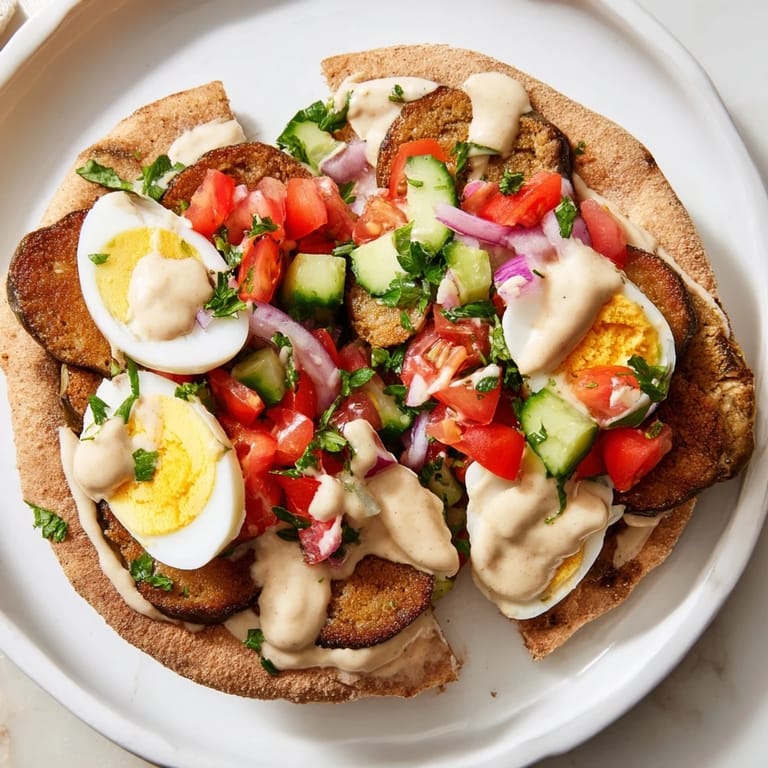
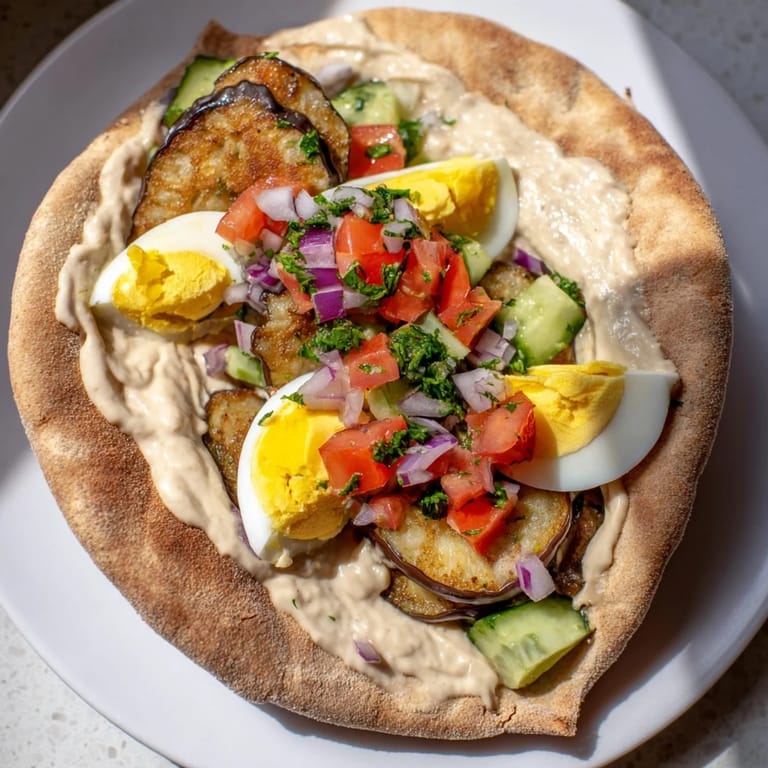
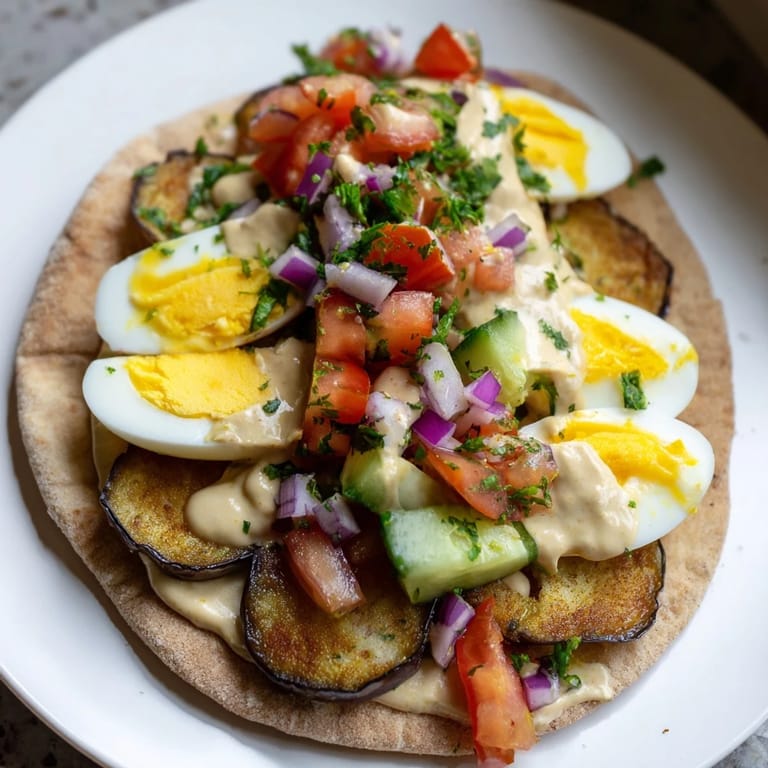
- Heat your pita breads gently so they're pliable and warm but not so hot they tear. Slice open a pocket, then layer fried eggplant, sliced eggs, and Israeli salad inside first, then drizzle tahini sauce over top.
- Finish with brightness and heat:
- Add pickles, amba if you're using it, cilantro, and as much hot sauce as your mouth can handle. Serve immediately while everything is still warm and the contrast of temperatures matters.
 Pin it
 There's a moment after you've assembled the first sabich where you're holding it and everything is still warm and the tahini is still creamy and the eggplant is still crispy, and before you take that first bite you realize you've made something that somehow tastes like a place you don't live. That moment never stops feeling special, no matter how many times you make it.
The Eggplant is Everything
The texture of the eggplant is what makes or breaks this dish, and I learned this lesson the hard way by underfrying in a rush. The oil needs to be hot enough that it sizzles immediately when eggplant hits the pan, and each slice needs enough time to develop that shatteringly crispy exterior. If you're cooking for a crowd, set up an assembly line with floured eggplants on one side and paper towels on the other so you stay organized and nothing gets soggy.
Building the Perfect Bite
The architecture of a sabich matters because different components shine at different moments. The salad should go in last against the warmth of the pita so it stays crisp, and the tahini should coat everything but not drown it. I've found that slightly underfilling is better than overstuffing because it keeps everything contained and the flavors separate enough that you taste each element as you eat.
Making It Your Own
The beauty of sabich is that it's a platform for whatever you want it to be. Some people add labneh for extra creaminess, others use hummus instead of tahini, and I once made it with roasted cauliflower when eggplant looked sad at the market. The core is fried eggplant and tahini sauce, but after that the rest is up to you and what your kitchen offers on any given day.
- Toast your pita in a dry skillet for 30 seconds on each side before slicing if you want it even crispier.
- Make the tahini sauce thinner if you prefer it drizzle-able, thicker if you like it spread-able.
- Amba is worth hunting down in a Middle Eastern market because it's absolutely transformative, but hot sauce works in a pinch.
 Pin it
 A good sabich is one of those rare dishes that feels both totally casual and genuinely special, the kind of thing you want to make again immediately after eating it. I hope this version brings you at least one moment as good as that humid afternoon in Tel Aviv.
Frequently Asked Questions
- → What is the best way to prepare the eggplant?
Slice eggplant into 1/2-inch rounds, sprinkle with salt to draw out moisture, pat dry, then lightly coat in flour and fry until golden brown on both sides.
- → How is the tahini sauce made smooth?
Whisk tahini paste with water, lemon juice, garlic, and salt, adjusting water gradually until the sauce reaches a creamy, pourable texture.
- → Can the eggs be substituted for a vegan option?
Yes, eggs can be omitted or replaced with tofu slices to create a vegan-friendly variation.
- → What ingredients compose the Israeli salad?
The salad combines diced tomatoes, cucumber, red onion, fresh parsley, lemon juice, olive oil, salt, and pepper for a fresh, tangy flavor.
- → Is amba sauce necessary for authenticity?
Amba (pickled mango sauce) is traditional but optional; it adds a tangy and spicy note to the pita filling.