 Save
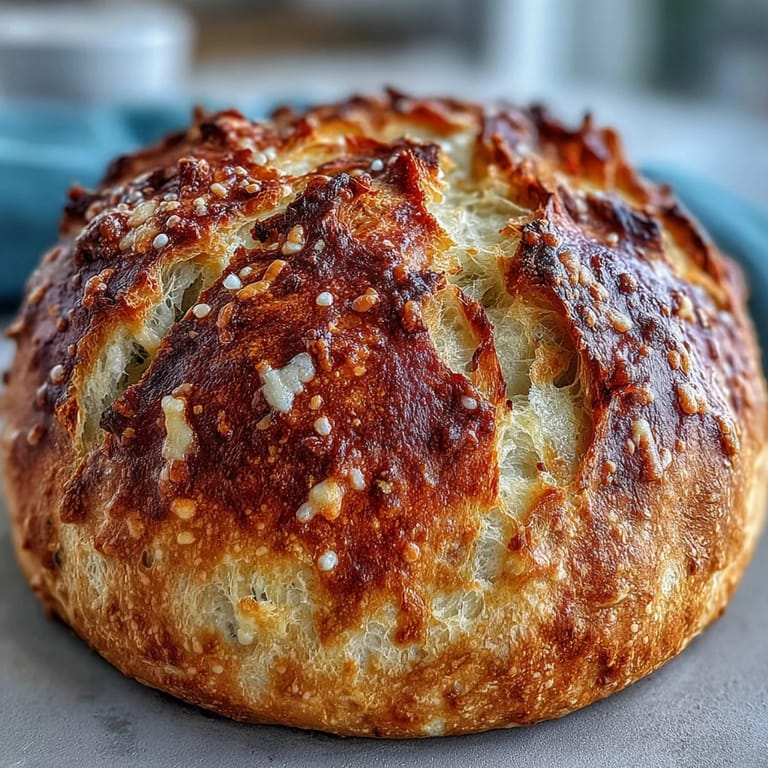
Save There's something magical about waking up to a bowl of dough that's been quietly working all night. I started making this Parmesan garlic bread during a particularly snowy winter when grocery runs felt like expeditions, and now it's my go-to for when I want to feel like a proper baker without actually doing much work. The smell that fills the house when you lift that Dutch oven lid—garlicky, cheesy, comfort—is absolutely worth the wait.
I made this for a friend's dinner party last month, and honestly, I was nervous. Bread has always felt like one of those things that can go spectacularly wrong. But when I pulled this golden beauty out of the oven and the room went quiet, then someone whispered 'is this from a bakery'—that's a memory I'm holding onto. We devoured it alongside a simple tomato soup, and suddenly everyone was asking for the recipe like I'd just revealed a family secret.
Ingredients
- 3 1/4 cups all-purpose flour: I've used bread flour when that's what I had on hand, and honestly it works great too—the bread just comes out a bit chewier
- 2 teaspoons salt: Don't skimp here, it's what balances all that Parmesan richness
- 1 teaspoon granulated sugar: Just enough to wake up the yeast and give the crust that golden color
- 2 teaspoons active dry yeast: Make sure it's fresh—nothing sadder than dough that won't rise because of tired yeast
- 1 1/2 cups warm water: Think bathwater temperature, about 110°F—too hot and you'll kill the yeast, too cold and it'll take forever to wake up
- 2 tablespoons olive oil: Keeps the crumb tender and adds a lovely subtle fruitiness
- 1 cup freshly grated Parmesan cheese: Freshly grated is non-negotiable here—the pre-grated stuff just doesn't melt the same way
- 2–3 cloves garlic, minced: I always go with 3 because garlic is life, but 2 if you're feeling shy
- 1 tablespoon chopped fresh rosemary or parsley: Optional, but that little hit of herbal freshness really makes it feel special
Tired of Takeout? 🥡
Get 10 meals you can make faster than delivery arrives. Seriously.
One email. No spam. Unsubscribe anytime.
Instructions
- Mix your dry base:
- Grab your largest bowl and whisk together the flour, salt, and sugar until they're one happy family
- Wake up the yeast:
- Dissolve the yeast in that warm water and wait 5 minutes—you should see a lovely foam layer form, which means it's alive and ready to work
- Bring it all together:
- Pour in the yeasty water and olive oil, then stir with a wooden spoon until you've got a sticky, shaggy dough
- Add the good stuff:
- Fold in the Parmesan, garlic, and herbs until everything's evenly distributed—your kitchen should already smell amazing
- The overnight magic:
- Cover the bowl and let it rise somewhere warm for 12 to 18 hours—I usually do this before bed so I can bake first thing
- Shape your loaf:
- Turn the dough onto a floured surface, gently fold it over itself a few times to create surface tension, then shape it into a round
- Preheat your Dutch oven:
- Place your dough on parchment paper, let it rest for 30 minutes, then stick your Dutch oven in the oven at 450°F
- Score the surface:
- Use a sharp knife to cut a shallow slash across the top of the loaf—this gives it room to expand and looks so professional
- Bake covered:
- Carefully lower your dough into the hot Dutch oven, cover with the lid, and bake for 30 minutes
- Reveal and finish:
- Remove the lid and bake for another 15 minutes until it's deeply golden and sounds hollow when you tap the bottom
- Patience pays off:
- Let it cool on a wire rack for at least 30 minutes—slicing hot bread is tempting, but it ruins the texture
 Pin it
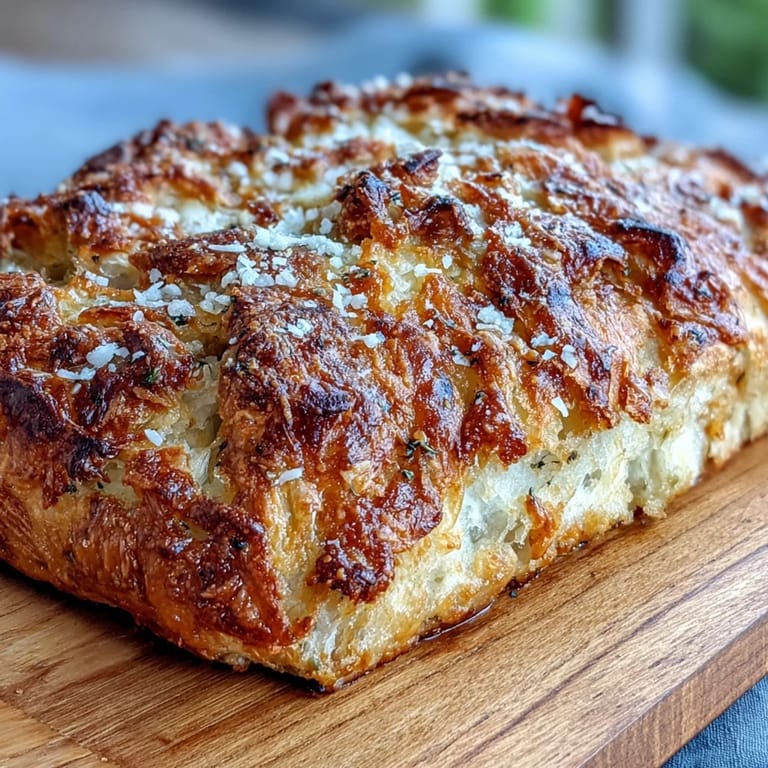
 This bread has become my thing. The one recipe people actually request, the one that makes me feel like I can totally handle this adult cooking thing. There's something so grounding about making bread—it connects you to centuries of humans doing the exact same process, and yet it feels brand new every time.
Making It Your Own
I've experimented with all kinds of additions now—chunks of aged cheddar, sun-dried tomatoes, even some crushed walnuts once when I was feeling fancy. The beauty of this dough is that it's incredibly forgiving. It's like a reliable friend who's up for whatever adventure you propose.
The Science Behind the Crust
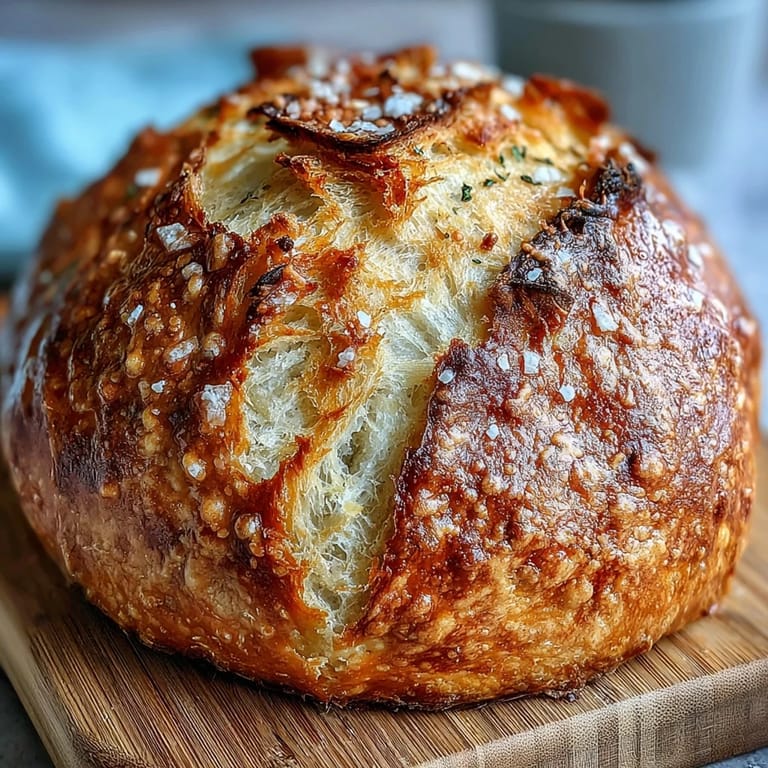
That Dutch oven creates a little steam chamber in your oven, which is exactly what professional bread ovens do. The steam keeps the crust soft initially, allowing the bread to expand fully before the exterior hardens into that gorgeous, crackly shell. It's the secret trick that makes homemade bread look like it came from an artisan bakery.
Serving Suggestions
This bread disappears fast in my house, but if you somehow have leftovers, it makes incredible toast the next morning—just a little butter and maybe some jam. I've also turned day-old slices into croutons that transformed a basic Caesar salad into something people still talk about.
- Try serving it alongside a hearty minestrone or creamy tomato soup
- Use slightly stale slices to make the most incredible grilled cheese sandwich of your life
- Wrap the loaf tightly and freeze it if you won't eat it within 2 days—it reheats beautifully in a 350°F oven for 10 minutes
 Pin it
 Hope this bread brings as much joy to your kitchen as it has to mine. There's nothing quite like breaking bread you made yourself, especially when it's this good.
Frequently Asked Questions
- → Can I reduce the rising time?
While you can reduce the rise to 6–8 hours in a very warm environment, the extended 12–18 hour fermentation develops superior flavor and creates those signature air pockets. The longer rest also enhances the cheesy garlic infusion throughout the crumb.
- → What if I don't have a Dutch oven?
A heavy cast iron pot with a tight-fitting lid, enameled braiser, or even a baking stone with a metal bowl inverted over the loaf works well. The key is creating a steamy enclosed environment that yields that crisp, crackling crust.
- → Can I use other cheese varieties?
Absolutely. Aged Asiago, Gruyère, sharp cheddar, or Pecorino Romano all work beautifully. Each brings unique flavor profiles—Gruyère adds nuttiness while Pecorino delivers sharper saltiness. Keep the total cheese quantity around one cup for proper dough structure.
- → Why is my dough so sticky?
Sticky dough is actually ideal for this method. The high hydration level creates those desirable airy pockets and tender crumb. Resist adding extra flour during shaping—lightly flour your hands and work surface instead. The dough will become more manageable as it rests on the parchment.
- → Can I freeze the finished loaf?
Yes, once completely cooled, wrap the loaf tightly in plastic wrap then foil. Freeze for up to three months. Thaw at room temperature still wrapped, then refresh in a 350°F oven for 10–15 minutes to restore the crispy crust. Slices can also be frozen individually for quick toasting.
- → Do I need to score the bread?
Scoring isn't strictly necessary, but it directs the expansion during baking, creating that professional artisan appearance. A single slash down the center or a cross pattern works well. Use a very sharp knife or lame, cutting about ½ inch deep just before baking.