 Save
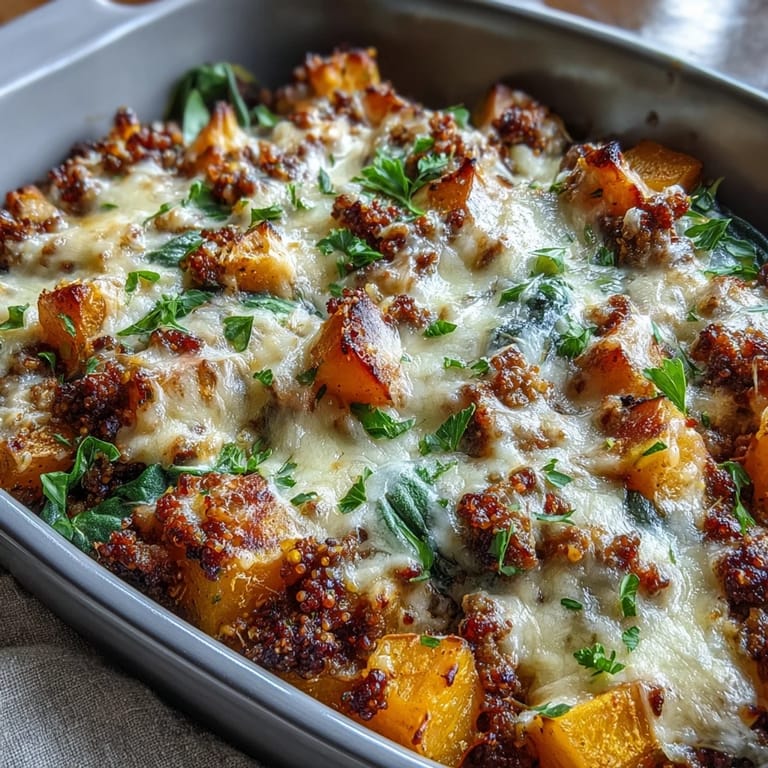
Save The first time I made this casserole, it was snowing sideways and my kitchen was the only warm place in the world. I had a butternut squash sitting on my counter that I'd bought on impulse, and some Italian sausage from the farmers market. The way the squash caramelized with the sausage made the whole house smell like autumn decided to move in and stay awhile.
I served this at a small dinner party last November when my friend Sarah was going through a tough divorce. She took three helpings and asked for the recipe before she even finished her first plate. Sometimes food does what words cannot.
Ingredients
- 1 medium butternut squash: Peel and seed this carefully—those curves can be tricky, and a sharp knife makes all the difference
- 1 medium onion, diced: Yellow onions work beautifully here, becoming sweet and golden as they cook down
- 2 cloves garlic, minced: Fresh garlic beats jarred every time—press it right before adding so those oils stay potent
- 3 cups baby spinach: It looks like a mountain going in, but wilts down into just the right amount of green
- 1 pound Italian sausage: Sweet gives a classic taste, spicy adds that warmth that lingers—remove the casing before cooking
- 1 cup cooked quinoa: Make this ahead or use leftover—the nutty flavor pairs perfectly with the squash
- 1 cup shredded mozzarella: Buy it shredded or grate it yourself fresh—that melt factor matters
- ½ cup grated Parmesan: The salty punch here balances the sweetness of everything else
- 2 tablespoons olive oil: Use a decent one since you are cooking at medium heat
- 1 teaspoon dried thyme: Earthy and warm, thyme belongs with squash like they were made for each other
- 1 teaspoon dried sage: This is the secret ingredient that makes it taste like grandmother's kitchen
- 1 teaspoon paprika: Smoked paprika adds depth, regular adds color—either works
- Salt and pepper: Taste as you go, especially since the sausage and Parmesan bring their own salt
- 1 cup chicken or vegetable broth: This creates a little sauce as everything bakes together
Tired of Takeout? 🥡
Get 10 meals you can make faster than delivery arrives. Seriously.
One email. No spam. Unsubscribe anytime.
Instructions
- Get your oven ready:
- Preheat to 375°F and grease a 9x13 baking dish—do this first so you are not scrambling later when everything is ready to go in
- Start the aromatics:
- Heat olive oil in a large skillet over medium heat, add diced onion and cook about 5 minutes until it turns translucent and smells sweet
- Add the garlic:
- Throw in minced garlic for just one minute—you want it fragrant, not browned or bitter
- Brown the sausage:
- Crank up the heat slightly, add the sausage and break it apart with a wooden spoon, cooking 7 to 10 minutes until it is fully browned and sizzling
- Bring in the squash:
- Add those cubed pieces along with thyme, sage, paprika, salt and pepper, stirring occasionally for 5 to 7 minutes as the squash begins to soften at the edges
- Add the greens and grains:
- Toss in spinach and cooked quinoa, stirring until the spinach collapses into everything else
- Create the sauce:
- Pour in the broth and let it simmer for 3 to 4 minutes—this step is what keeps the casserole from drying out in the oven
- Assemble and cheese:
- Transfer everything to your prepared baking dish, spread it evenly, and blanket the top with mozzarella and Parmesan
- Bake covered:
- Cover tightly with foil and bake for 25 minutes—this steams the squash until tender
- Get the golden top:
- Remove that foil and bake another 15 to 20 minutes until the cheese bubbles and turns golden brown in spots
- The waiting game:
- Let it rest for 5 minutes before serving—this helps everything set and makes serving so much easier
 Pin it
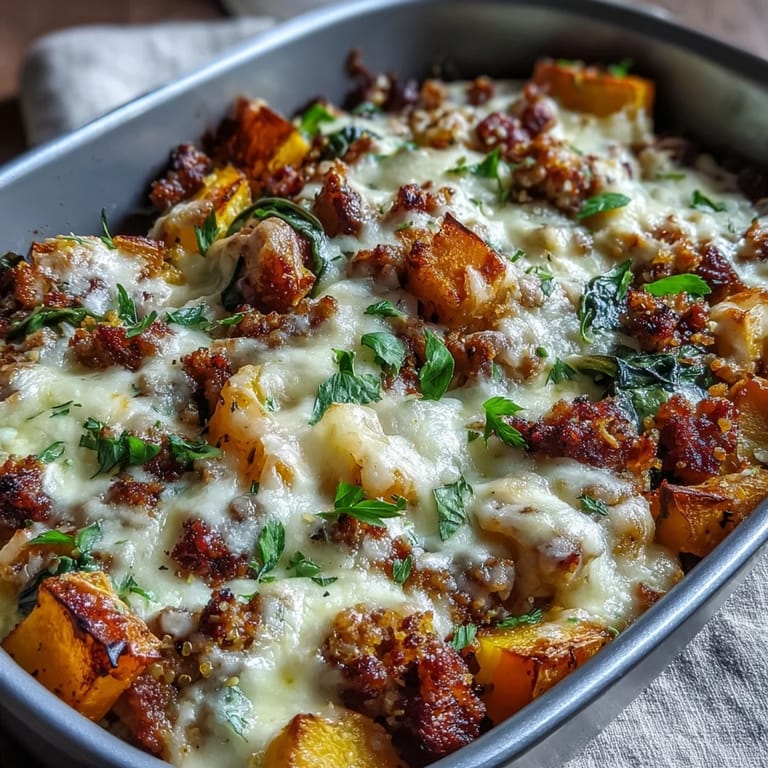
 My neighbor smelled this baking and knocked on my door with an empty Tupperware container. Now we have a standing arrangement—I make extra, she brings wine. Best trade I have ever made.
Make It Your Own
Sometimes I swap the quinoa for wild rice when I want something nuttier. Other times I add kale instead of spinach just because that is what I have in the fridge. The structure stays the same, but the ingredients shift with the seasons.
Timing Everything Right
I have learned to prep all my ingredients before I turn on any burners. The sausage cooks faster than you expect, and having everything measured and ready means you never scramble with hot grease splattering. Do your mise en place first—thank yourself later.
Leftovers Actually Get Better
This reheats beautifully for lunch the next day. The flavors have time to really marry and settle into each other. I pack individual portions in glass containers and they are the thing I look forward to most at work.
- Sprinkle a little water before reheating to keep it from drying out
- Add fresh cheese on top so it gets bubbly again
- A fried egg on top turns leftovers into breakfast
 Pin it
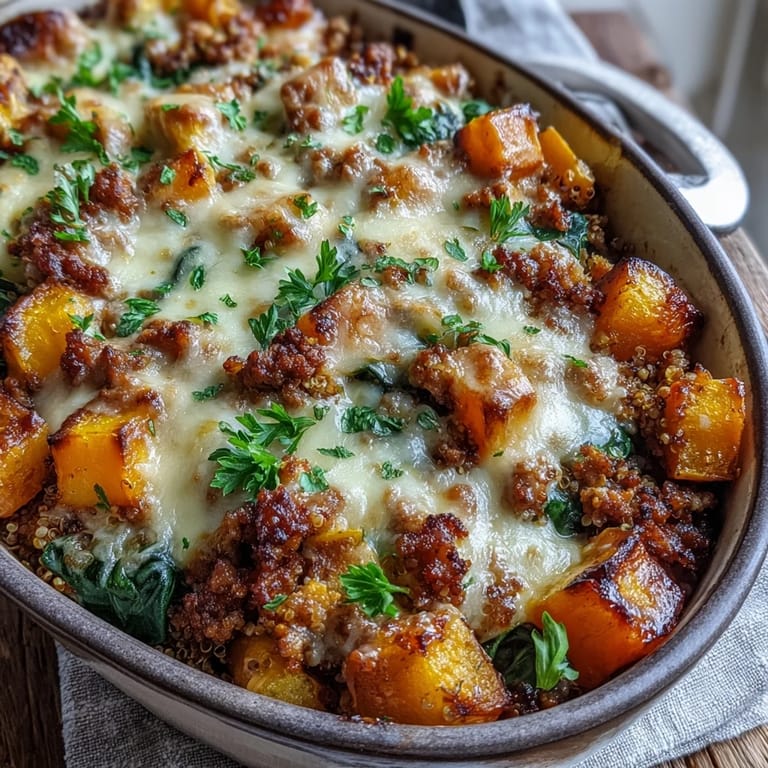
 This is the kind of dinner that makes winter feel like a gift instead of a punishment. Enjoy every warm, cheesy bite.
Frequently Asked Questions
- → Can I make this butternut squash casserole ahead of time?
Yes, you can assemble the entire dish up to 2 days in advance and refrigerate it. When ready to bake, add a few extra minutes to the baking time since it will be cold. The flavors actually meld together beautifully when made ahead.
- → What can I substitute for the quinoa?
Cooked rice or couscous work perfectly as alternatives to quinoa. Both provide a similar texture and will absorb the savory flavors just as well. Adjust cooking liquid slightly if needed.
- → How do I make this vegetarian?
Replace the Italian sausage with plant-based sausage crumbles or cannellini beans for protein. Use vegetable broth instead of chicken broth. The rest of the ingredients are naturally vegetarian-friendly.
- → Can I freeze this casserole?
Yes, this freezes well either before or after baking. If freezing unbaked, thaw completely in the refrigerator before baking as directed. For best results, wrap tightly and use within 3 months.
- → What wine pairs well with this dish?
A light red wine like Pinot Noir complements the savory sausage, while a crisp white such as Sauvignon Blanc contrasts nicely with the sweet butternut squash. Choose based on your preference for red or white.
- → How do I know when the squash is tender enough?
The squash should be easily pierced with a fork but not falling apart. After sautéing for 5-7 minutes, it should start softening. The final baking time ensures it becomes completely tender while absorbing all the seasoned flavors.