 Save
Save The first time I made imam bayildi, I wasn't expecting the eggplant to transform so completely. I'd heard the name whispered in passing—something about an imam fainting from the sheer deliciousness—and I was skeptical until that first spoonful of silky flesh infused with caramelized onions and tomatoes. Now whenever I roast eggplants, that same magic happens in my kitchen, and I find myself slowing down, tasting, savoring the layers of flavor that only time and olive oil can build.
I remember serving this to my neighbor who'd never had anything like it, watching her hesitate at the fork, then close her eyes on that first bite. She came back three days later asking if I'd make it again because she'd thought about it non-stop. That's when I realized imam bayildi isn't just food—it's the kind of dish that stays with people.
Ingredients
- Eggplants (4 medium, about 250g each): Choose ones that feel heavy for their size and have unblemished skin—they'll be meatier and less bitter once salted and cooked.
- Onions (3 medium, thinly sliced): These are the soul of the filling, so don't rush them; slow cooking transforms them into something almost sweet.
- Tomatoes (4 ripe, peeled and diced): Use tomatoes that smell like tomatoes, or canned San Marzano in winter—the difference is real.
- Garlic (4 cloves, minced): Add it after the onions have softened so it doesn't burn and turn bitter.
- Green bell peppers (2, seeded and finely chopped): They add body to the filling without overpowering the delicate eggplant.
- Flat-leaf parsley (1 bunch, chopped): Stir it in at the very end to keep its brightness and fragrance alive.
- Extra virgin olive oil (120 ml): Don't skimp here; the quality matters because olive oil is the main flavor carrier.
- Water (120 ml): This creates gentle steam that finishes cooking the eggplant and keeps the filling moist.
- Lemon juice (½ lemon): A squeeze of acid lifts everything and prevents the dish from feeling heavy.
- Sugar (1 tsp): Just enough to round out the acidity of tomatoes and coax sweetness from the onions.
- Sea salt (1½ tsp, plus more to taste): Salt the eggplants upfront to draw out water, then season the filling by taste.
- Ground black pepper (½ tsp): Fresh cracked is worth the extra step.
- Paprika (1 tsp, optional): A whisper of this deepens the tomato notes without making it spicy.
Tired of Takeout? 🥡
Get 10 meals you can make faster than delivery arrives. Seriously.
One email. No spam. Unsubscribe anytime.
Instructions
- Set the oven and prepare the eggplants:
- Preheat to 180°C (350°F). Wash each eggplant and, using a vegetable peeler, stripe them lengthwise by peeling alternating strips—this looks beautiful and helps them cook evenly. Lay each one on a cutting board and carefully slice lengthwise down the center, being careful to leave the stem and tail intact so they stay whole.
- Draw out the bitterness:
- Sprinkle the eggplant halves inside and out with salt and set them on paper towels for 20 minutes. You'll see moisture bead on the surface—that's the bitter compounds leaving. Rinse gently under cool water and pat completely dry with a clean towel.
- Build the filling foundation:
- Heat half the olive oil in a large skillet over medium heat. Add the sliced onions and cook slowly, stirring often, until they turn soft and golden—this takes about 8 minutes and is worth every second. You're coaxing out their natural sweetness.
- Deepen the filling:
- Add minced garlic and chopped peppers to the onions and cook for 3 more minutes until fragrant. Stir in the diced tomatoes, sugar, salt, pepper, and paprika. Let everything simmer together for about 10 minutes until the tomatoes break down and the mixture thickens slightly—it should smell incredible by now.
- Finish the filling with freshness:
- Take the skillet off heat and stir in the chopped parsley, folding it in gently so it stays bright green and aromatic.
- Sear the eggplants:
- In a clean skillet, heat the remaining olive oil over medium-high heat. Working in batches if needed, place the eggplant halves cut-side down first and let them brown gently for 2-3 minutes, then flip and brown the skin side for another 2-3 minutes. They should be lightly colored and just beginning to soften—don't overdo it.
- Stuff and arrange:
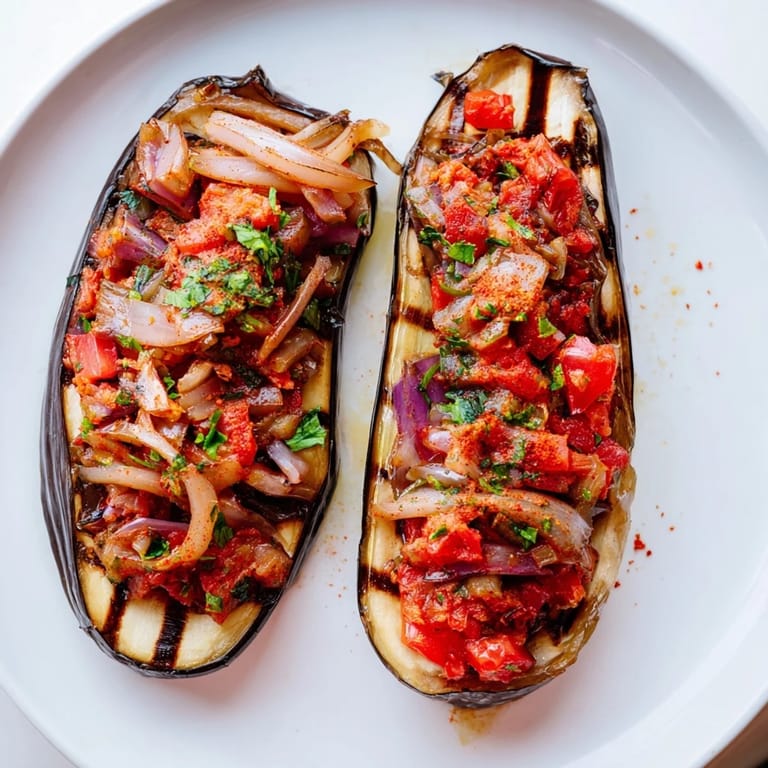
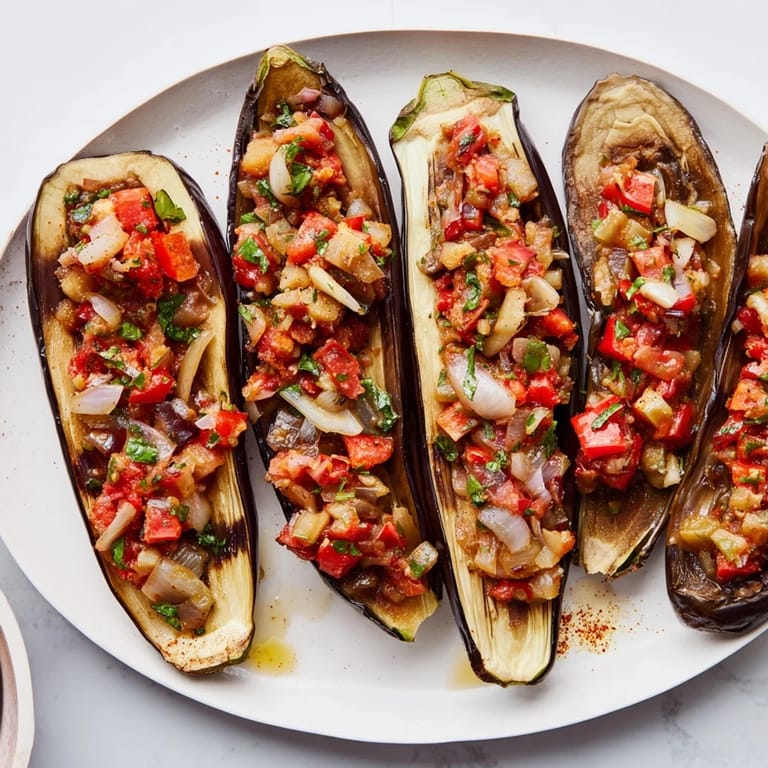
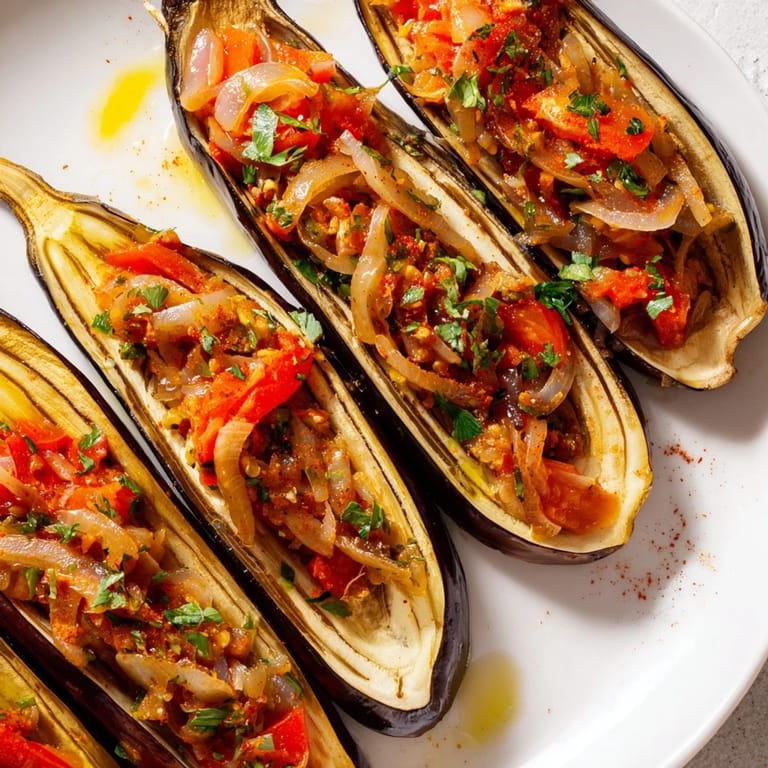
- Transfer the seared eggplants to a baking dish, cut-side up. Carefully open each slit as wide as you comfortably can and spoon the filling inside generously, packing it in so each eggplant is well-fed. Any leftover filling can nestle in the dish around them.
- Add liquid and cover:
- Squeeze the lemon juice over everything, then pour the water into the bottom of the dish—not over the eggplants. Cover tightly with aluminum foil and place in the oven.
- First bake:
- Bake covered for 35 minutes until the eggplants are tender but not mushy when pierced with a fork. You should hear the water gently simmering underneath.
- Final flourish:
- Remove the foil and bake uncovered for another 10-15 minutes until the filling bubbles slightly at the edges and the eggplant skin has darkened a bit. The exposed filling should look jammy.
- Cool and serve:
- Let everything come to room temperature—the flavors actually become clearer and more complex as it cools. Imam bayildi is meant to be enjoyed warm or at room temperature, never straight from a hot oven.
 Pin it
 I once brought this to a dinner party on a whim, not thinking much of it, and someone asked for the recipe before dessert was even cleared. That moment taught me that home cooking isn't about impressing anyone—it's about feeding people something so honest and warm that they feel seen.
Why This Dish Lasts
Imam bayildi has traveled through centuries and across continents because it's forgiving and adaptable while staying true to itself. The base of caramelized onions and tomatoes is timeless, and the silky eggplant is a blank canvas that takes on flavors without losing its gentle nature. I've made it dozens of ways—with a whisper of cinnamon, a pinch of allspice, sometimes a chopped green chili for heat—and it always feels right.
Serving and Pairing
Serve this at room temperature with thick slices of crusty bread to soak up the olive oil and juices, or alongside fluffy rice pilaf if you want something more substantial. A dollop of cool yogurt on the side creates a beautiful temperature contrast and adds a tangy counterpoint to the sweetness of the filling. If you're making this for a mezze spread, it sits beautifully alongside hummus, baba ghanoush, and a simple salad.
Storage and Make-Ahead Magic
This is one of those rare dishes that actually improves after a day or two as the flavors meld and deepen. Store it covered in the refrigerator for up to four days, and bring it to room temperature before serving—or gently warm it in a low oven if you prefer. You can also freeze individual eggplants wrapped tightly for up to a month, though the texture becomes slightly softer after thawing.
- Make the filling a day ahead and refrigerate it separately, then sear and stuff the eggplants fresh for the best texture.
- If preparing for guests, assemble everything in the baking dish in the morning and bake just before serving.
- Leftover filling is delicious spooned over roasted vegetables or stirred into a simple pasta the next day.
 Pin it
 This dish reminds me why I cook at all—to create something that makes people pause and truly taste. Imam bayildi deserves that kind of attention, and once you make it, you'll understand why.
Frequently Asked Questions
- → What type of eggplants work best for Imam Bayildi?
Medium-sized eggplants with firm skin are ideal to hold the filling well and soften evenly when baked.
- → Can the dish be prepared ahead of time?
Yes, the flavors deepen if made a day in advance and allowed to rest before serving.
- → Is it necessary to salt the eggplants before cooking?
Salting helps draw out bitterness and moisture, resulting in a better texture and flavor.
- → What oils are traditionally used in this dish?
Extra virgin olive oil is preferred for its rich flavor and smooth texture throughout the dish.
- → How is the filling prepared for Imam Bayildi?
Onions, garlic, tomatoes, and green peppers are gently cooked with seasonings to create a fragrant, thick filling.
- → Can spices like cinnamon or chili be added?
Yes, adding a pinch of cinnamon or chopped green chili can add warmth or heat to enhance the dish.