 Save
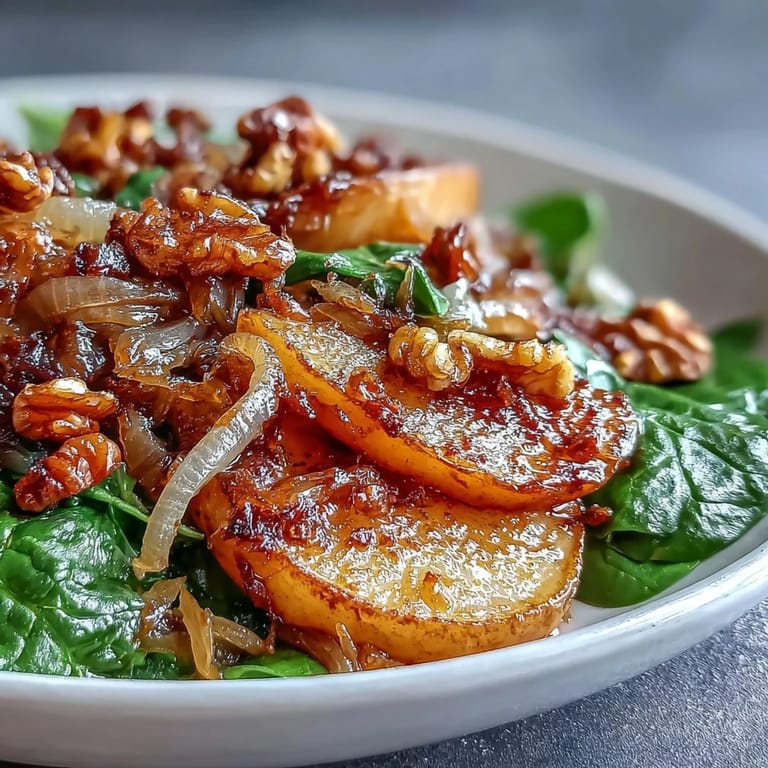
Save The day I discovered this warm apple and sauerkraut skillet salad was during an autumn farmers' market visit where my basket overflowed with crisp apples and a local vendor convinced me to try their homemade sauerkraut. That evening, with a chill in the air, I craved something comforting yet fresh and started experimenting. As the apples caramelized in my cast iron skillet, their sweet aroma mingling with the tangy fermented cabbage, I knew I'd stumbled onto something special that bridged the gap between salad and side dish.
I first served this salad during a small dinner gathering where I was nervous about the unconventional pairing. My friend Sarah, who typically wrinkles her nose at sauerkraut, took a hesitant bite then immediately asked for the recipe. The table fell silent as everyone savored the warm, tangy-sweet bites, punctuated only by the occasional approving murmur. By the end of the night, the empty serving dish told me everything I needed to know about this accidental creation's success.
Ingredients
- Apples: Honeycrisp or Gala work beautifully here because they hold their shape when cooked while offering the perfect balance of sweetness and acidity.
- Sauerkraut: Fresh refrigerated sauerkraut rather than shelf-stable varieties gives you more probiotic benefits and a cleaner, brighter flavor.
- Red onion: These become wonderfully sweet when caramelized, creating a perfect bridge between the apples and sauerkraut.
- Caraway seeds: After forgetting these once, I realized they're what ties everything together with their subtle anise-like warmth that complements both the apples and fermented cabbage.
- Toasted nuts: The textural contrast these provide against the softened fruits and vegetables turns an interesting side into a memorable dish.
Tired of Takeout? 🥡
Get 10 meals you can make faster than delivery arrives. Seriously.
One email. No spam. Unsubscribe anytime.
Instructions
- Caramelize the fruits:
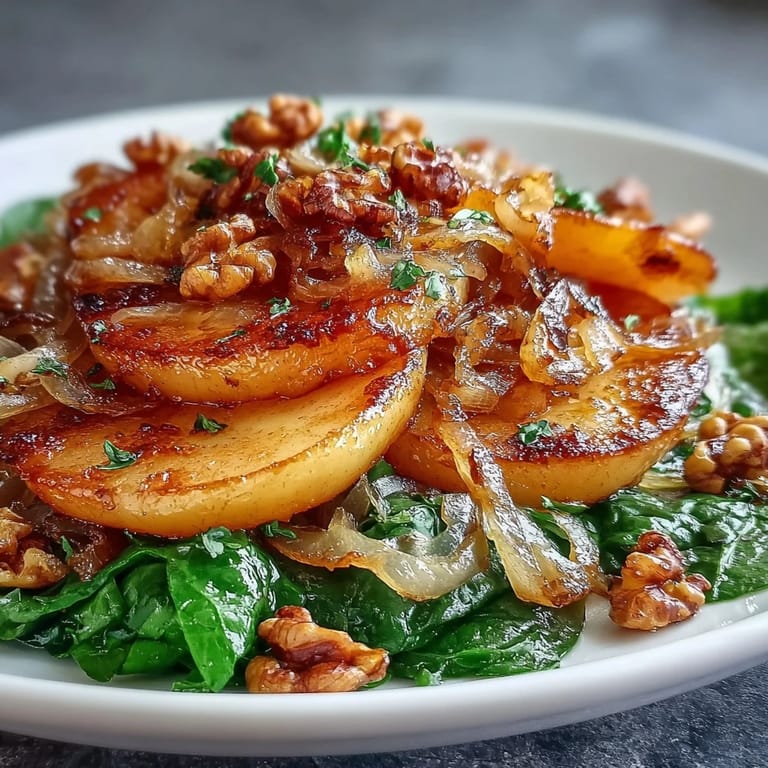
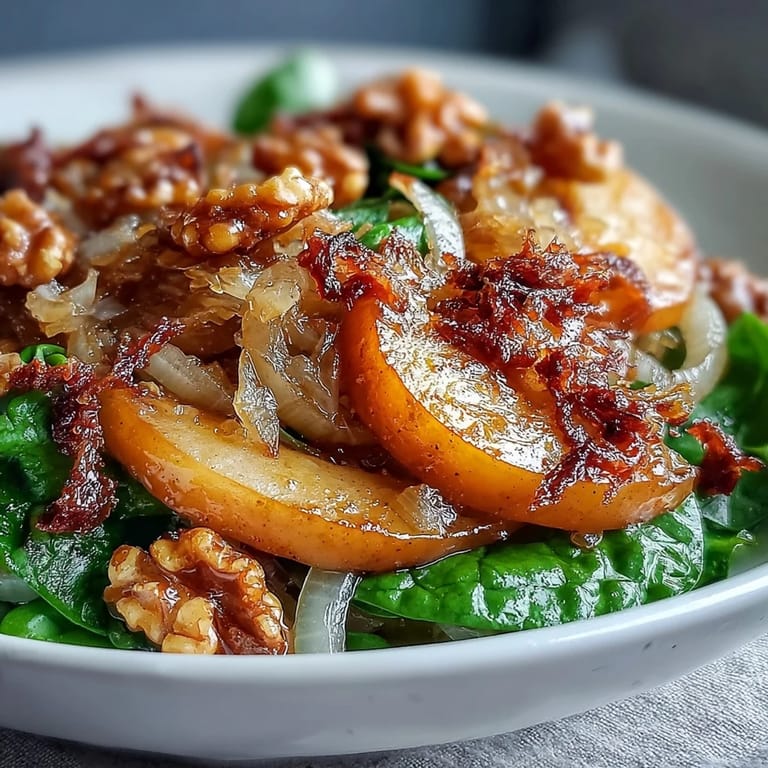
- Heat your olive oil or butter in a skillet until it shimmers, then add those beautiful apple and onion slices. You'll know they're ready when your kitchen fills with a sweet aroma and the edges turn golden brown.
- Add the sweet and spice:
- Drizzle in your sweetener and sprinkle those aromatic caraway seeds, watching how they immediately release their fragrance in the heat. The honey or maple syrup will bubble slightly and coat everything in a light glaze.
- Warm the sauerkraut:
- Gently fold in your drained sauerkraut, being careful not to overheat it which would destroy its beneficial probiotics. You just want it warmed through, maintaining its pleasant tang and slight crunch.
- Wilt the greens:
- Off the heat, add your spinach or arugula and watch it soften from the residual warmth. The greens should turn bright and just barely wilted, maintaining some structure.
- Finish with texture:
- Transfer to your serving dish and scatter those toasted nuts and fresh herbs over the top. The contrast between the warm, soft salad and the crunchy garnishes makes every bite interesting.
 Pin it
 Last winter, I prepared this salad for my father-in-law who grew up in a traditional German household. As he took his first bite, his eyes widened with surprise, then softened with a kind of nostalgic recognition. Though not exactly like his mother's cooking, he said the flavors transported him back to childhood Sunday dinners. We spent the evening sharing stories about how food connects us to our heritage and to each other, all sparked by this humble skillet of apples and sauerkraut.
Seasonal Adaptations
This versatile dish changes with the seasons in my kitchen. In autumn, I use freshly harvested apples and sometimes add a handful of cranberries for extra color and tartness. Winter versions might include a sprinkle of warming spices like cinnamon or clove. Spring calls for tender young spinach straight from the garden, while summer allows me to throw in whatever herbs are thriving on my windowsill. The recipe's flexibility is part of its charm, evolving with what's available and what your body craves.
Serving Suggestions
While delicious on its own, this warm skillet salad plays well with others at the table. I've served it alongside roasted pork loin where its acidity cuts through the richness beautifully. It makes an impressive bed for pan-seared fish, the juices mingling together on the plate. For a complete vegetarian meal, I sometimes add white beans or chickpeas directly to the skillet for protein, or crown it with a poached egg whose runny yolk creates an instant sauce. When entertaining, I've presented it as part of a European-inspired grazing board with crusty bread and good cheese.
Make It Your Own
After making this salad dozens of times, I've learned it's incredibly forgiving and adaptable to what you have on hand. The essence remains the same even as the specifics shift with my mood or pantry constraints.
- For a more substantial meal, fold in cooked farro or barley during the final warming stage.
- If you enjoy smoky flavors, substitute half the olive oil with a touch of bacon fat or add a sprinkle of smoked paprika.
- For a refreshing summer twist, let the cooked mixture cool slightly and toss with more raw greens and a squeeze of lemon juice.
 Pin it
 This warm apple and sauerkraut skillet salad has taught me that some of the best recipes come from trusting intuition rather than tradition. Each time I make it, I'm reminded that cooking isn't just about following rules but about discovering connections between seemingly disparate ingredients.
Frequently Asked Questions
- → Can I prepare this ahead of time?
Yes, you can caramelize the apples and onions in advance. Reheat gently before folding in the sauerkraut and greens to maintain texture and probiotic benefits.
- → What type of apples work best?
Honeycrisp or Gala apples provide excellent balance—firm enough to hold shape during cooking while developing natural sweetness. Avoid overly soft varieties that may become mushy.
- → Is this dish spicy?
No, there's no heat. The flavor profile balances sweet apples, tangy sauerkraut, and savory onions. Caraway seeds add subtle earthiness without spiciness.
- → Can I make it vegan?
Absolutely. Use olive oil instead of butter and choose maple syrup rather than honey. All other ingredients naturally fit plant-based diets.
- → What proteins pair well with this skillet?
Roast pork, sausages, or grilled chicken complement beautifully. The tangy sweetness cuts through rich meats while the probiotics aid digestion.
- → How do I store leftovers?
Refrigerate in an airtight container up to 3 days. Reheat gently over low heat, adding fresh greens if the original ones have become too wilted.