 Save
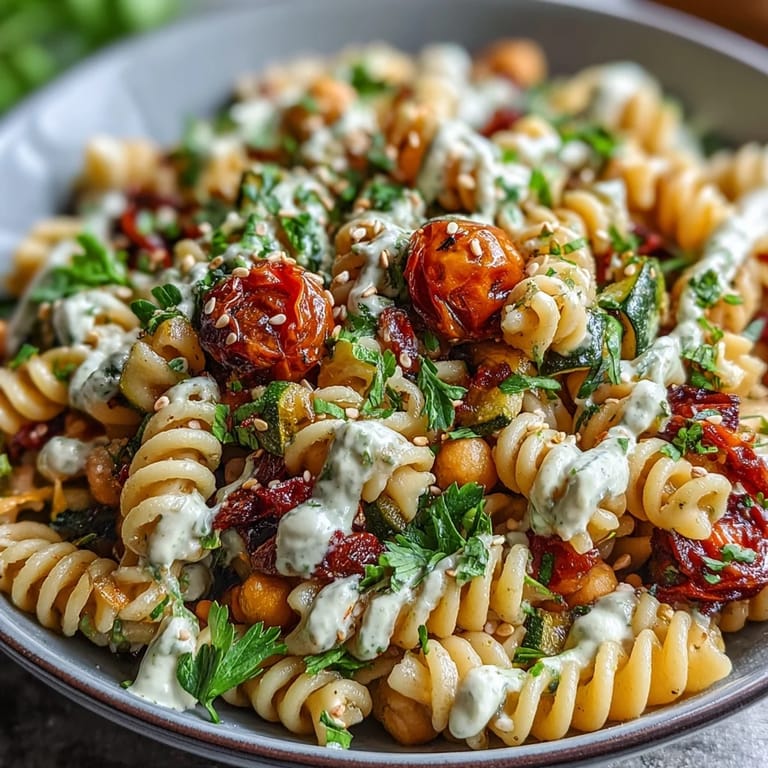
Save I stumbled onto chickpea pasta during a random grocery run when my usual brand was out of stock, and honestly, I grabbed it more out of curiosity than conviction. That first bowl I made was transformative—the pasta had this nutty, substantial quality that made the whole meal feel grounded and real. Now it's become my go-to when I need something that feels indulgent but actually fuels me for hours. The roasted vegetables caramelize into these little flavor bombs, and the tahini sauce ties everything together with this silky, almost luxurious texture. It's the kind of meal that tastes like you spent all day cooking, but the clock says forty-five minutes.
I served this to my friend Maya, who'd been trying to eat more plant-based, and watching her face light up when she tasted it was worth every chopped vegetable. She kept saying it didn't taste like health food, and I think that's the highest compliment—it tastes like something you'd order at a restaurant you love, not something you're eating because you have to. That meal turned into a whole conversation about how eating differently doesn't mean eating less flavorfully, and now she asks for the recipe every time we catch up.
Ingredients
- Chickpea pasta: This is the foundation, and it brings protein and fiber that regular pasta just can't match—it also has a slightly toasty flavor that pairs beautifully with roasted vegetables.
- Zucchini: Choose one that's medium-sized and not too watery, as the oven will concentrate its flavor instead of just steaming it out.
- Red bell pepper: The sweetness balances the earthiness of the tahini, and the red variety is slightly sweeter than yellow or green.
- Red onion: It softens during roasting and loses that sharp bite, becoming almost caramelized and sweet.
- Cherry tomatoes: Halving them helps them roast faster and lets their insides concentrate into little pockets of concentrated flavor.
- Olive oil: Use a good quality one—it's a key player here, not just a cooking medium.
- Dried oregano and smoked paprika: These two are the secret to depth; the oregano brings Mediterranean herbiness while the paprika adds warmth and complexity.
- Tahini: The creamy backbone of this whole situation—look for roasted tahini if you want deeper, nuttier notes.
- Lemon juice: This cuts through the richness and keeps the sauce bright instead of heavy.
- Maple syrup or agave: Just a touch balances the tang without making anything taste sweet.
- Fresh parsley: Don't skip this; it adds a living, grassy note that makes the finished bowl feel fresh instead of one-dimensional.
Tired of Takeout? 🥡
Get 10 meals you can make faster than delivery arrives. Seriously.
One email. No spam. Unsubscribe anytime.
Instructions
- Heat your oven and prep your stage:
- Get that oven to 220°C (425°F) and line your baking sheet with parchment paper—this prevents sticking and cleanup becomes almost effortless. Your mise en place matters here more than you'd think.
- Toss and season your vegetables:
- In a large bowl, combine your diced zucchini, chopped bell pepper, sliced red onion, and halved cherry tomatoes, then coat them generously with olive oil, oregano, smoked paprika, salt, and pepper. Take time with this step; uneven seasoning means some bites will taste flat.
- Roast until golden and tender:
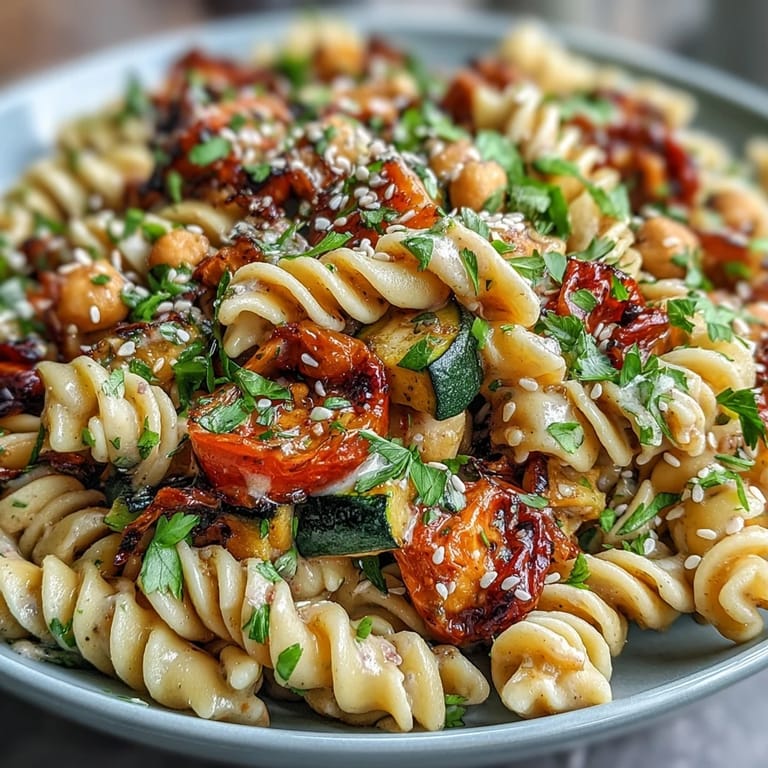
- Spread everything on your baking sheet in a single layer and slide it into the oven for 20 to 25 minutes, stirring halfway through so the edges caramelize evenly. You'll know it's ready when the vegetables have softened and the edges are touched with brown.
- Boil your pasta simultaneously:
- While vegetables roast, bring a large pot of salted water to a boil and cook the chickpea pasta according to its package instructions—usually around 8 to 10 minutes. The water should taste like the sea, which might sound dramatic but it genuinely matters for flavor.
- Whisk your tahini sauce into silky life:
- In a small bowl, whisk together tahini, lemon juice, maple syrup, warm water, minced garlic, and a pinch of salt until completely smooth and creamy. If it's too thick, add warm water one tablespoon at a time until you reach a consistency that drapes rather than clumps.
- Combine pasta with roasted vegetables:
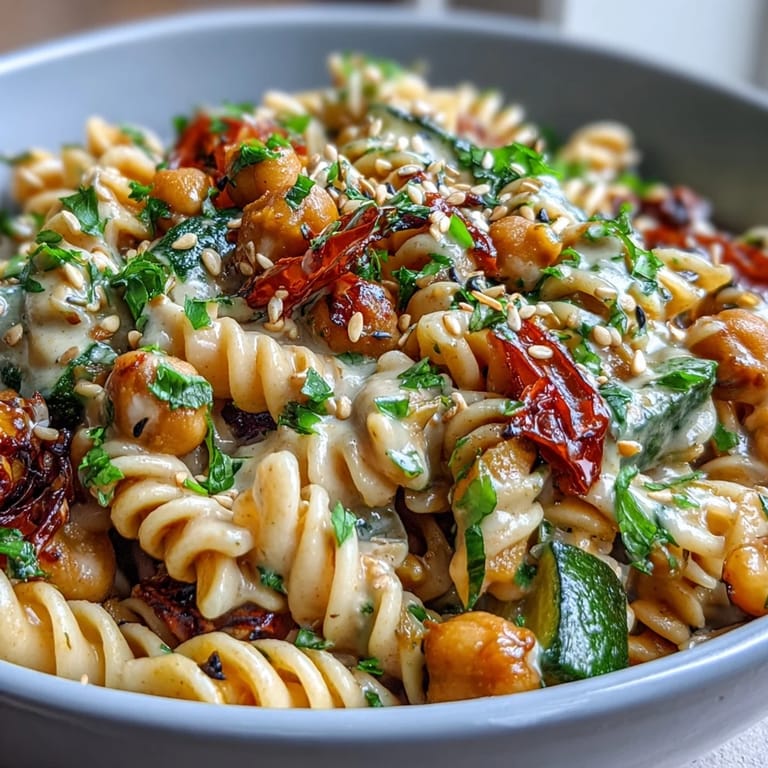
- Drain your cooked pasta and tumble it into a large mixing bowl with the roasted vegetables, then drizzle the tahini sauce over everything and toss gently but thoroughly until every strand is coated. This is when the magic happens—all those flavors finally meet.
- Plate and garnish:
- Divide the mixture between serving bowls and top each one with a scatter of fresh parsley and toasted sesame seeds if you're using them. Serve warm or at room temperature, depending on the season and your mood.
 Pin it
 My favorite version of this meal happened on a late spring evening when I made it for myself after a long day, and I ate it standing at my kitchen counter while watching the light change outside my window. There's something about the combination of warm, earthiness and bright freshness that felt exactly like what I needed, not because it was perfect, but because it was exactly right for that moment. That's when I realized this recipe isn't just nutritious—it's actually nourishing in a way that matters beyond the numbers.
The Tahini Sauce Philosophy
Tahini sauce can feel intimidating if you've never made it before, but it's really just about balance and patience. The lemon juice is what prevents it from becoming heavy or cloying; the maple syrup softens the bitterness; the garlic adds a whisper of pungency; and the warm water is your tool for achieving the exact consistency you want. I've learned that the best tahini sauces are the ones where no single ingredient overwhelms, and you taste all of them in conversation rather than in isolation.
Why Roasting Matters Here
There's a real difference between roasted vegetables and steamed or sautéed ones, and roasting is where vegetables become their best selves. High heat causes the natural sugars to caramelize, creating this sweet, slightly charred quality that's impossible to achieve any other way. The flavors become concentrated and intense instead of just cooked, which is why this bowl tastes so much richer than you'd expect from simple vegetables and pasta.
Customizing Your Bowl
This recipe is genuinely flexible once you understand the structure—the pasta gives you the foundation, the roasted vegetables are your flavor and texture, and the tahini sauce is your connector. I've swapped in broccoli in winter, eggplant in late summer, and even added grilled tofu or white beans when I wanted extra protein without changing the core identity. The beauty is that it stays balanced and satisfying no matter what you adjust.
- Try adding cooked chickpeas directly into the bowl if you want extra protein and a different texture.
- Experiment with different vegetables based on the season—carrots, cauliflower, and asparagus all work beautifully with this sauce.
- If you want the flavors brighter, add a splash of tahini to your lemon juice and water for a lighter, less creamy sauce.
 Pin it
 This chickpea pasta bowl became my answer to the question of how to eat well without exhaustion or sacrifice. It's proof that plant-based cooking can be genuinely delicious, filling, and something you'd actually want to eat again and again.
Frequently Asked Questions
- → Can I use regular pasta instead of chickpea pasta?
Yes, you can substitute whole wheat or gluten-free pasta. Chickpea pasta provides extra protein and fiber, but traditional pasta works well with the roasted vegetables and tahini sauce.
- → How do I store leftovers?
Store components separately in airtight containers in the refrigerator for up to 4 days. Keep the sauce in a separate jar and toss with the pasta and vegetables when ready to serve.
- → Can I make the tahini sauce ahead?
Absolutely. The tahini sauce keeps well in the refrigerator for up to a week. It may thicken when cold—simply whisk in a teaspoon of warm water to reach desired consistency.
- → What vegetables work best for roasting?
Choose vegetables that roast well without becoming mushy. Zucchini, bell peppers, eggplant, broccoli florets, cauliflower, sweet potatoes, and cherry tomatoes all develop wonderful sweetness when roasted.
- → Is this dish high in protein?
Yes, chickpea pasta provides approximately 17 grams of protein per serving. For additional protein, consider adding cooked chickpeas, grilled tofu, or a sprinkle of hemp seeds.
- → Can I serve this cold?
This dish works beautifully warm or at room temperature. It's perfect for meal prep and can be enjoyed straight from the refrigerator as a cold pasta salad.