 Save
Save There's something about the way farro catches the light that made me fall for this bowl on a Tuesday afternoon when my farmer's market haul was threatening to wilt. I'd grabbed too many peppers, as usual, and the zucchini was at that sweet spot where it's still firm but starting to whisper that it won't last long. A colleague had mentioned tossing farro with summer vegetables, and somehow that stuck with me until I found myself in the kitchen, tossing everything together with the kind of ease that only comes when you're not overthinking it.
I made this for a potluck once without thinking twice, and it was the quietest dish to disappear. Not the flashiest thing on the table, but people kept coming back for another small bowlful, and someone asked for the recipe in that tone that meant they were actually going to make it. That's when I realized it wasn't about doing anything fancy, just about letting good ingredients stay honest and letting them taste like themselves.
Ingredients
- Farro pasta (250 g): The nutty grain holds up beautifully to tossing and won't turn to mush, though regular pasta works just fine if that's what you have on hand.
- Zucchini (1 medium, diced): Cut into small enough pieces that they're not a mouthful, but don't dice so small that they disappear into the mix.
- Red and yellow bell peppers (1 of each, diced): The color matters here, not for vanity but because different peppers bring slightly different sweetness; red ones are riper and sweeter than yellow.
- Cherry tomatoes (150 g, halved): These burst slightly during cooking, releasing their juice into the bowl, which helps season everything without needing much extra salt.
- Baby spinach (100 g): Add it at the very end so it stays bright green and doesn't turn into gray-green sadness, just a quick wilt to soften it.
- Red onion (1 small, finely sliced): The raw sharpness mellows into something sweeter as it sits, so don't skip this even if raw onion makes you hesitant.
- Garlic (2 cloves, minced): Fresh garlic gets mellow and almost sweet when sautéed, so mince it small enough that it distributes without overwhelming any single bite.
- Extra virgin olive oil (60 ml for dressing): This is where you can taste the difference between a generic bottle and something with actual character, so pour something you'd actually want to taste.
- Lemon juice (2 tbsp, freshly squeezed): Bottled won't give you the brightness you're looking for, so grab an actual lemon and squeeze it yourself.
- Dried oregano (1 tsp): Don't use the stuff that's been sitting in your cabinet for three years; oregano loses its punch quickly and old herbs make the whole thing taste tired.
- Sea salt and freshly ground pepper: Season as you taste, not by measurement, because the tomatoes and feta will bring their own saltiness.
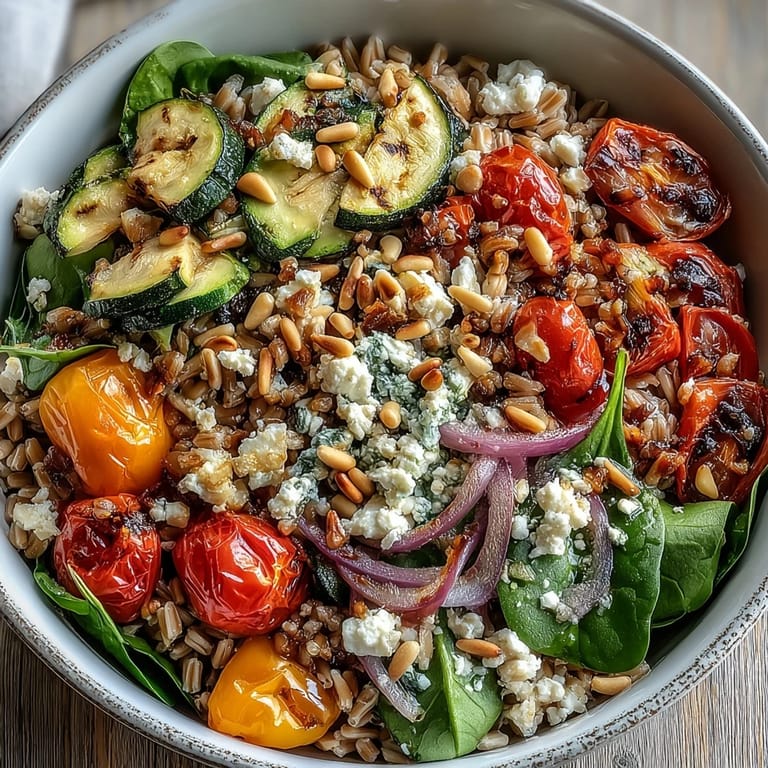
- Feta cheese (60 g, crumbled): The salty tang keeps the whole thing from feeling too light or delicate, grounding all those vegetables in something substantial.
- Fresh parsley and toasted pine nuts: Both optional, but parsley brings a fresh brightness at the end and pine nuts add a subtle richness if you have them.
Tired of Takeout? 🥡
Get 10 meals you can make faster than delivery arrives. Seriously.
One email. No spam. Unsubscribe anytime.
Instructions
- Get the pasta going:
- Boil a large pot of salted water like you're making pasta for a crowd, then add your farro and let it cook according to the package instructions until it's tender but not soft, which usually takes about 20 minutes. You want to hear a slight resistance when you bite into a single piece, not mush.
- Sauté the aromatics:
- While the pasta does its thing, warm olive oil in a large skillet and add your sliced onion and minced garlic, letting them sit for a couple minutes until the kitchen smells absolutely incredible. Don't rush this step because it's where you're building the foundation of flavor.
- Add the vegetables:
- Toss in your zucchini, peppers, and tomatoes, stirring every minute or so as they start to soften around the edges and release their color into the hot oil. After about 6 to 8 minutes, they should be tender enough to eat but still holding their shape and brightness.
- Wilt the spinach:
- Add all the baby spinach at once and it'll look like you've overfilled the pan, but stir it gently and within two minutes it'll collapse down into something silky. The residual heat from the vegetables is enough to soften it perfectly.
- Make the dressing:
- While everything is finishing, whisk together your remaining olive oil, lemon juice, oregano, salt, and pepper in a small bowl, tasting and adjusting as you go because this is your chance to dial in the flavor exactly how you like it.
- Bring it all together:
- Drain your farro and add it to the large bowl along with the cooked vegetables, then pour the dressing over everything and toss gently but thoroughly, making sure every piece gets coated. The warm pasta will finish cooking slightly from the residual heat and help absorb some of that dressing.
- Serve and garnish:
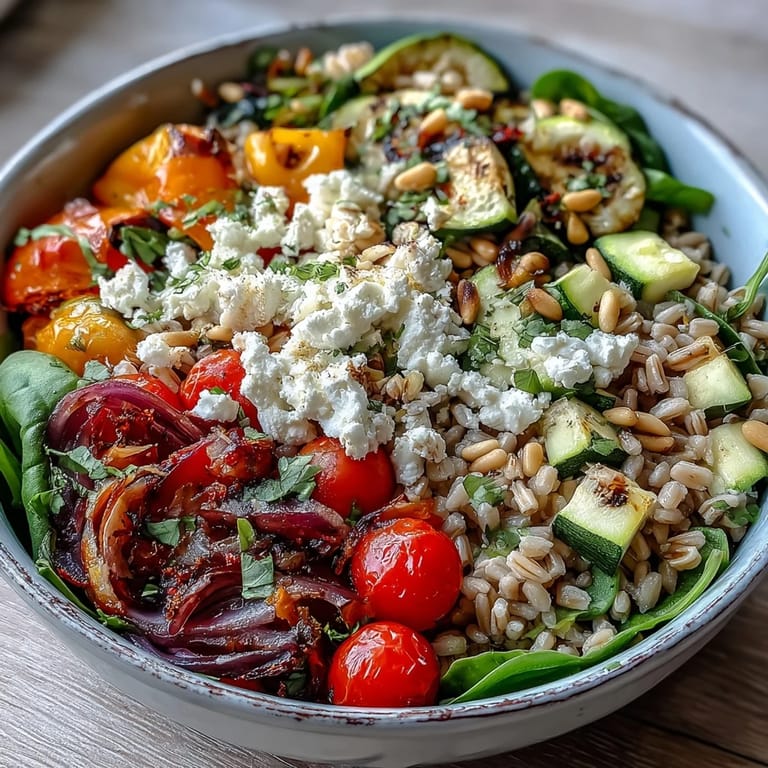
- Divide into bowls, crumble feta over the top, and scatter with parsley and pine nuts if you're feeling generous. It's lovely warm, but honestly just as good at room temperature once it's cooled.
 Pin it
 My friend who usually skips vegetables altogether ate two bowls of this at a dinner party and then started asking me about where to buy farro. There's something disarming about a dish that doesn't announce itself as healthy or virtuous, it just shows up and tastes good.
Why This Works Year-Round
In summer, you're reaching for whatever's abundant at the market and this bowl gives you permission to just throw it in without a plan. Come fall, the same formula works with roasted vegetables instead of raw, or in winter you can swap the fresh spinach for kale and nobody will judge you for making it cozy and warm. The genius of farro is that it tastes equally convincing in all these scenarios, holding everything together without demanding anything specific from you.
Temperature Flexibility
Some dishes have strong opinions about whether they want to be hot or cold, but this one is genuinely happy either way. I've kept leftovers in the fridge and eaten them straight from the bowl the next morning, and the flavors have actually gotten more integrated, like the dressing had time to really settle into every grain. The feta gets a little softer, the vegetables lose that rawness they had before, and somehow it becomes even better.
Ways to Make It Your Own
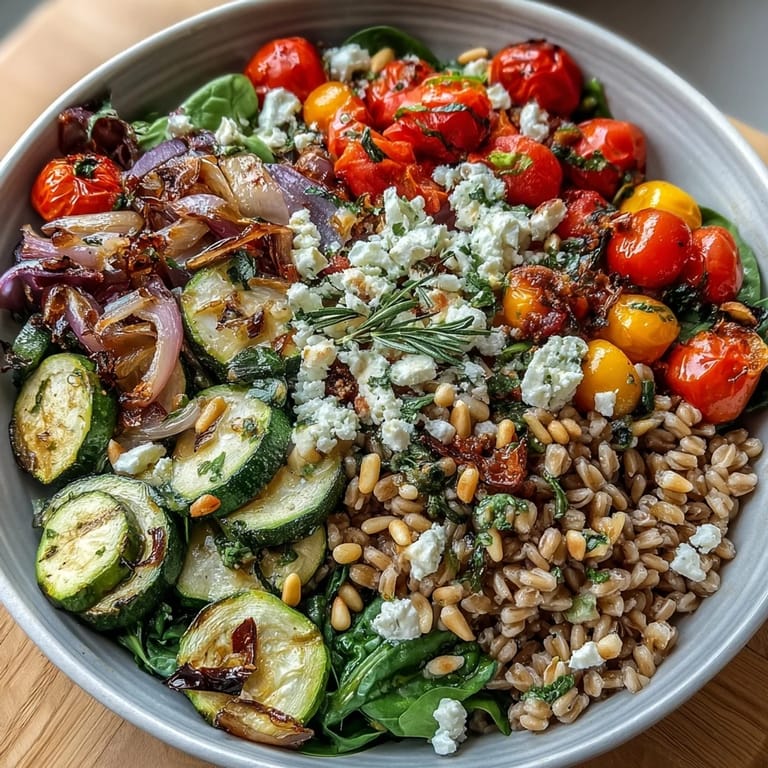
This is honestly more of a template than a strict recipe, which is why I come back to it so often. The ratio of pasta to vegetables to dressing is solid, but what goes into those categories is entirely up to what you have or what you're craving. I've made it with roasted chickpeas for extra protein, stirred in some labneh instead of plain feta, used basil instead of parsley when I had it overflowing in my garden, and even added a handful of pitted olives once when I was feeling dramatic.
- Add cooked chickpeas, white beans, or grilled chicken if you want something more substantial for dinner.
- Try it with whole farro grains instead of pasta if you want something even nuttier and chewier.
- Swap the feta for ricotta, goat cheese, or even a good quality cream cheese if that's what you're working with.
 Pin it
 This bowl has become my go-to when I want something that feels nourishing without fussing, and I keep coming back because it never disappoints. It's the kind of dish that lets you feed people without apology.
Frequently Asked Questions
- → Can I use regular farro instead of farro pasta?
Yes, whole farro works beautifully. Cook it for 20-25 minutes until tender, then proceed with the same assembly and dressing steps.
- → Is this dish suitable for meal prep?
Absolutely. The flavors develop beautifully overnight. Store components separately and combine when ready to eat, or enjoy cold as a grain salad.
- → What protein additions work well?
Chickpeas, grilled chicken, or white beans complement the Mediterranean flavors. For plant-based protein, consider adding quinoa or lentils.
- → Can I make this vegan?
Simply omit the feta cheese or substitute with a plant-based alternative. The dish remains delicious and satisfying without dairy.
- → What other grains can I use?
Whole wheat pasta, quinoa, barley, or brown rice all work wonderfully. Adjust cooking times according to package instructions.
- → How long do leftovers keep?
Stored in an airtight container, leftovers remain fresh for 3-4 days. The vegetables stay vibrant and the farro maintains its texture well.