 Save
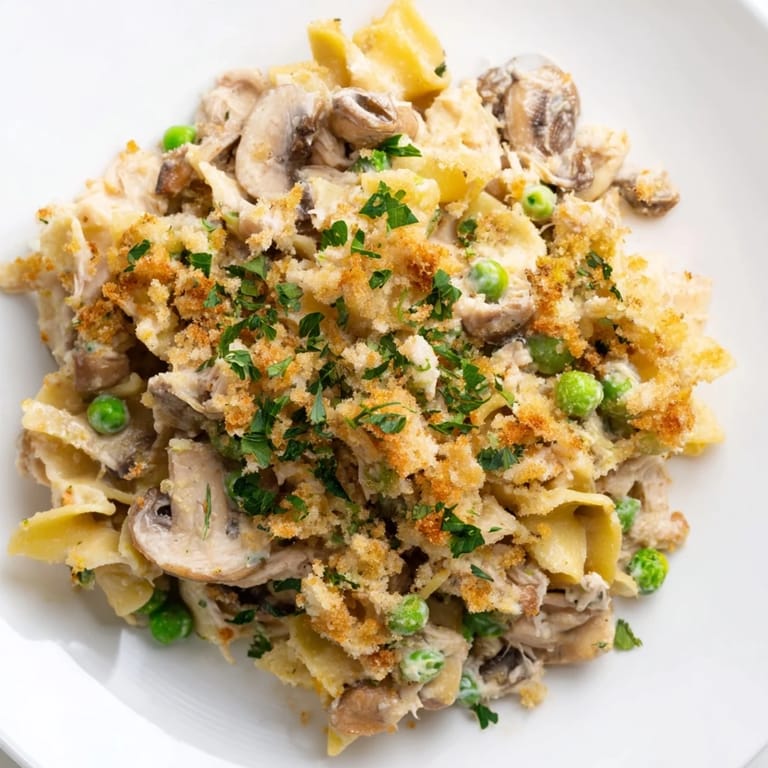
Save My mom's tuna noodle casserole was the kind of dish that arrived at potlucks in a dented aluminum pan, always empty by the end of the night. Years later, I found myself craving that comfort but wanting something a bit more refined, so I started experimenting with better ingredients and fresher vegetables. This version keeps that soul-warming quality but adds depth with sautéed mushrooms, a silky sauce, and a crispy panko topping that actually stays golden. It's become my go-to when I want to feed people something that feels both familiar and thoughtfully made.
I made this for a dinner party on a cold November evening, and something magical happened when everyone took that first bite and their faces softened. One guest asked if I'd been holding out on them all these years, which made me laugh because honestly, this dish just works. There's something about tuna casserole that brings people together, maybe because it's both humble and generous at the same time.
Ingredients
- Egg noodles (12 oz): Keep them slightly underdone since they continue cooking in the oven—I learned this the hard way with mushy casseroles.
- Solid white tuna (2 cans): Drain it well and break it into flakes with a fork; the texture matters more than you'd think.
- Frozen peas (1 cup): Thaw them first so they don't water down the sauce and scatter cold spots throughout.
- Cremini mushrooms (1 cup, sliced): These add an earthy depth that makes the whole dish taste more sophisticated than the original.
- Yellow onion (1 small, finely chopped): This is your flavor foundation—don't skip it or rush the sautéing.
- Celery (1 cup, diced): It softens beautifully and adds a subtle sweetness that balances everything.
- Garlic (2 cloves, minced): Add it after the other vegetables soften so it doesn't burn and turn bitter.
- Unsalted butter (3 tbsp): Use real butter for the roux; it makes the sauce taste like comfort tastes.
- All-purpose flour (3 tbsp): This thickens your sauce—whisk it in carefully to avoid lumps.
- Chicken or vegetable broth (2 cups): Low-sodium lets you control the salt and prevents the dish from tasting overly salty.
- Whole milk (1 cup): This creates richness without making the sauce heavy and one-note.
- Sour cream (1/2 cup): Stir it in off the heat to keep it smooth and creamy; hot sauce can make it break.
- Dijon mustard (1/2 tsp): A small amount adds a subtle tang that lifts all the other flavors.
- Kosher salt and black pepper: Season in layers as you go rather than all at once at the end.
- Panko breadcrumbs (3/4 cup): Don't skip the panko—regular breadcrumbs get soggy, but panko stays crispy and golden.
- Parmesan cheese (1/2 cup, grated): Freshly grated is worth the extra minute; pre-grated versions don't brown the same way.
- Melted butter (2 tbsp): This is what makes the topping actually crunchy instead of just dry.
- Fresh parsley (2 tbsp, optional): A sprinkle at the end adds a fresh, green note that cuts through the richness.
Tired of Takeout? 🥡
Get 10 meals you can make faster than delivery arrives. Seriously.
One email. No spam. Unsubscribe anytime.
Instructions
- Set your oven and prep your vessel:
- Preheat your oven to 400°F and lightly grease a 9x13-inch baking dish—I use butter because it browns better than cooking spray. This gives you time to gather everything else while it heats.
- Get the noodles to al dente:
- Cook the egg noodles in salted boiling water, but pull them out a minute or two before the package says they're done. They'll keep cooking in the oven, and you want them tender, not mushy.
- Build your flavor base:
- Melt butter in a large skillet over medium heat and add the chopped onion and celery first—they need about 3 minutes to start softening. Add the sliced mushrooms and let them release their moisture and turn golden, another 4 minutes or so.
- Add your aromatics:
- Stir in the minced garlic and cook it just until fragrant, maybe 1 minute—this is the smell that tells you you're on the right track.
- Create your sauce foundation:
- Sprinkle the flour over the vegetables and stir constantly for about a minute, letting it coat everything and cook out the raw flour taste. Gradually pour in the broth while stirring, then add the milk and bring everything to a gentle simmer, stirring often until it thickens, about 3 to 4 minutes.
- Finish the sauce smoothly:
- Remove the skillet from heat and stir in the sour cream, Dijon mustard, salt, and pepper—always add sour cream to a hot sauce that's already cooled slightly, never the other way around. Taste and adjust your seasonings here.
- Bring it all together:
- Fold in the drained tuna (breaking it into nice flakes as you go), the thawed peas, and your cooked noodles until everything is evenly coated and combined. The mixture should look creamy and cohesive.
- Transfer to your baking dish:
- Pour the entire mixture into your prepared baking dish and spread it into an even layer with a spatula.
- Make the topping:
- In a small bowl, mix together the panko breadcrumbs, grated parmesan, and melted butter until the mixture looks like coarse sand—every breadcrumb should glisten with butter.
- Top and bake:
- Sprinkle the panko mixture evenly over the casserole, making sure you cover the whole surface. Bake for 20 to 25 minutes until the topping is golden brown and the casserole is bubbling around the edges.
- Rest before serving:
- Let it stand for 5 minutes out of the oven—this lets everything set slightly so it holds together when you serve it. Sprinkle with fresh parsley if you have it.
 Pin it
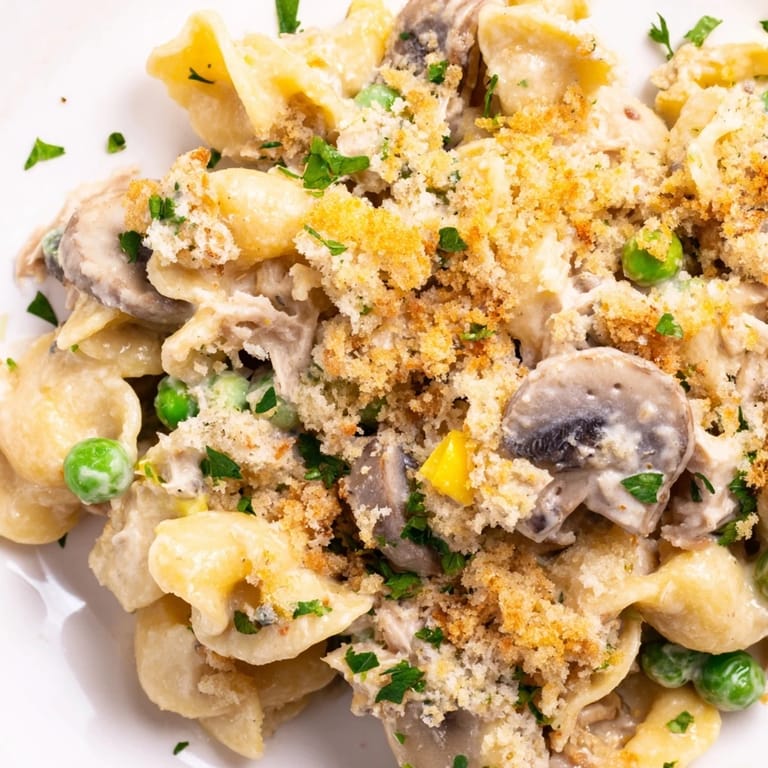
 There's a moment right when the casserole comes out of the oven when the house fills with this warm, savory aroma that makes everyone hungry instantly. That's when I know this dish has done what it's supposed to do.
Make It Your Own
The beauty of this recipe is that it welcomes your personal touch. I've added shredded cheddar or gruyère to the sauce for extra richness, swapped Greek yogurt for the sour cream on nights when I wanted it lighter, and once threw in some fresh dill that turned out to be an inspired move. The core structure stays solid, but these little adjustments make it feel like your version, not just something you copied from a recipe.
Pairing and Serving
This casserole is hearty enough to be the main event, but it shines when paired with something that cuts through the richness. A crisp white wine like Sauvignon Blanc, a simple green salad, or even just some crusty bread for soaking up the sauce rounds out the meal. I've served it at casual weeknight dinners and at more formal gatherings, and it always feels right.
Storage and Reheating
Tuna noodle casserole is actually one of those dishes that sits beautifully in the refrigerator and often tastes even better the next day when all the flavors have had time to get to know each other. Cover it tightly and it keeps for about 3 days. You can reheat it gently in a 325°F oven covered with foil until warmed through, or you can eat it cold straight from the fridge on a lazy afternoon, though I don't recommend microwaving it because the noodles can turn rubbery.
- Make it ahead and bake it the next day if your schedule calls for it.
- Freeze individual portions for quick meals that taste homemade, not hastily thrown together.
- If the topping softens on the second day, pop it under the broiler for 2 minutes before serving to crisp it back up.
 Pin it
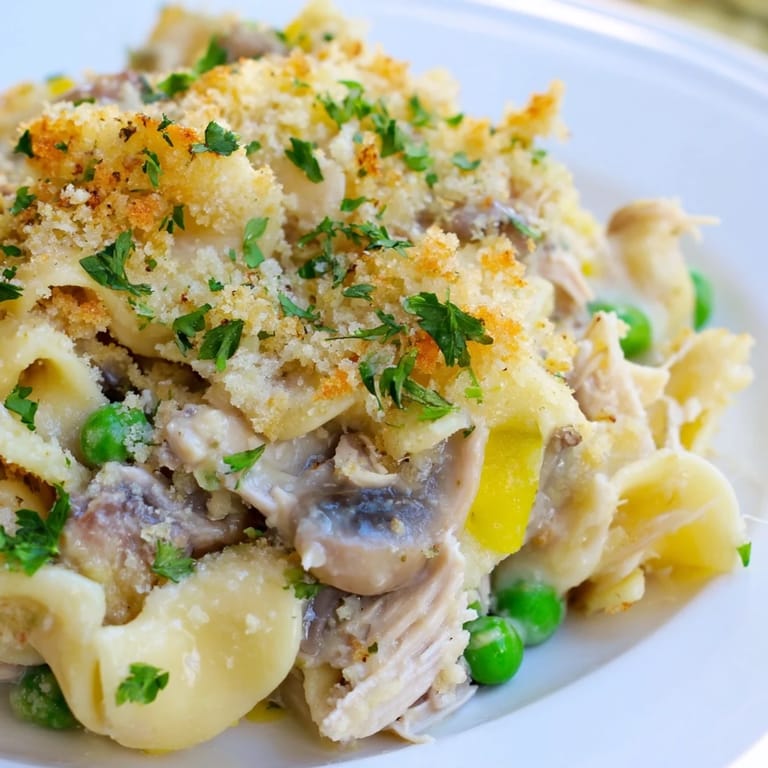
 This tuna noodle casserole sits right at the intersection of nostalgic and thoughtful, of casual and cared-for. It's the kind of dish that reminds you why comfort food earned its name in the first place.
Frequently Asked Questions
- → What type of noodles works best?
Egg noodles are ideal for their tenderness and ability to absorb the creamy sauce without becoming mushy.
- → Can I substitute the tuna in this dish?
While solid white tuna is recommended for its texture and flavor, you can try other flaky white fish varieties, taking care not to overpower the delicate sauce.
- → How do I achieve a crispy topping?
Mixing panko breadcrumbs with melted butter and parmesan cheese before sprinkling ensures a golden, crunchy finish after baking.
- → Are there ways to lighten the sauce?
Replacing sour cream with Greek yogurt can reduce richness while maintaining creaminess.
- → What is a good side pairing?
A crisp white wine, such as Sauvignon Blanc, complements the creamy and savory elements of the dish nicely.