 Save
Save My neighbor brought a pavlova to a summer garden party, and I watched people's faces light up as they bit into that crispy shell that gave way to chewy sweetness underneath. I'd always thought meringue was intimidating, something only bakeries could master, but seeing how simple the technique actually was changed everything. That afternoon, surrounded by strawberries and cream, I decided to stop overthinking it and just try. The result was so rewarding that I've made pavlovas ever since, each one a little reminder that showstopping desserts don't have to be complicated.
I'll never forget making this for my mom's birthday last spring, how the kitchen smelled like vanilla and the oven's gentle warmth while everyone chatted in the living room. When I brought it out and saw her eyes widen, I understood why people get excited about making desserts for others—it's not really about the food, it's about that moment of shared delight. She took a bite, closed her eyes, and said it tasted like celebration, and honestly, that's been my favorite compliment ever.
Ingredients
- Egg whites (4 large, room temperature): Cold eggs won't whip to stiff peaks, so let them sit out for 20 minutes before starting—this small step makes the difference between meringue and disappointment.
- Superfine sugar (1 cup): The finer granules dissolve more completely into the egg whites, creating that signature glossy finish instead of grainy texture.
- Cornstarch (1 tsp): This magical ingredient keeps the meringue from weeping and adds a subtle chewiness to the center that makes each bite perfect.
- White vinegar (1 tsp): It stabilizes the egg whites and adds a whisper of tang that balances the sweetness beautifully.
- Vanilla extract (1 tsp for meringue, 1 tsp for cream): Don't skip this—it adds depth without being obvious, just makes everything taste more like itself.
- Heavy cream (1 cup, chilled): The colder it starts, the quicker it whips, so refrigerate the bowl and beaters too if you have time.
- Powdered sugar (2 tbsp): Use this for the cream instead of granulated sugar because it dissolves instantly and keeps the texture silky smooth.
- Fresh strawberries (2 cups, hulled and sliced): Taste them before you buy—choose berries with a deep red color all the way through, and macerate them with a bit of sugar to draw out their natural juices.
- Fresh mint (optional): A few leaves scattered on top add visual beauty and a subtle freshness that makes the whole dessert feel a bit more refined.
Tired of Takeout? 🥡
Get 10 meals you can make faster than delivery arrives. Seriously.
One email. No spam. Unsubscribe anytime.
Instructions
- Prepare your workspace:
- Preheat the oven to 275°F and line a baking sheet with parchment paper, drawing a 9-inch circle as your guide. Make absolutely sure your mixing bowl and beaters are clean and dry—any trace of grease will sabotage your egg whites, so wash them once more if you're feeling unsure.
- Start whipping:
- Place the room-temperature egg whites in your bowl and beat on medium speed until soft peaks form, which means the mixture holds a shape but the tips curl over. You'll notice the transition from frothy to foamy, and this usually takes about 3 to 4 minutes of beating.
- Add sugar gradually:
- This is where patience matters—add the superfine sugar one tablespoon at a time while the mixer runs on high, beating for about 10 to 15 seconds between each addition. You're building structure and incorporating sweetness slowly so it all dissolves properly, creating those glossy, stiff peaks that stand straight up when you lift the beater.
- Fold in the secret ingredients:
- Sprinkle the cornstarch, vinegar, and vanilla over the meringue, then gently fold everything together using a spatula with slow, careful motions—don't beat or stir aggressively, or you'll deflate all that air you just whipped in. The mixture should look glossy and voluminous, ready to hold its shape.
- Shape your nest:
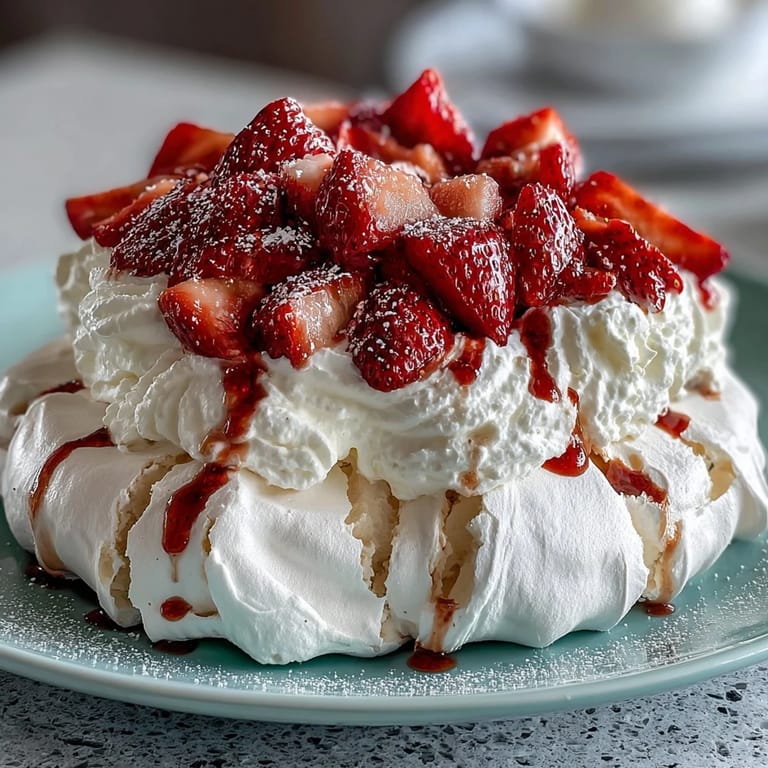
- Spoon the meringue onto your parchment circle, using the spatula to spread it into a disc about 1 inch thick, with slightly raised edges to create a shallow bowl. This nest shape naturally catches the cream and berries, and it looks intentional rather than accidental.
- Bake low and slow:
- Slide the tray into the 275°F oven for 1 hour 15 minutes—the meringue should turn pale, crispy, and very slightly cracked on the surface, with a creamy interior still. When time's up, turn off the oven and crack the door open just a bit, letting it cool completely inside for at least another hour so there's no temperature shock.
- Prepare the cream:
- While the meringue cools, place a bowl and beaters in the freezer for a few minutes, then pour in your cold heavy cream and whip it with powdered sugar and vanilla until soft peaks form. This usually takes about 2 to 3 minutes, and you want to stop before it becomes grainy or butter-like.
- Macerate the berries:
- Toss your sliced strawberries with a tablespoon of granulated sugar and let them sit in a separate bowl for about 10 minutes—they'll release their own juice, creating a light syrup that tastes fresh and intentional. This waiting period is perfect for letting the meringue cool.
- Assemble with care:
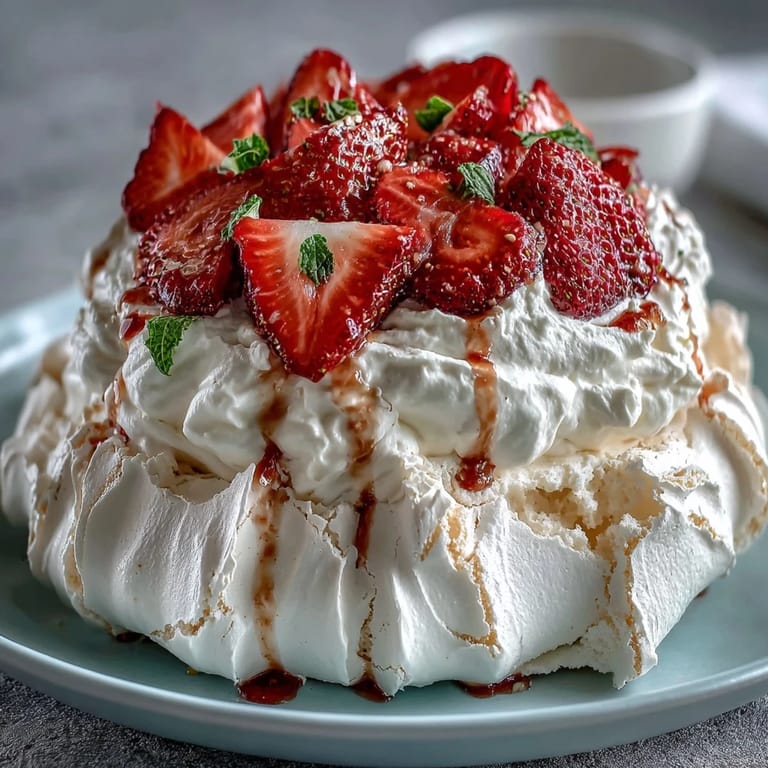
- Carefully transfer the cooled meringue to your serving plate, then spread the whipped cream evenly across the center, leaving some of the crispy edges visible. Pile the macerated strawberries on top, scatter a few mint leaves if you're using them, and serve right away while everything is at its best.
 Pin it
 There was an evening when I made this for a friend going through a rough patch, and as we sat outside eating it together, she laughed for the first time in weeks. I realized then that pavlovas aren't just dessert—they're a way of saying I took time to create something beautiful for you, and that matters more than any words could express.
Why This Dessert Works
The magic of pavlova lies in its simplicity and its drama—four ingredients transformed by patience and precision into something that looks like you've trained in a professional kitchen. The three-part texture (crispy outside, chewy middle, creamy center) keeps your mouth interested with every bite, and the strawberries provide a natural tartness that cuts through richness so you don't feel overstuffed. It's a dessert that invites people to slow down and actually taste what they're eating, which feels rare and special in a world of mindless eating.
Timing and Flexibility
You can bake the meringue a day or two ahead and store it in an airtight container, which means you only need to whip cream and arrange berries on serving day—a real advantage when you're planning a gathering and want to minimize last-minute stress. The strawberries release the most juice within 30 minutes of maceration, so prep them closer to serving time rather than hours ahead if you want them to stay distinct rather than dissolving into the cream. This flexibility is one reason I return to pavlova again and again—it feels impressive but doesn't demand that you be hovering in the kitchen at the final moment.
Variations and Adaptations
While strawberries are the classic choice, I've experimented with mixed berries, passion fruit curd drizzled through the cream, and even a thin layer of dark chocolate shavings between the cream and meringue—each version feels fresh and intentional rather than like I'm just following a formula. The meringue base is neutral enough to pair with almost any topping you're craving, so think of it as a canvas that invites creativity rather than a rigid structure. Once you've made it once successfully, you'll find yourself wanting to play with it, which is exactly when cooking becomes genuinely fun.
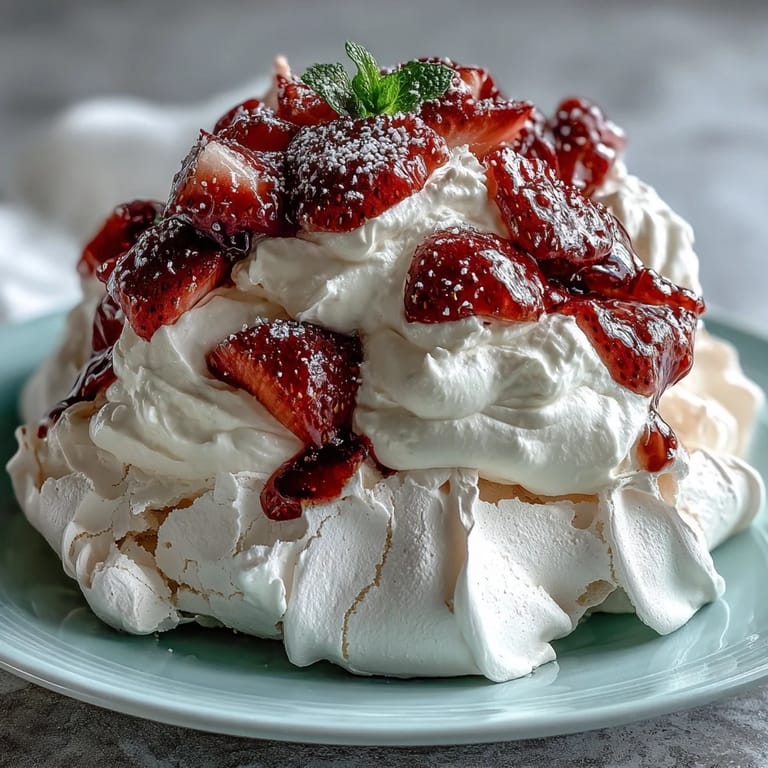
- Try a berry compote drizzled over the whipped cream for deeper flavor and beautiful visual contrast.
- A dusting of edible flowers or pomegranate seeds adds elegance and a touch of tartness that plays well with the sweetness.
- For chocolate lovers, spread a thin layer of chocolate ganache on the baked meringue before adding the cream and berries.
 Pin it
 Pavlova reminds me that baking is partly science and partly theater, and the confidence you build from mastering one technique opens doors to so many others. Every time someone takes that first bite and their expression shifts to pure delight, you'll understand why this dessert has stayed beloved for generations—it's simply magic on a plate.
Frequently Asked Questions
- → How do you achieve crisp yet chewy meringue?
Beat egg whites to stiff peaks and bake at a low temperature for over an hour, then allow it to cool slowly inside the oven to develop the perfect texture.
- → What is the purpose of cornstarch and vinegar in the meringue?
Cornstarch adds stability and a tender texture while vinegar helps to stabilize the egg whites and enhance volume.
- → How should the whipped cream be prepared for this dessert?
Chill the cream and bowl, then beat with powdered sugar and vanilla until soft peaks form for a light, airy topping.
- → Can other fruits be used instead of strawberries?
Yes, a mix of berries or other fresh fruits can be substituted to complement the sweet cream and meringue base.
- → What are the best storage tips for leftovers?
Store any leftovers in the fridge, but note the meringue will soften and lose its crispness over time.