 Save
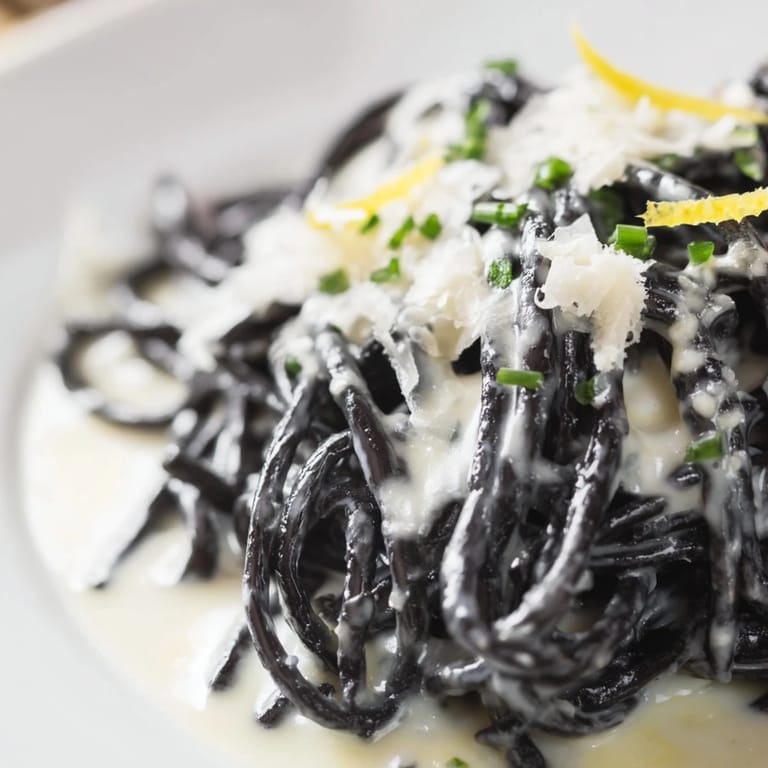
Save My neighbor slid a plate across the table without a word, and I just stared. The pasta was jet black, glossy, coiled like something pulled from the ocean floor. I hesitated, fork hovering, until she laughed and told me to trust her. One bite and I understood: this wasn't just pasta, it was theater on a plate, briny and rich and utterly unforgettable.
I made this for a small birthday dinner once, plating it in wide white bowls so the black pasta looked even more dramatic. My friend gasped when I brought it out, and for a moment I felt like I was running a tiny restaurant in my own kitchen. We ate slowly, savoring every bite, and nobody wanted the night to end.
Ingredients
- Squid ink pasta: The star of the show, naturally black and briny, with a tender bite when cooked just right; look for good quality dried or fresh from Italian markets.
- Unsalted butter: The base of the sauce, adding silky richness without overpowering the delicate squid ink flavor.
- Shallot: Sweeter and milder than onion, it melts into the sauce and adds a gentle aromatic backbone.
- Garlic: Just two cloves, minced fine, blooming in butter for that warm, fragrant foundation.
- Dry white wine: Brightens everything, cutting through the cream and adding a subtle acidity that makes the sauce sing.
- Heavy cream: Transforms the wine reduction into a luscious, glossy sauce that coats every strand of pasta.
- Lemon zest: A tiny addition that lifts the whole dish, adding freshness without making it citrusy.
- Parmigiano-Reggiano: Salty, nutty, aged perfection; grate it fresh for the best texture and flavor.
- Chives: A pop of green against the black, subtle onion flavor, and a touch of elegance on top.
Tired of Takeout? 🥡
Get 10 meals you can make faster than delivery arrives. Seriously.
One email. No spam. Unsubscribe anytime.
Instructions
- Boil the pasta:
- Bring a large pot of well-salted water to a rolling boil and cook the squid ink pasta until al dente, following the package timing closely. Reserve half a cup of that starchy cooking water before draining; it is liquid gold for adjusting the sauce later.
- Sauté the aromatics:
- Melt butter in a large skillet over medium heat, then add the finely chopped shallot and let it soften until translucent, about two to three minutes. Toss in the garlic and stir for just thirty seconds until it smells incredible but hasn't browned.
- Deglaze with wine:
- Pour in the white wine and let it bubble and reduce for a few minutes, scraping up any flavorful bits from the bottom of the pan. You will see the liquid reduce by about half, and the alcohol will cook off, leaving just brightness behind.
- Add the cream:
- Lower the heat and stir in the heavy cream and lemon zest, letting it simmer gently until it thickens just slightly. Season with salt and pepper, tasting as you go, because the pasta and cheese will add more saltiness later.
- Toss and finish:
- Add the drained pasta directly to the skillet and toss everything together, letting the sauce cling to each strand. If it looks too thick, add reserved pasta water a tablespoon at a time until the sauce is silky and glossy, coating the pasta like a velvet glove.
- Serve immediately:
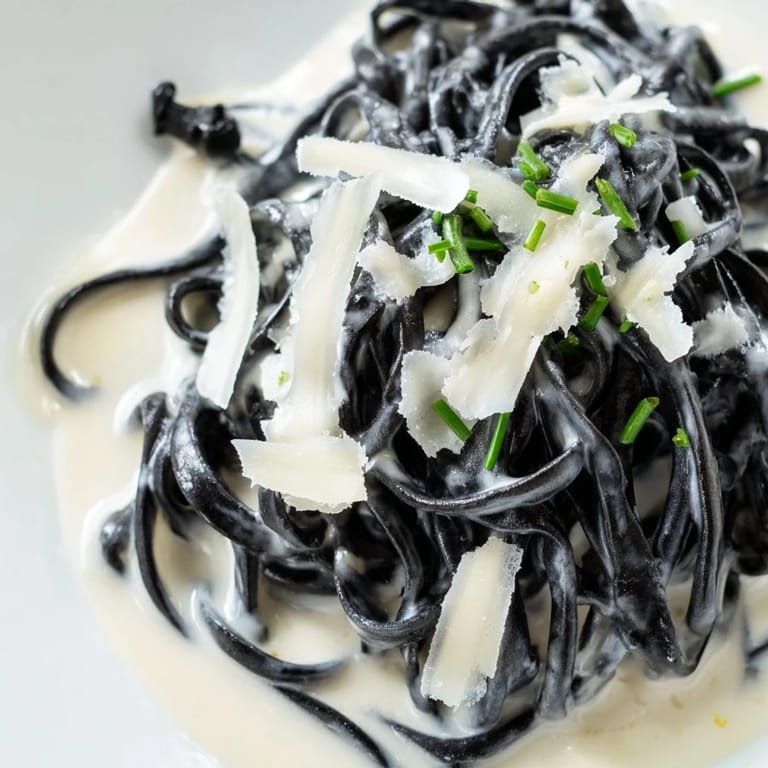
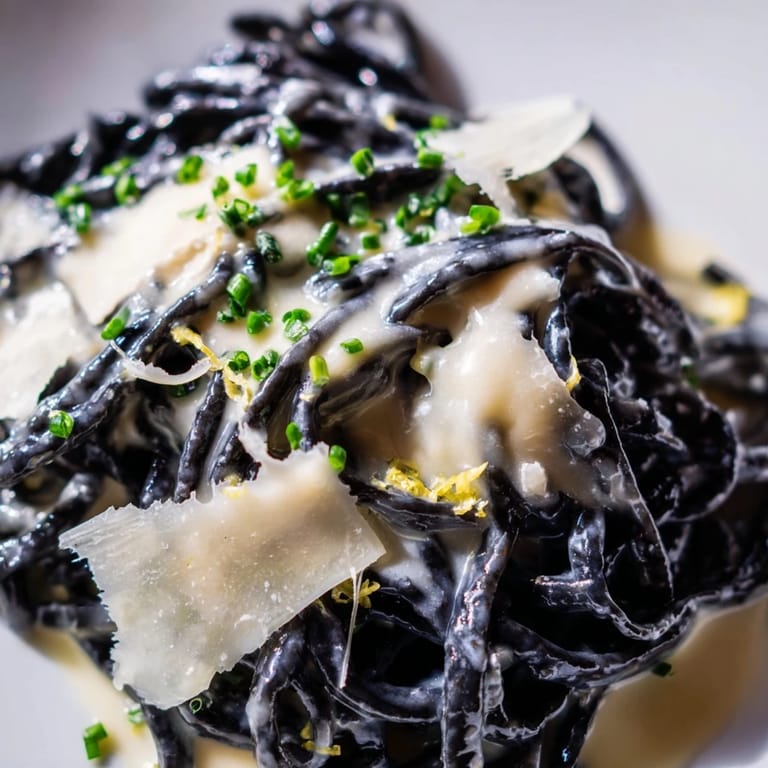
- Plate the pasta in wide bowls, then shower it with freshly grated Parmigiano-Reggiano and a sprinkle of chopped chives. A lemon wedge on the side is optional, but a quick squeeze right before eating makes everything taste brighter.
 Pin it
 The first time I served this, someone asked if I had ordered takeout from a fancy Italian place. I smiled and said nothing, letting them believe it for just a moment. That is the magic of squid ink pasta: it looks like something you would pay thirty dollars for, but you made it in your own kitchen, and that secret feels almost as good as the taste.
Choosing Your Pasta
Fresh squid ink pasta cooks faster and has a slightly softer texture, almost delicate, while dried holds its shape better and has a firmer bite. I have used both, and honestly, either works beautifully as long as you watch the clock and taste for doneness. If you cannot find squid ink pasta locally, specialty Italian shops or online retailers usually carry it, and it keeps well in the pantry for months.
Wine Pairing and Variations
A crisp Pinot Grigio or Vermentino cuts through the cream and complements the briny notes without overwhelming the dish. If you want to make it heartier, sauté shrimp or calamari in the butter before adding the shallot, then set the seafood aside and fold it back in at the end. Even a handful of cherry tomatoes, halved and warmed through, can add a sweet pop of color and acidity.
Storing and Reheating
This pasta is best eaten fresh, right off the stove, when the sauce is glossy and the pasta still has that perfect chew. Leftovers can be refrigerated in an airtight container for up to two days, but cream sauces sometimes tighten up in the fridge. Reheat gently in a skillet over low heat, adding a splash of cream or pasta water to bring the sauce back to life, stirring constantly so it does not break.
- Always reheat slowly; high heat will cause the cream to separate and turn grainy.
- Add a tiny drizzle of olive oil when reheating to help the sauce come together smoothly.
- Freshen it up with a handful of chopped herbs or a squeeze of lemon before serving again.
 Pin it
 This dish has a way of making any meal feel special, even if it is just a quiet Tuesday night. Plate it with confidence, and watch as everyone leans in a little closer, ready to taste something memorable.
Frequently Asked Questions
- → Can I use fresh squid ink pasta instead of dried?
Yes, fresh squid ink pasta works wonderfully and may require less cooking time. Check the package instructions and taste for al dente texture, as fresh pasta typically cooks faster than dried varieties.
- → What can I add to make this more substantial?
Sautéed shrimp, pan-seared calamari, or grilled scallops complement the cream sauce beautifully. Add them during the final tossing step to avoid overcooking delicate seafood.
- → How do I prevent the sauce from becoming too thick?
Reserve pasta water while draining and add it gradually, one tablespoon at a time, until you achieve a silky, glossy consistency that lightly coats each strand.
- → What wine pairs best with this dish?
A crisp Italian white wine like Pinot Grigio, Vermentino, or Gavi complements the rich cream sauce and squid ink pasta beautifully, cutting through the richness with acidity.
- → Can I prepare this ahead of time?
The cream sauce can be prepared up to 2 hours ahead and gently reheated. Cook pasta just before serving and toss with the sauce immediately for best texture and presentation.
- → Are there dairy-free alternatives?
Substitute heavy cream with coconut milk or cashew cream for a creamy texture. Use olive oil instead of butter and nutritional yeast or dairy-free Parmesan alternatives for garnish.