 Save
Save My neighbor's kitchen window was open one August evening, and the smell of garlic and wine drifting out stopped me mid-step on the sidewalk. She waved me in, handed me a fork, and I tasted seafood linguine for the first time, standing at her stove while she told me about summers in Liguria. The shrimp were sweet, the broth soaked into every strand of pasta, and I knew I'd be making this myself by the weekend. I did, and I've been making it ever since, tweaking the garlic, adding more lemon, learning how to coax open every last shell.
I made this for my sister's birthday last spring, and she still brings it up every time we talk about food. She doesn't cook much herself, but she stood in my kitchen that night watching me toss the clams into the wine, asking questions, taking photos. When we sat down to eat, she went quiet for the first three bites, then looked up and said it tasted like vacation. That's exactly what it should taste like.
Ingredients
- Large shrimp, peeled and deveined: Look for shrimp that smell like the sea, not fishy or like ammonia, and if they're frozen, thaw them gently in the fridge so they stay firm and sweet.
- Fresh clams, scrubbed: Tap any open clams before cooking, they should close up if they're alive, and always discard the ones that stay shut after steaming because they were already gone.
- Fresh mussels, scrubbed and debearded: Pull that fibrous beard off just before cooking, not hours ahead, and give them a cold water rinse to get rid of any grit hiding in the shells.
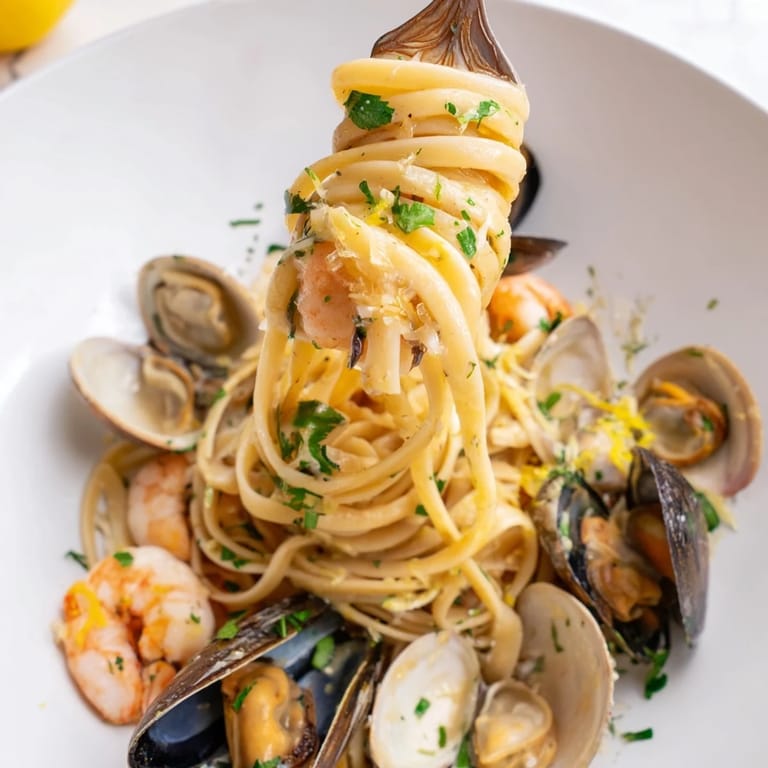
- Dried linguine: This shape is perfect because it's wide enough to grab onto bits of garlic and parsley, but still delicate enough to twirl gracefully around a fork.
- Extra virgin olive oil: Use something you'd actually want to taste, not the dusty bottle in the back of the cupboard, because it flavors the entire base of the dish.
- Garlic cloves, thinly sliced: Slicing instead of mincing gives you sweet, golden pieces that soften into the sauce rather than burning into bitterness.
- Small shallot, finely chopped: Shallots add a mild, almost floral sweetness that balances the brininess of the shellfish without overpowering the garlic.
- Red pepper flakes: Just a pinch wakes everything up, but you can skip it entirely if you're cooking for someone who thinks black pepper is spicy.
- Dry white wine: Pour something you'd drink, like a Pinot Grigio or Sauvignon Blanc, because if it tastes sour in the glass it'll taste sour in the pan.
- Fish or chicken stock: Fish stock is ideal if you can find it, but good chicken stock works beautifully and won't make anyone miss the difference.
- Unsalted butter: This goes in at the end to make the sauce silky and round out all the sharp, bright edges from the wine and lemon.
- Lemon zest and juice: The zest brings fragrance and the juice cuts through the richness, so use a whole fresh lemon and taste as you go.
- Fresh parsley: Flat-leaf parsley tastes greener and less bitter than curly, and it should go on at the very end so it stays bright and doesn't wilt into the background.
Tired of Takeout? 🥡
Get 10 meals you can make faster than delivery arrives. Seriously.
One email. No spam. Unsubscribe anytime.
Instructions
- Boil the pasta:
- Bring a large pot of salted water to a rolling boil, then cook the linguine until it still has a slight bite in the center, usually a minute or two less than the package suggests. Reserve half a cup of the starchy pasta water before draining, it's the secret to making everything come together later.
- Start the sauce base:
- Heat olive oil in a large, deep skillet over medium heat, then add the garlic and shallot, stirring gently until they turn fragrant and translucent but not brown. If using red pepper flakes, toss them in now so they bloom in the oil.
- Sear the shrimp:
- Turn the heat up to medium high, add the shrimp in a single layer, and let them sizzle undisturbed for about a minute per side until they curl and turn pink at the edges. Pull them out onto a plate so they don't overcook while you deal with the shells.
- Steam the shellfish:
- Add the clams and mussels to the skillet, pour in the white wine, and cover with a lid to trap the steam. Let them cook for three to four minutes, shaking the pan once or twice, until most of the shells pop open.
- Build the broth:
- Pour in the stock, bring everything to a gentle simmer, and let it cook uncovered for a few minutes to concentrate the flavors. Return the shrimp to the pan so they can warm through without turning rubbery.
- Toss the pasta:
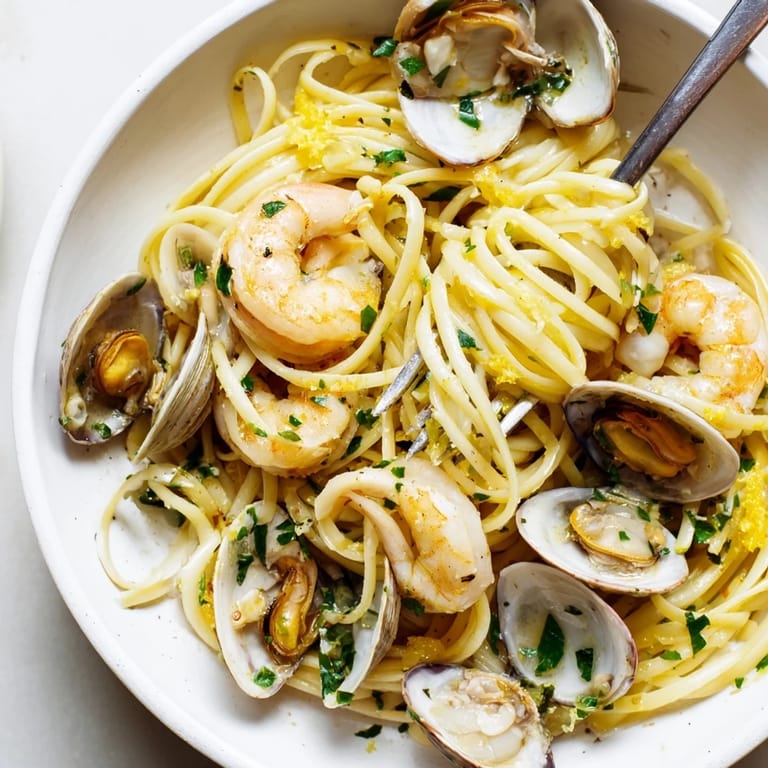
- Add the drained linguine, a splash of the reserved pasta water, the butter, lemon zest, and juice, then toss everything together over low heat using tongs until the pasta is glossy and coated. Taste and adjust with salt and pepper, remembering the shellfish and pasta water are already salty.
- Serve:
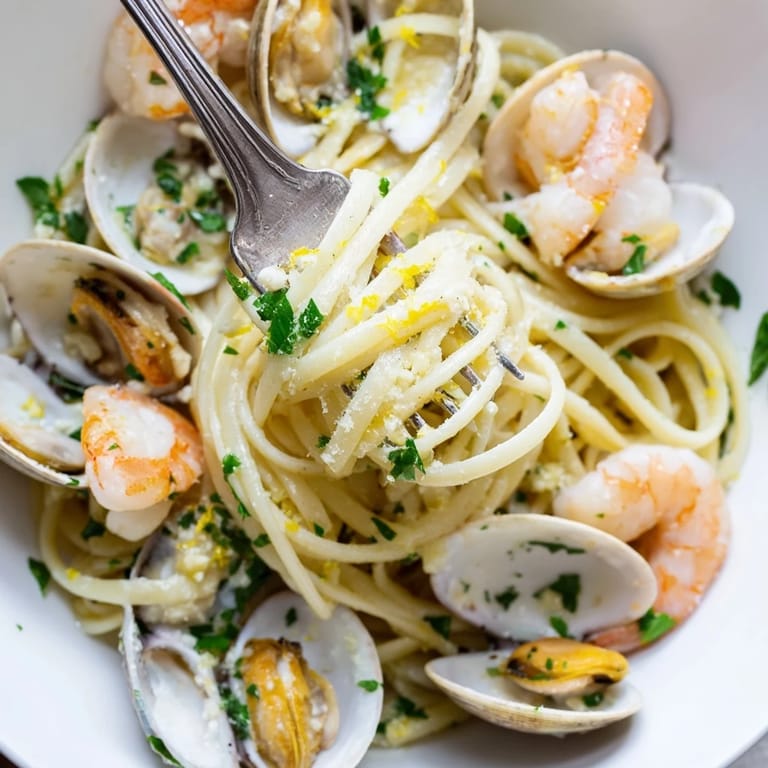
- Divide the linguine and seafood among shallow bowls, making sure everyone gets a mix of shrimp, clams, and mussels. Scatter parsley over the top and tuck a lemon wedge on the side.
 Pin it
 One night I made this for a friend who'd just moved across the country and was feeling unmoored in a new city. We ate it on my back porch with a bottle of cold white wine, and she said it was the first meal that made her new apartment feel less temporary. Food does that sometimes, it anchors you when everything else is shifting. I think about that dinner whenever I make this now.
Choosing Your Seafood
The seafood counter can be intimidating, but the best strategy is to ask what came in that morning and build your dish around that. If the clams look tired but the mussels are plump and shiny, go heavier on mussels. If you can get your hands on fresh calamari or a few scallops, toss those in too and adjust the cooking time so nothing gets tough. The dish is forgiving as long as everything you use is fresh and smells clean, like cold saltwater and nothing else.
Getting the Pasta Right
Undercooking the linguine by a minute or two is essential because it finishes cooking in the sauce and soaks up all that garlicky, winey broth. I learned this the hard way after serving a batch where the pasta was already soft and it turned into a mushy tangle by the time it hit the plates. Now I pull it when it still feels a little firm and chalky in the center, and it always comes out perfect after a minute of tossing in the pan.
What to Serve Alongside
This dish is rich enough to stand on its own, but a simple green salad with lemon vinaigrette and a basket of crusty bread for mopping up the sauce turns it into a full meal. I also like putting out a small bowl of good olive oil and flaky salt for dipping the bread between bites. If you want to go all in, open a bottle of chilled Vermentino or Pinot Grigio and pour it generously, the wine in the glass should echo what's in the pan.
- Keep a loaf of sourdough or ciabatta warming in the oven so it's hot when you sit down to eat.
- A handful of arugula tossed with olive oil and lemon makes a peppery contrast to the sweet seafood.
- If you have any leftover sauce, save it in the fridge and toss it with pasta the next day for lunch.
 Pin it
 This is the kind of meal that makes people lean back in their chairs and sigh, the kind that turns a regular Tuesday into something worth remembering. I hope it does the same for you.
Frequently Asked Questions
- → How do I know if clams and mussels are fresh?
Purchase seafood the day of cooking. Fresh clams and mussels should have tightly closed shells. Before cooking, discard any with broken shells or that don't close when tapped. After cooking, discard any that failed to open.
- → Can I prepare this dish ahead of time?
Cook the linguine and seafood components separately, then combine just before serving. The sauce begins to separate if left sitting, so this is best enjoyed immediately after assembly for optimal texture and flavor.
- → What wine should I use for the sauce?
Choose a crisp, dry white wine like Pinot Grigio, Vermentino, or Sauvignon Blanc. Avoid oaky wines as they can overpower the delicate seafood. The same wine pairs beautifully for drinking alongside the meal.
- → How can I adjust the spice level?
The red pepper flakes are entirely optional. Start with ¼ teaspoon if you prefer gentle heat, or omit completely for a milder preparation. Add to taste during cooking rather than at the end.
- → What are good substitutions for shellfish?
Substitute or combine with calamari, scallops, or white fish fillets. Adjust cooking times accordingly—scallops need only 2-3 minutes per side, while calamari requires 3-4 minutes to prevent toughness.
- → Why is reserved pasta water important?
Pasta water contains starch that emulsifies with oil and butter, creating a silky sauce that clings to the noodles. This transforms the dish from wet to beautifully coated. Start with ¼ cup and add more as needed.