 Save
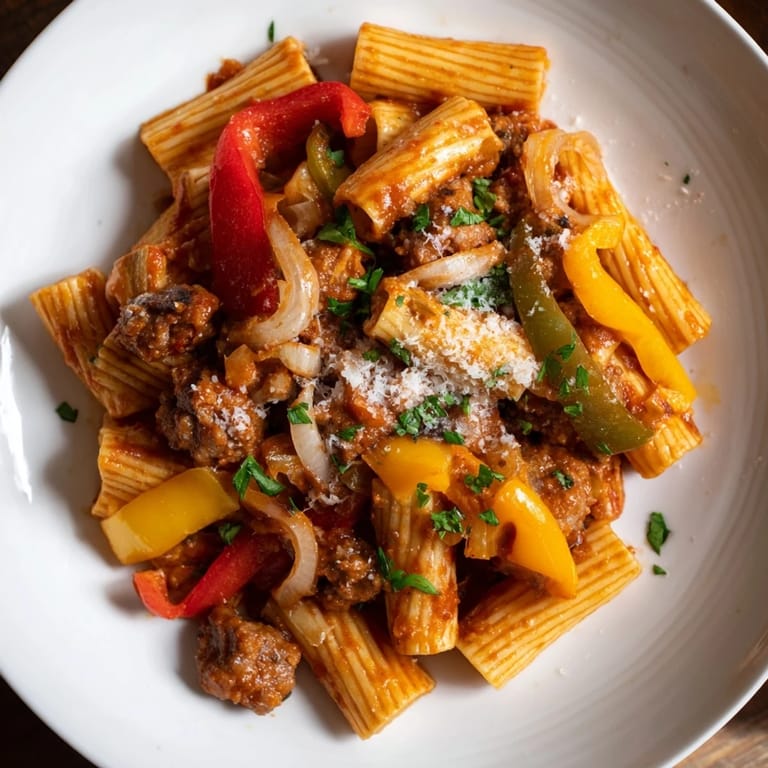
Save There's something about the smell of sausage hitting a hot pan that just stops you mid-conversation. My neighbor Maria brought this dish to a potluck years ago, and I watched people go back for thirds without even trying anything else on the table. When she finally shared how simple it was—just good sausage, peppers, and tomato sauce—I felt a little foolish for thinking it required some secret technique. Now it's the first thing I make when I want something hearty but don't have the energy for fussiness.
I made this for my partner's family dinner once, and his mother kept asking what wine I'd paired with it. When I told her it was just what the recipe suggested, she looked genuinely surprised that something so satisfying didn't require more fussing. That moment taught me that good food doesn't announce itself—it just quietly wins people over.
Ingredients
- Italian sausage (1 lb): The backbone of this dish—choose mild if you want the peppers to shine, spicy if you like a kick that lingers. Removing the casing lets it break apart into small, flavorful pieces that coat the pasta evenly.
- Bell peppers (3 colors, sliced): The mix of red, yellow, and green isn't just pretty; each adds its own sweetness and slight flavor variation. Slice them thick enough that they soften without falling apart.
- Onion (1 large, thinly sliced): This is where the magic happens—low and slow cooking turns these into something almost jam-like and sweet.
- Garlic (3 cloves, minced): Don't skip the mincing step; it dissolves into the sauce and perfumes everything.
- Penne or rigatoni (12 oz): The ridges catch sauce, which is why smooth pasta feels wrong here. Cook it slightly under package time so it stays a little firm.
- Crushed tomatoes (14 oz can): San Marzano if your budget allows, but any good quality brand works. The acid balances the richness of the sausage.
- Tomato paste (2 tbsp): This deepens the tomato flavor without watering everything down; stir it in before adding the canned tomatoes.
- Oregano and basil (dried, 1 tsp and 1/2 tsp): These herbs need the heat to wake up, so don't add them raw. Fresh would overpower the delicate balance.
- Red pepper flakes (1/2 tsp, optional): A whisper of heat that makes people wonder what they're tasting.
- Olive oil (2 tbsp): Use something you'd actually pour on bread, not the cheapest bottle.
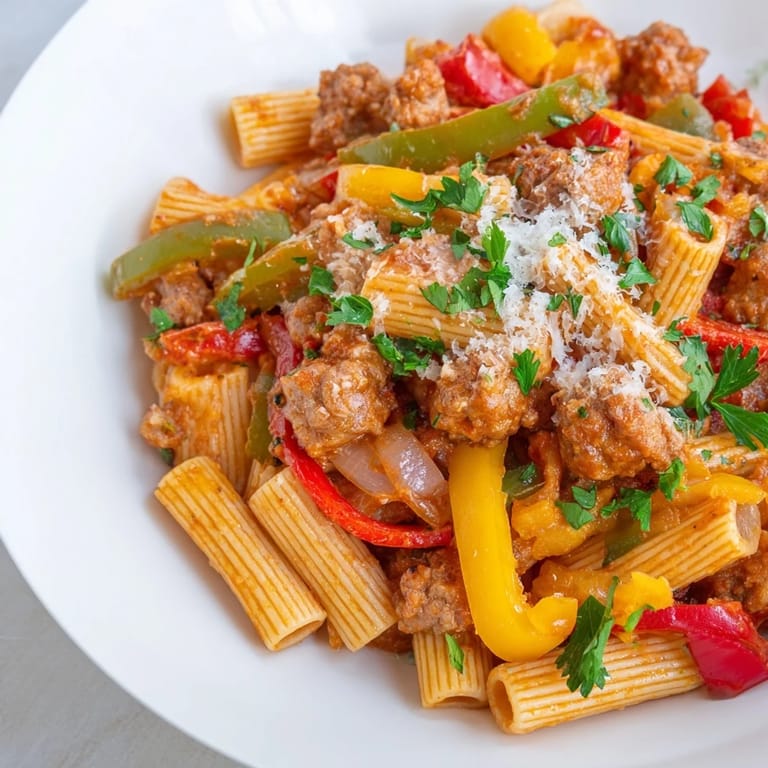
- Fresh parsley (1/4 cup) and Parmesan: These finish the dish—parsley adds freshness that cuts through the richness, and Parmesan adds umami that brings everything together.
Tired of Takeout? 🥡
Get 10 meals you can make faster than delivery arrives. Seriously.
One email. No spam. Unsubscribe anytime.
Instructions
- Start the pasta:
- Bring a large pot of well-salted water to a rolling boil. The water should taste like the sea. Drop in your pasta and set a timer for one minute less than the box says—you want it to have some resistance when you bite down.
- Brown the sausage:
- While the pasta cooks, heat olive oil in your skillet over medium heat until it shimmers. Crumble in the sausage and let it sit undisturbed for a minute so it gets a golden crust, then break it apart and stir occasionally until no pink remains, about 5-7 minutes. This browning is where the flavor deepens.
- Soften the peppers:
- Push the sausage to the side and add your peppers and onions to the same pan. Don't rush this part—let them sit and caramelize for 5-6 minutes, stirring occasionally. You want the edges to brown slightly and the onions to become soft and almost translucent.
- Add the aromatics:
- Scatter the minced garlic over everything and stir constantly for about a minute. When the whole kitchen smells like garlic, you'll know it's done.
- Build the sauce:
- Stir in the tomato paste first and let it cook for a minute, coating the vegetables. This prevents lumps when you add the crushed tomatoes. Pour in the canned tomatoes, dried oregano, basil, and red pepper flakes. Season with salt and pepper.
- Simmer and meld:
- Let everything bubble gently for 5 minutes, then return the sausage to the pan and stir well. Simmer for another 3-4 minutes so the flavors blend. If the sauce looks too thick, splash in some of the reserved pasta water a little at a time until it coats a spoon but still clings to the pasta.
- Combine and finish:
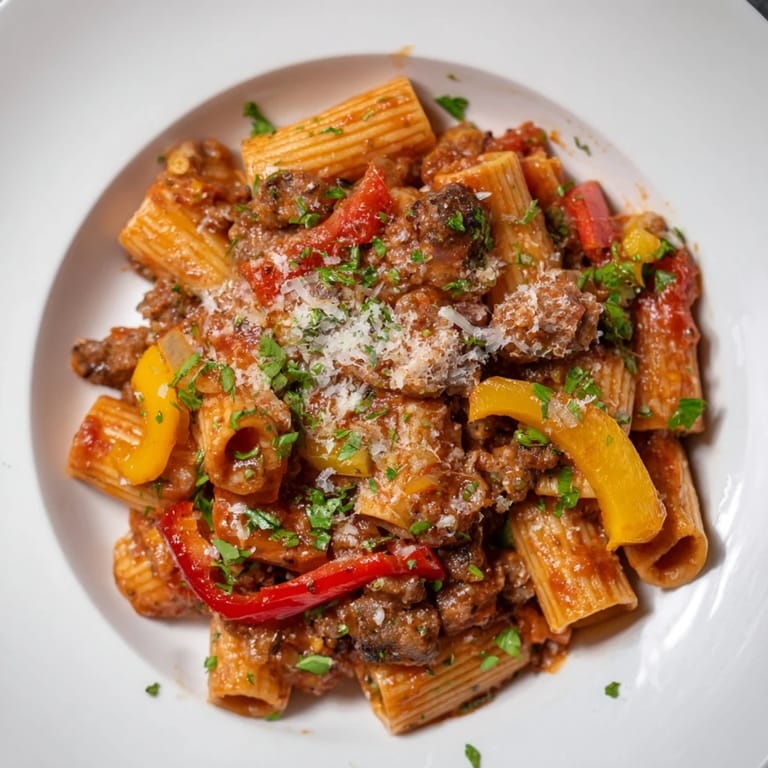
- Drain your pasta and add it directly to the skillet with the sauce. Toss for a minute over the heat so the pasta absorbs some of the sauce. Serve immediately with a handful of fresh parsley and a generous shower of Parmesan.
 Pin it
 My friend brought her new partner over for dinner and served this, and afterward he asked if she'd learned to cook from a professional. She laughed and told him it was the easiest thing she made, and watching his face shift from impressed to slightly embarrassed is a memory I bring up every time we hang out. That's what this dish does—it makes you look better than you feel in that moment.
The Sausage Decision
Choosing your sausage sets the whole tone of the dish. A spicy Italian sausage will give you heat that lingers, while mild sausage lets the sweet peppers be the star. Some people swear by fennel-forward sausages, and if that's your thing, lean into it. I've also experimented with half pork and half turkey for something lighter, and honestly, it works when you're not in the mood for something so rich. Whatever you choose, make sure it's good quality—this dish has so few ingredients that each one matters.
On Caramelizing the Peppers
This is where patience actually changes everything. Rushing the peppers and onions means they steam instead of caramelize, and you lose that deep, almost sweet complexity that makes this dish memorable. The browning takes time, but it's mostly hands-off—you can wipe your workspace, check your phone, breathe for a minute. When you finally stir them, the fond on the bottom of the pan is flavor waiting to be released. Some nights I add a splash of red wine at this point, letting it bubble away for a minute before adding the tomatoes. It's not required, but it gives the sauce a roundness that feels almost luxurious.
Variations and Extensions
The beauty of this recipe is how forgiving it is. I've added fennel seeds, roasted red peppers from a jar, fresh spinach stirred in at the end, or even a splash of balsamic vinegar when I wanted something richer. Once I added anchovy paste because I was curious, and it disappeared into the sauce, adding umami nobody could quite name but everyone noticed. The dish holds up to your whims, which is maybe why I come back to it so often.
- Fresh spinach wilts in beautifully when tossed with the hot pasta if you want something green.
- A sprinkle of crushed fennel seed on top adds an unexpected brightness that makes people ask questions.
- Leftover sauce freezes perfectly and becomes even more flavorful the next time you make it.
 Pin it
 This is the kind of meal that brings people around a table without fanfare, the kind that tastes like someone cared without looking like they fussed. Make it often, adjust it gently, and watch how quickly it becomes something people ask you to bring.
Frequently Asked Questions
- → What type of sausage works best?
Italian sausage, mild or spicy, adds the perfect savory depth. For a lighter option, turkey or chicken sausage can be used.
- → Which peppers are included in the dish?
Red, yellow, and green bell peppers are sliced and sautéed, providing sweetness and color.
- → Can I use different pasta shapes?
Penne or rigatoni are ideal as they hold the sauce well, but other sturdy pasta shapes can be substituted.
- → How do I prevent the sauce from being too thick?
Reserve some pasta water when draining and add it to the sauce as needed to reach desired consistency.
- → What garnishes enhance this dish?
Fresh parsley and grated Parmesan cheese add brightness and a savory finish.