 Save
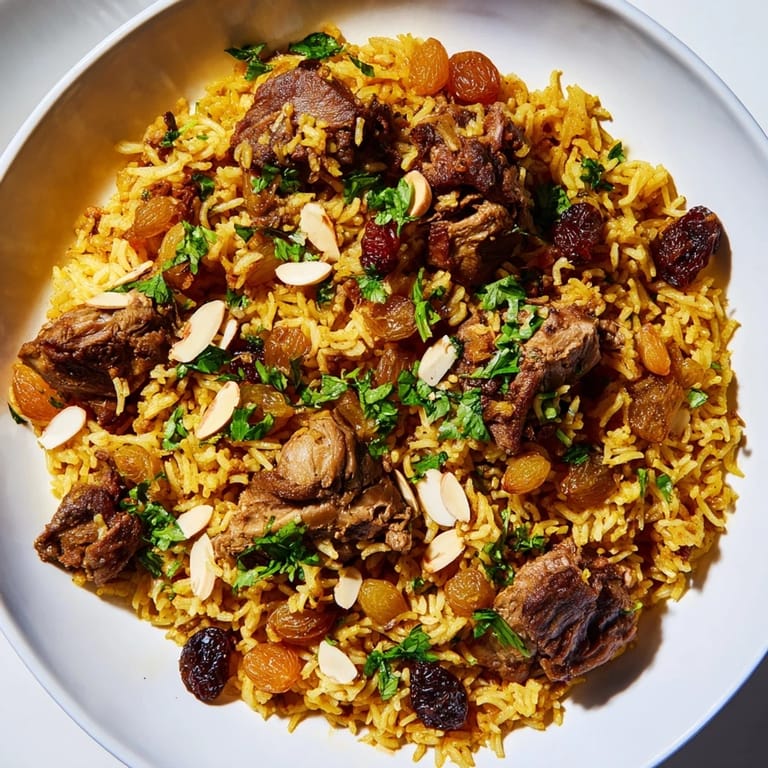
Save My uncle's kitchen in Riyadh always smelled like cardamom and roasted almonds on Friday mornings, and I finally understood why when I watched him layer spices into a pot of golden onions one winter visit. He never rushed the spice bloom, letting each one release its secrets into the heat before adding the meat, and I realized that Kabsa wasn't just rice and meat thrown together but a carefully orchestrated dance of flavors built layer by layer. That visit sparked an obsession, and after several attempts in my own kitchen, I cracked the code: respect the spices, don't skip the browning step, and let the rice drink in all those meaty, aromatic juices. Now when I make this dish, my whole apartment fills with that same intoxicating smell, and I'm transported right back to that kitchen.
I served this for the first time to friends who'd never had Middle Eastern food before, and watching their faces light up when they tasted that first spoonful of fragrant rice studded with tender lamb was pure joy. One friend immediately asked for seconds and then the recipe, saying she'd never imagined rice could taste this complex and alive. That moment made me realize Kabsa isn't just about feeding people—it's about sharing something that feels both elegant and deeply comforting.
Ingredients
- Bone-in lamb or chicken pieces (1 kg): The bones are your secret weapon, simmering down to create an insanely flavorful broth that rice drinks up like it's been waiting for this moment.
- Vegetable oil (1 tbsp): Keep it neutral so the spices shine; I use it just enough to get that golden crust on the onions.
- Onion, finely sliced (1 large): This is your foundation—slice it thin so it breaks down into silky threads that almost melt into the broth.
- Garlic, minced (3 cloves): Add it after the onion so it doesn't burn, and let it cook just long enough to soften.
- Ground cumin (2 tsp): Warm, slightly earthy, and the backbone of this dish's personality.
- Ground coriander (2 tsp): Citrusy and bright, it lifts everything without overpowering.
- Ground cinnamon (1 ½ tsp): Don't skip this—it adds subtle sweetness and depth that makes people ask what that mysterious flavor is.
- Ground black pepper (1 ½ tsp): Use freshly ground if you can; pre-ground fades faster.
- Ground turmeric (1 tsp): Adds earthiness and a golden hue that's both warm and slightly peppery.
- Ground cardamom (1 tsp): This is the one that transported me back to my uncle's kitchen—floral, aromatic, irreplaceable.
- Ground cloves (½ tsp): A tiny amount goes a long way; too much tastes medicinal, but just right it adds mysterious warmth.
- Ground allspice (½ tsp): Think warm winter spice; it ties everything together.
- Bay leaves (2 dried): Nestle them into the broth for subtle herbal notes you can't quite identify but definitely notice.
- Dried black lime or loomi (1, pierced, optional): If you can find this, use it—it adds a sophisticated tangy complexity that's authentically Saudi, but the dish works beautifully without it too.
- Tomatoes, chopped (2 medium): Fresh tomatoes add acidity and body to the broth; canned works in a pinch but fresh is better.
- Carrot, grated (1 medium): It softens into the broth and adds subtle sweetness without any gritty texture.
- Basmati rice, rinsed and soaked (3 cups): Soaking for 20 minutes is non-negotiable—it ensures each grain stays separate and fluffy instead of turning to mush.
- Chicken or lamb stock (5 cups): Homemade is ideal, but good quality store-bought works; avoid the salty stuff that overpowers the spices.
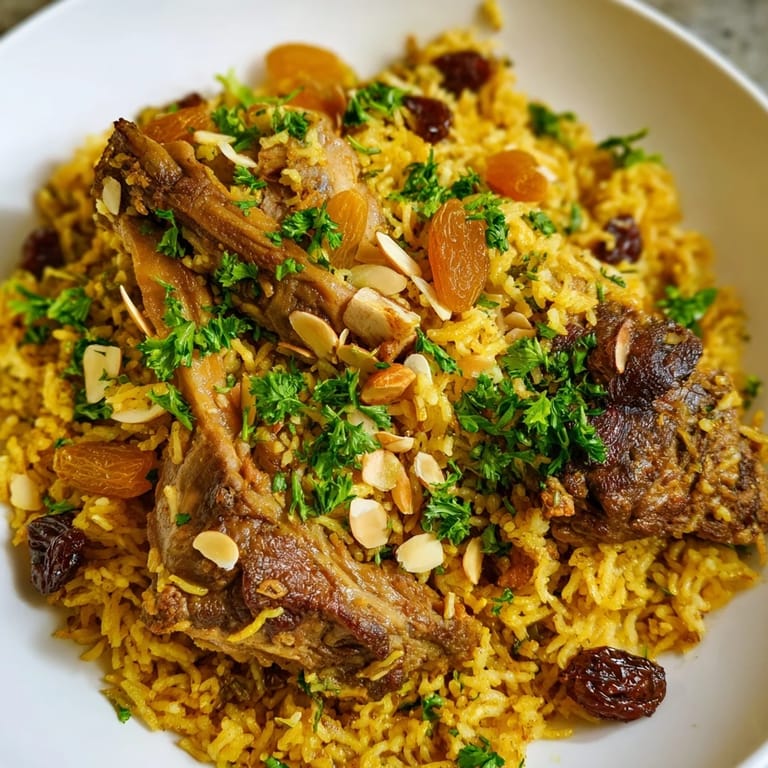
- Golden raisins (½ cup): They plump up in the heat and add bursts of sweetness that balance the savory spices.
- Slivered almonds, toasted (½ cup): Toast them yourself right before serving so they're still warm and crackling; pre-toasted ones get stale fast.
- Fresh parsley, chopped (¼ cup, optional): A bright, fresh garnish that cuts through the richness and adds color.
- Salt, to taste: Start conservatively since your stock probably has salt already, and you can always add more at the end.
Tired of Takeout? 🥡
Get 10 meals you can make faster than delivery arrives. Seriously.
One email. No spam. Unsubscribe anytime.
Instructions
- Start with the aromatics:
- Heat your oil over medium-high heat and add those thin onion slices, letting them turn golden and soft—this takes patience but creates the sweet, caramelized base everything else builds on. You'll know it's right when they smell sweet and jammy, not sharp.
- Wake up the meat:
- Stir in your minced garlic and cook just until fragrant (about a minute), then add your meat pieces and let them brown on all sides—don't rush this part, as it's where the magic begins. This deep browning creates fond on the bottom of the pot that will flavor everything.
- Bloom those spices:
- Add all your ground spices, bay leaves, and black lime (if using) and stir constantly for 1-2 minutes while the kitchen fills with an intoxicating aroma. You're not cooking them long, just long enough to release their essential oils into the oil.
- Build the broth:
- Stir in your chopped tomatoes and grated carrot, cooking for 4-5 minutes so they start breaking down and infusing the pot. The tomatoes add body and acidity that balances all those warm spices.
- Simmer the meat tender:
- Pour in your stock and bring everything to a boil, then lower the heat, cover, and let it simmer gently—about 35-40 minutes for chicken or a full hour for lamb until the meat is fall-apart tender. You'll know it's ready when a fork slides through without resistance.
- Swap the meat out:
- Carefully remove the cooked meat and keep it warm on a plate while you move on to the rice. Don't lose any of that precious broth.
- Welcome the rice:
- Stir your soaked (and drained) rice directly into the simmering broth with a pinch of salt, then gently nestle those meat pieces back on top so they steam along with the rice. The rice will start absorbing all those flavors immediately.
- Add sweetness and texture:
- Scatter your golden raisins over the top, cover the pot, and reduce the heat to the lowest setting. Don't peek—let it cook undisturbed for 25-30 minutes until the liquid is absorbed and the rice is fluffy.
- The final fluff:
- Remove from heat and discard your bay leaves and black lime, then use a fork to gently fluff the rice, separating the grains without mashing them. Be gentle here—you want separate, intact grains, not a mushy pile.
- Plate and finish:
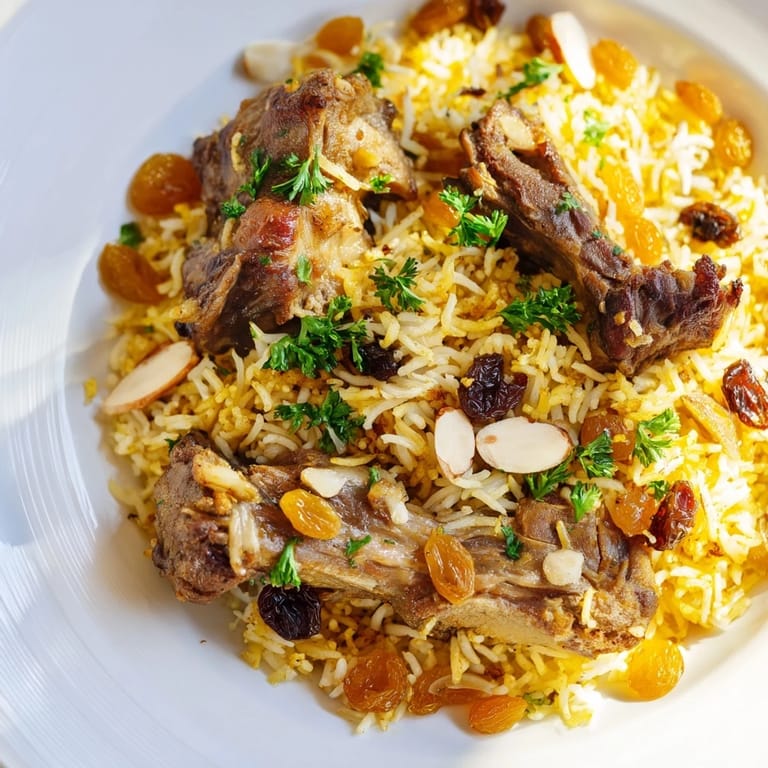
- Transfer everything to a serving platter and scatter those warm toasted almonds and fresh parsley on top. This final step adds the textural contrast and fresh brightness that makes people go back for more.
 Pin it
 I made this dish for my mom one Sunday, and she sat there eating slowly, eyes closed, and when she opened them she just said, "This tastes like home," even though she'd never had Kabsa before. It reminded me that the best food isn't about complicated techniques or rare ingredients—it's about respecting tradition and taking your time with each layer of flavor.
The Spice Story
The first time I tried making this without toasting the spices separately, I wondered why it tasted flat compared to my uncle's version, so I went back and paid attention to that crucial moment when warm spices hit hot oil and release their volatile oils—that's when they stop being dried bits and become alive. Now I treat that two-minute window like a meditation, stirring slowly and breathing in the changing aromas as each spice contributes its voice. It's the difference between a good dish and one that makes people lean back and say, "Wow, what is this?"
Making It Your Own
While tradition calls for lamb, I've made this with chicken on weeknights when I'm short on time, and with beef when I want something even richer—each meat brings its own character but the spice profile holds everything together beautifully. The black lime (loomi) is authentically Saudi and adds a citrusy depth you can't replicate, but I've made delicious versions without it when I couldn't find any. Don't stress about having every single ingredient; focus on getting the spice balance right and using good quality meat and stock, and you'll end up with something special.
Serving and Pairing
This dish shines on its own but comes alive when you serve it with cool, crisp sides that provide contrast to all that warm spice—a simple tomato and cucumber salad dressed with lemon juice and olive oil, alongside some plain or cucumber yogurt, transforms it from great to unforgettable. I've also served it with warm flatbread for scooping, which turns it into a communal eating experience that feels intimate and celebratory at the same time.
- A cool yogurt sauce with cucumber and fresh herbs cuts through the richness and soothes the palate.
- Skip heavy desserts afterward; something light like fresh fruit or mint tea lets the spices linger and settle comfortably.
- Leftovers actually taste better the next day as the flavors meld, making this perfect for meal prep.
 Pin it
 Kabsa is the kind of dish that transforms a meal into a moment, where people slow down and actually taste what's in front of them. Once you master it, you'll find yourself making it again and again.
Frequently Asked Questions
- → What type of meat works best for this dish?
Lamb or chicken pieces with bone-in are preferred to enhance flavor and tenderness.
- → Can I omit the dried black lime (loomi)?
Yes, but the loomi adds a unique tangy depth; omitting it will slightly change the dish's traditional flavor.
- → Why soak the rice before cooking?
Soaking basmati rice helps remove excess starch and ensures a fluffy, separate grain texture.
- → What is the role of raisins and almonds in the dish?
Golden raisins add a sweet contrast while toasted almonds contribute crunch and nutty aroma.
- → How should spices be prepared for maximum flavor?
Toasting the whole or ground spices briefly before adding releases their essential oils and deepens the aroma.
- → Is this dish suitable for special dietary preferences?
It is naturally dairy-free and halal, but check stock and spice blends for hidden allergens like nuts.