 Save
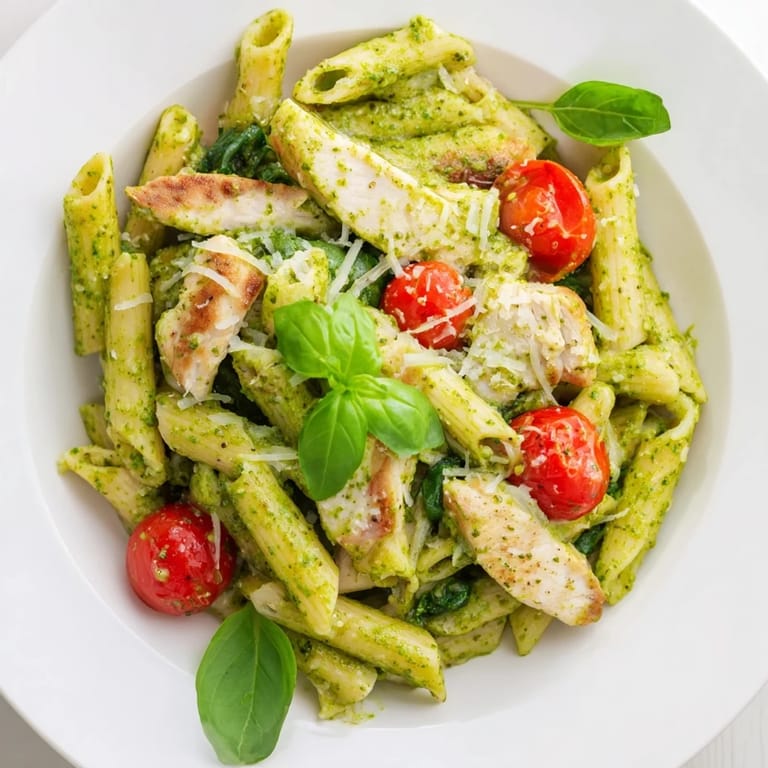
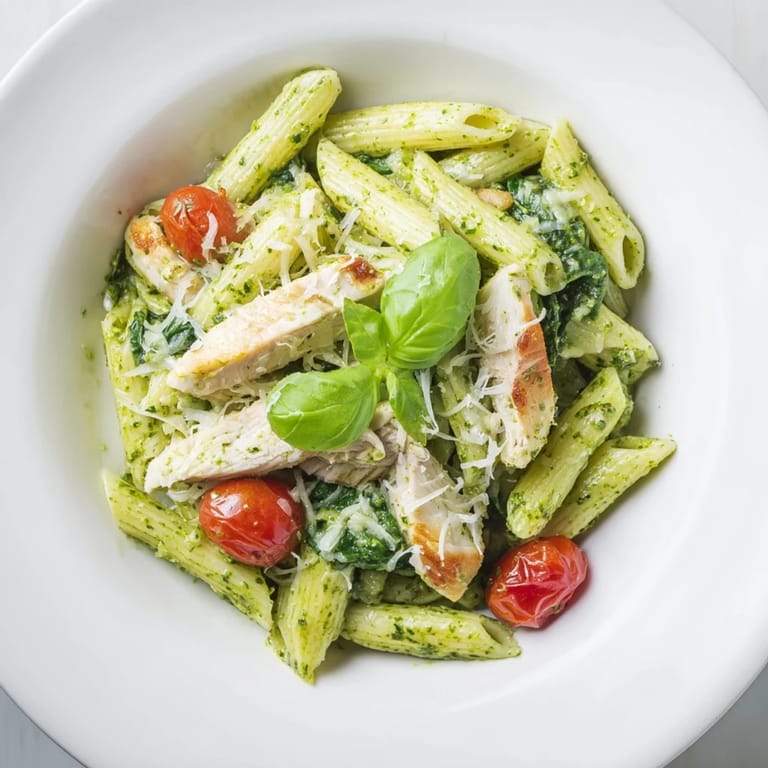
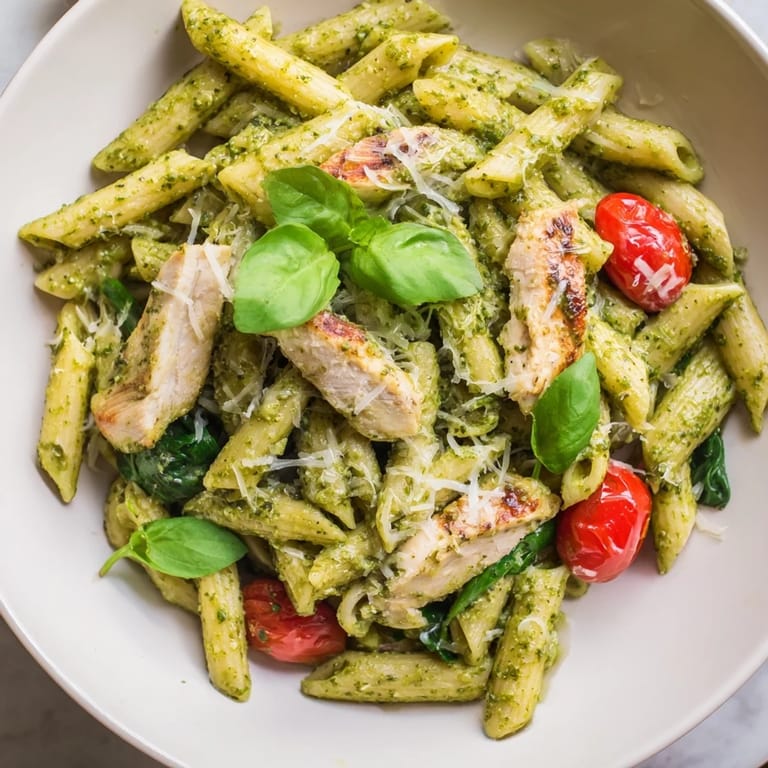
Save There was nothing fancy about the night I threw this together, just a Tuesday after work when the fridge felt bare but my stomach disagreed. I had a jar of pesto tucked behind the milk, some chicken I'd meant to use days ago, and pasta in the pantry. Twenty minutes later, I was twirling fork after fork of basil-scented pasta with juicy chicken and warm cherry tomatoes, wondering why I ever overthought dinner. It became my weeknight rescue ever since.
I made this for my sister once when she showed up unannounced, exhausted from a long day. She sat at my counter, glass of wine in hand, and watched me toss everything together while we caught up. By the time I plated it with a little extra Parmesan and fresh basil, she looked at me like I'd performed magic. She still texts me for the recipe even though I've told her a dozen times there's barely one to follow.
Ingredients
- Boneless, skinless chicken breasts: Slice them horizontally so they cook fast and stay tender, and always let them rest before cutting or the juices run everywhere.
- Penne or fusilli pasta: The ridges and hollows catch the pesto beautifully, and they hold up better than delicate shapes when you toss everything together.
- Store-bought basil pesto: Buy the best one you can find, it's the soul of this dish and worth spending an extra dollar or two.
- Extra-virgin olive oil: Use it for cooking the chicken and garlic, it adds a fruity richness that butter just can't match.
- Garlic, minced: Fresh garlic blooms in the oil and fills your kitchen with a smell that makes everyone wander in asking what's for dinner.
- Grated Parmesan cheese: Freshly grated melts into the pasta and thickens the sauce slightly, pre-shredded stuff just doesn't melt the same way.
- Cherry tomatoes, halved: They soften just enough to release a little sweetness and juice without turning mushy.
- Baby spinach leaves: They wilt in seconds from the residual heat, adding color and a mild earthiness that balances the richness.
- Salt and freshly ground black pepper: Season at every stage, especially the pasta water and the chicken, so the flavor builds instead of landing flat at the end.
- Fresh basil leaves: A few torn leaves on top make it look restaurant-worthy and add a punch of fragrance right before you eat.
Tired of Takeout? 🥡
Get 10 meals you can make faster than delivery arrives. Seriously.
One email. No spam. Unsubscribe anytime.
Instructions
- Season and prep the chicken:
- Sprinkle both sides with salt and pepper, then slice each breast horizontally so you have thinner, quicker-cooking pieces. This is the trick that keeps them juicy instead of dry.
- Grill the chicken:
- Heat a tablespoon of olive oil in a grill pan over medium-high until it shimmers, then lay the chicken flat and let it sear undisturbed for four to five minutes per side until golden with char marks. Transfer to a plate, cover loosely, and let it rest while you handle the pasta.
- Boil the pasta:
- Fill a large pot with water, salt it generously until it tastes like the sea, and bring it to a rolling boil before adding the pasta. Cook until al dente, scoop out a quarter cup of the starchy water, then drain the rest.
- Sauté the garlic:
- In the same pot you used for pasta, warm the remaining tablespoon of olive oil over medium heat and toss in the minced garlic, stirring constantly for thirty seconds until it smells nutty and fragrant. Don't let it brown or it turns bitter.
- Soften the tomatoes:
- Add the halved cherry tomatoes and let them cook for two minutes, shaking the pot occasionally until they start to blister and release their juices.
- Toss with pesto:
- Return the drained pasta to the pot, then stir in the pesto, reserved pasta water, and Parmesan, tossing everything together until the noodles are glossy and coated. The starchy water helps the pesto cling instead of pooling at the bottom.
- Add chicken and spinach:
- Slice the rested chicken into thin strips, fold it into the pasta along with the baby spinach, and toss gently until the greens wilt and everything is mixed. Taste and adjust the salt and pepper.
- Serve hot:
- Divide among bowls, top with torn basil leaves and extra Parmesan, and bring it to the table while it's still steaming.
 Pin it
 One summer evening, I made this on the patio with a bottle of cold Pinot Grigio and a friend who claimed she couldn't cook. She watched me move through the steps, surprised at how simple it all was, and by the end she was twirling pasta onto her fork, laughing at how good something this easy could taste. She texted me a photo the next week of her own version, proud and a little messy, and I saved it because that's what food should do.
How to Choose Your Pesto
Not all store-bought pesto tastes the same, and it's worth reading the label. Look for ones with olive oil listed first, real Parmesan or Pecorino, and basil that's vibrant green instead of murky brown. I've learned the hard way that cheap pesto can taste bitter or overly salty, and no amount of Parmesan will fix it. If you can find a refrigerated version in the deli section, it usually tastes fresher and brighter than the shelf-stable jars.
Swaps and Variations
This recipe is forgiving, so feel free to make it your own. Swap the chicken for grilled shrimp, seared tofu, or even canned white beans if you want something lighter or vegetarian. Try sun-dried tomato pesto or arugula pesto for a different flavor profile, or toss in roasted red peppers, artichoke hearts, or zucchini ribbons if you have them lying around. I've made it with whole wheat pasta, gluten-free noodles, and even zucchini noodles when I was feeling virtuous, and it worked every time.
Storing and Reheating
Leftovers keep well in the fridge for up to three days, though the pasta absorbs some of the sauce as it sits. When reheating, add a splash of water or olive oil and warm it gently in a skillet over medium-low heat, stirring often so it doesn't dry out. I've eaten it cold straight from the container for lunch, and honestly, it's still delicious that way, just a little less saucy.
- Reheat on the stovetop instead of the microwave to keep the texture from going rubbery.
- Add a handful of fresh spinach or arugula when reheating to brighten it up.
- A squeeze of lemon juice before serving brings the flavors back to life.
 Pin it
 This is the kind of meal that doesn't ask much from you but gives back plenty, and it never gets old. Make it once, and it'll become one of those recipes you reach for without thinking.
Frequently Asked Questions
- → Can I use fresh basil instead of store-bought pesto?
Yes, absolutely. Make fresh basil pesto by blending fresh basil leaves, garlic, pine nuts, Parmesan cheese, and olive oil. You'll need about 120g of fresh basil leaves to yield the equivalent amount of pesto used in this dish.
- → How do I know when the chicken is fully cooked?
Cook the chicken until it reaches an internal temperature of 165°F (74°C) at the thickest part. When grilling 4-5 minutes per side, the chicken should be opaque throughout with no pink inside. Let it rest for 5 minutes before slicing to keep it juicy.
- → What can I substitute for the chicken?
Grilled shrimp works wonderfully as a pescatarian option, requiring only 2-3 minutes per side. For vegetarian versions, try grilled tofu, white beans, or chickpeas. These alternatives pair beautifully with pesto and provide excellent protein.
- → Why should I reserve pasta water?
Pasta water contains starch that helps create a silky sauce and helps the pesto coat the pasta evenly. The starch acts as an emulsifier, preventing the oil-based pesto from separating and ensuring every bite is flavorful and well-coated.
- → Can I make this ahead of time?
This dish is best served immediately for optimal freshness and texture. However, you can prep components in advance: grill and refrigerate the chicken, cook the pasta separately, and store the pesto. Assemble just before serving to maintain the quality of the spinach and pasta texture.
- → What wine pairs well with this dish?
A crisp Pinot Grigio or light-bodied red wine complements the fresh basil and grilled chicken beautifully. The acidity in white wine cuts through the richness of the pesto, while a lighter red like Pinot Noir won't overpower the delicate flavors of the dish.