 Save
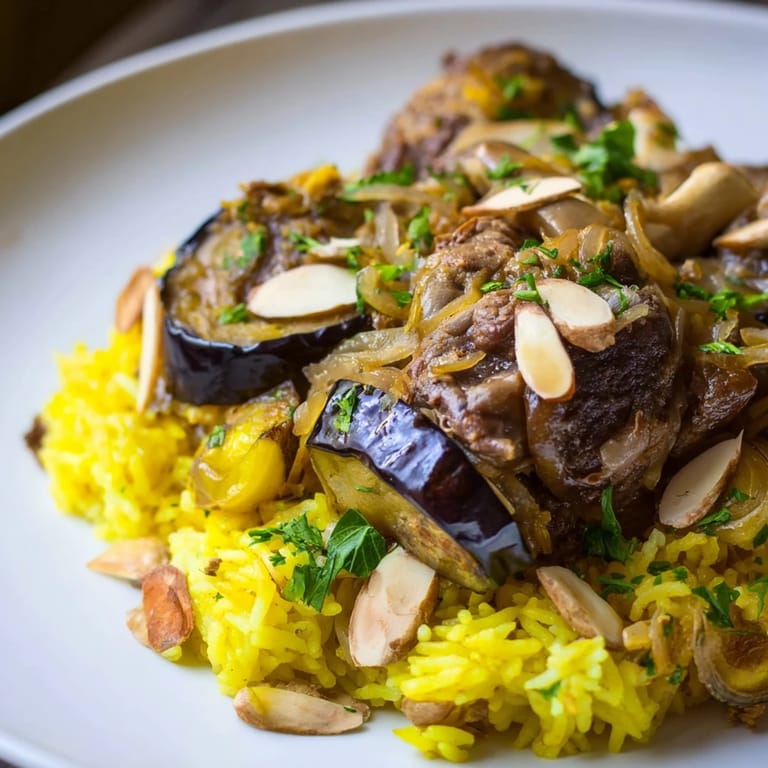
Save The first time I watched Maqluba being made, I was mesmerized by the theater of it all—the careful layering, the patient simmering, and then that breathless moment when the lid came off and someone flipped the entire pot upside down onto a platter. It's the kind of dish that demands respect and rewards it generously, arriving at the table as a golden, fragrant dome that somehow holds together like magic.
I made this for my family during a quiet Sunday, and watching everyone's faces light up when that dome of rice flipped perfectly onto the platter—that golden, steaming, impossibly intact structure—reminded me why certain dishes become traditions. My sister immediately asked for the recipe, and my nephew asked for seconds before finishing his first serving.
Ingredients
- Lamb shanks or chicken pieces (900 g): Bone-in cuts give you flavor and structure; they stay tender through the long cook and create a rich, savory base that infuses the entire dish.
- Ground allspice, cinnamon, and black pepper: These three create the warm, slightly sweet backbone that makes Maqluba unmistakable; don't skip the cinnamon, as it's what sets this apart from every other rice dish.
- Long-grain basmati rice (2 cups): Rinsing and soaking removes excess starch so each grain stays separate and fluffy instead of turning mushy during the layer assembly.
- Eggplant and potato slices (2 medium each): Roasting them first keeps them from releasing water that would soften your layers; it also deepens their flavor.
- Tomato slices (2 large): They create a light, acidic base layer that prevents sticking and adds brightness to balance the richness of the meat.
- Toasted almonds or pine nuts (1/2 cup): Toasting brings out their nuttiness; they add texture and a whisper of luxury that makes people notice.
- Chicken or beef broth (3-4 cups): Use homemade if you can; it carries all the flavor into every grain of rice and makes the difference between good and unforgettable.
Tired of Takeout? 🥡
Get 10 meals you can make faster than delivery arrives. Seriously.
One email. No spam. Unsubscribe anytime.
Instructions
- Prepare the rice:
- Rinse your basmati in cold water—swish it around with your fingers and pour off the cloudy water—until the water runs almost clear. This takes patience but prevents mushiness. Soak for 30 minutes, then drain and set aside.
- Season the meat:
- Mix black pepper, allspice, cinnamon, and salt in a small bowl, then coat your lamb or chicken pieces evenly. This isn't just flavoring; you're building the first layer of taste that will carry through every element.
- Sear and simmer the meat:
- Heat oil in your heavy pot until it shimmers, then lay the meat down carefully—you'll hear that satisfying sizzle. Brown it on all sides, which takes about 8–10 minutes total. Remove it, sauté the onion slices until soft, then return the meat with broth to cover. Let it simmer gently for 30–40 minutes until the meat is nearly tender but not falling apart.
- Roast the vegetables:
- While the meat cooks, brush eggplant and potato rounds lightly with oil and spread them on baking sheets. Roast at 200°C until golden and tender, about 20–25 minutes; this step concentrates their flavor and prevents them from releasing water into your layers.
- Build your layers:
- This is where precision matters. Start with tomato slices covering the bottom of the pot—they prevent sticking and add brightness. Layer roasted potatoes next, then eggplant, then the meat and onions. Finally, press the drained rice gently on top, as if tucking in something precious.
- Add seasoned broth:
- Stir turmeric, cumin, and salt into your reserved meat broth, then pour it over the rice until it just covers the top layer. The rice will absorb it as it cooks, creating gentle steam that keeps everything moist.
- Set the lid and heat:
- Place a heatproof plate slightly smaller than your pot directly on the rice—this keeps the layers from shifting. Cover with the pot lid, bring to a gentle simmer over medium heat, then reduce to low.
- Cook undisturbed:
- This is the hardest part: resist the urge to peek. Let it sit for 35–40 minutes until the rice is tender and the liquid is absorbed. The bottom will develop a light golden crust called tahdig, which is the prize.
- Rest and flip:
- Remove from heat and let it rest, covered, for 15 minutes. This allows the layers to set. Place a large serving platter over the pot, take a breath, and flip it upside down in one confident motion—the whole thing should release as a golden dome.
- Finish and serve:
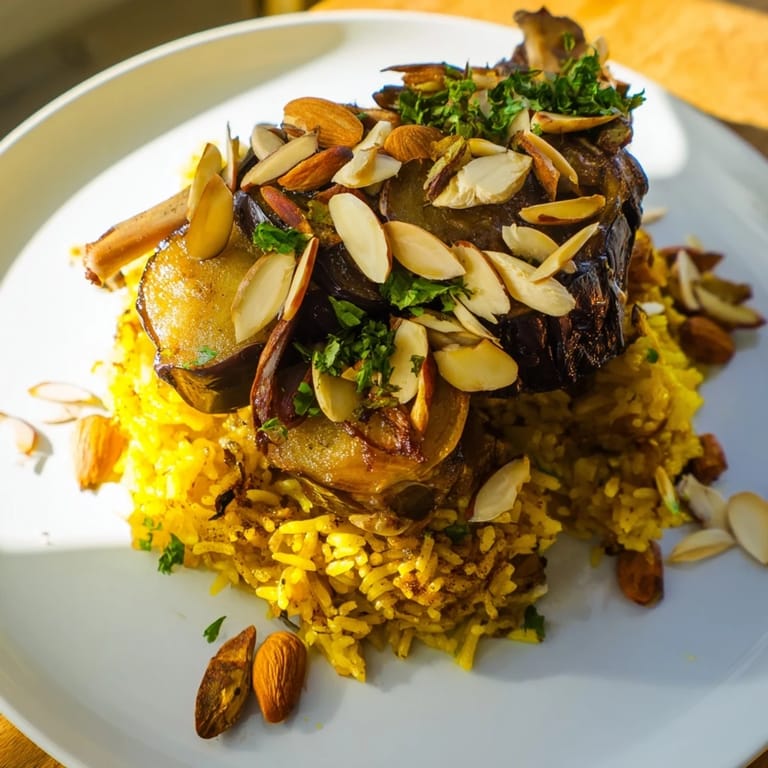
- Scatter toasted almonds and fresh parsley over the top, and bring it to the table while it's still steaming. Serve with cool cucumber-yogurt salad on the side.
 Pin it
 I once served this to my neighbor who had spent years in Palestine, and she teared up at the first bite. She said it tasted exactly like her mother's, which is the highest compliment a dish like this can receive.
The Art of Layering
The beauty of Maqluba lives in its architecture. Each ingredient sits in a specific order for a reason: tomatoes at the bottom prevent sticking and add acidity, potatoes and eggplant come next for their substance and flavor, meat and onions in the middle distribute richness throughout, and rice on top acts as both a vessel and a blank canvas for the spices. When you flip it, every bite contains a cross-section of everything, but the layers also offer individual moments of taste if you pay attention.
Variations Worth Trying
Maqluba is forgiving enough to embrace change while staying true to itself. Cauliflower florets roasted until crispy can replace eggplant for a different texture and earthier flavor. Boneless chicken thighs cook faster than lamb and are just as delicious. Some cooks add a handful of chickpeas between layers for extra heartiness, or use a mix of turmeric and saffron for deeper golden color and a more floral note.
Timing and Temperature Matter
The success of Maqluba hinges on cooking temperatures staying gentle and steady. Too high a heat scorches the bottom layer and cooks the rice unevenly; too low and you'll wait forever for the liquid to absorb. Medium heat brought to a gentle simmer, then lowered immediately, is the sweet spot. The resting period at the end is non-negotiable—it allows the moisture to redistribute and the layers to set firmly enough to survive the flip.
- Use a heavy-bottomed pot, preferably nonstick, to prevent burning and help the whole dish release cleanly.
- If your rice seems undercooked after 40 minutes, cover and cook for another 5 minutes, but check that liquid hasn't evaporated completely.
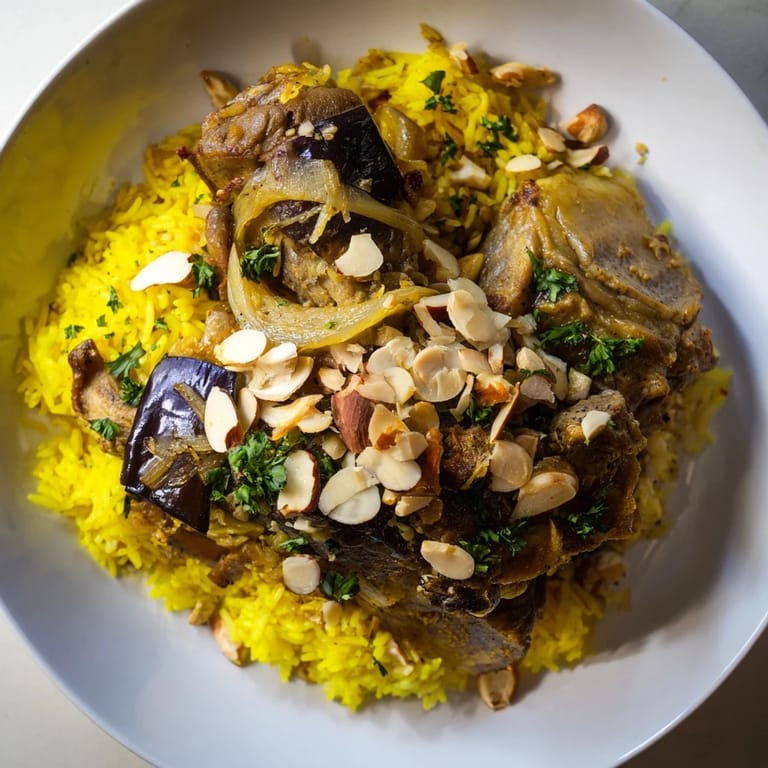
- The golden crust on the bottom (tahdig) is not a mistake—it's the reward for your patience, crispy and nutty and deeply prized.
 Pin it
 Maqluba is more than a recipe—it's a moment of connection, a dish that brings people together because it demands care and rewards it with beauty and flavor. Make it once, and you'll understand why families pass it down through generations.
Frequently Asked Questions
- → What type of meat works best for Maqluba?
Lamb shanks or bone-in chicken pieces offer rich flavor and tender texture, ideal for slow simmering in this dish.
- → How do I prepare the rice for this dish?
Rinse basmati rice thoroughly until water runs clear, soak for 30 minutes, then drain before layering with other ingredients.
- → Can I substitute the vegetables in Maqluba?
Yes, cauliflower florets can replace eggplants for variation, while maintaining hearty layers and texture.
- → What spices enhance the flavor of the broth?
A blend of black pepper, allspice, ground cinnamon, turmeric, and cumin provides warmth and aroma to the simmering broth.
- → How is the dish traditionally served after cooking?
After cooking, the pot is inverted onto a large platter to reveal the layered insides, garnished with toasted nuts and fresh parsley.
- → Is there a recommended side to accompany Maqluba?
Cucumber-yogurt salad complements the flavors by adding a refreshing contrast to the savory layers.