 Save
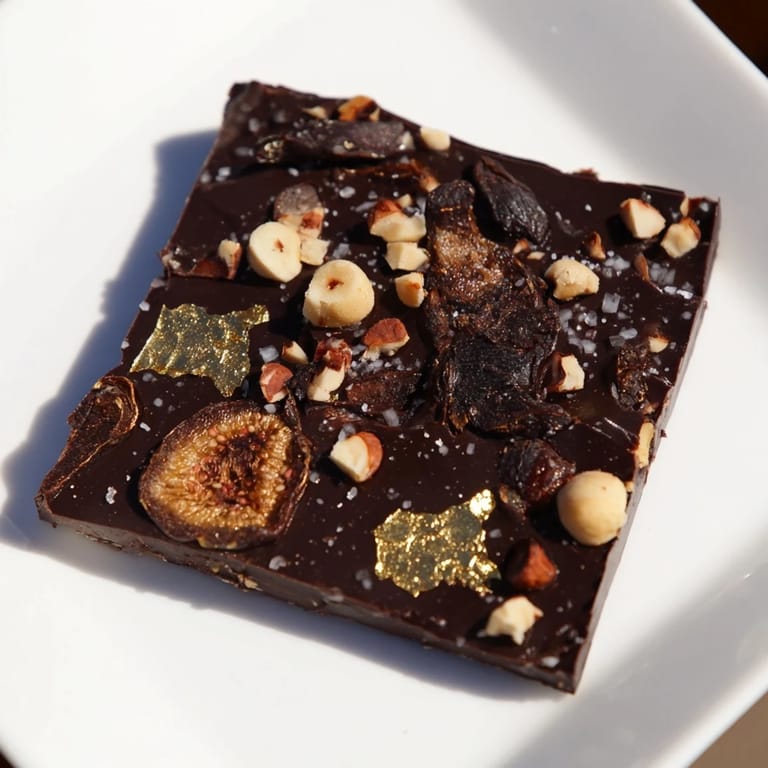
Save I discovered this strange, beautiful thing at a midnight dinner party where a friend brought a dessert that shouldn't have worked but absolutely did. Dark chocolate, figs, and black olives layered together like an edible painting, and somehow every bite made sense in a way that felt almost rebellious. That night, someone asked how a dessert could taste both indulgent and slightly savory, and I realized I'd been chasing that exact balance ever since. This mosaic became my answer to the question of what happens when you're brave enough to blur the lines between sweet and complex.
I made this for a dinner where everyone had just finished reading a book about food memories, and watching their faces as they tried something that broke every rule about what dessert should taste like reminded me why I love cooking. One person said it tasted like walking through a Mediterranean market at dusk, and I think that's exactly right.
Ingredients
- Dark chocolate (70% cocoa), 200g chopped: This percentage hits the sweet spot between bitterness and sweetness, letting the other flavors shine instead of drowning them out.
- Unsalted butter, 60g cubed: It creates that smooth, glossy base that holds the mosaic together without sliding apart.
- Honey, 1 tbsp: Just enough to round out the darker notes and bind everything without making it cloying.
- Sea salt, pinch: This is what makes people stop mid-bite and wonder what they're tasting.
- Dried figs, 120g finely sliced: The chewiness gives texture, and their natural sweetness bridges the gap between chocolate and olive.
- Pitted black olives, 80g thinly sliced: Oil-cured ones have more personality than regular brined olives, and slicing them thin lets them distribute evenly.
- Roasted hazelnuts, 50g chopped: They add crunch and a subtle earthiness that quietly ties everything together.
- Cocoa nibs, 30g: These little bursts of pure chocolate intensity make sure no bite feels flat or predictable.
- Flaky sea salt and edible gold leaf or dried rose petals (optional): The salt is genuinely functional, while the garnish is just for that moment when presentation matters.
Tired of Takeout? 🥡
Get 10 meals you can make faster than delivery arrives. Seriously.
One email. No spam. Unsubscribe anytime.
Instructions
- Set the stage:
- Line a 20x20 cm square tin with parchment, letting the edges hang over. This part matters because you'll be grateful for those handles when you're lifting something that weighs more than it looks.
- Melt without rushing:
- Set a heatproof bowl over barely simmering water and watch the chocolate and butter transform together. Stir until it's absolutely smooth, then take it off the heat and stir in honey and salt—the warmth of the chocolate will handle the rest.
- Spread your canvas:
- Pour the chocolate into the tin and use a spatula to even it out. This is meditation work, and it only takes a minute.
- Build the mosaic:
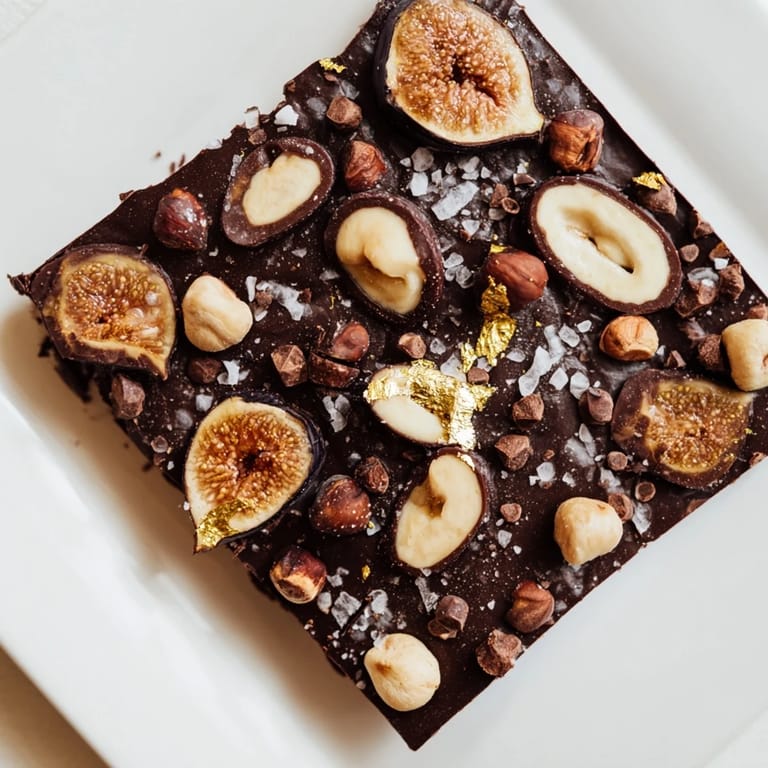
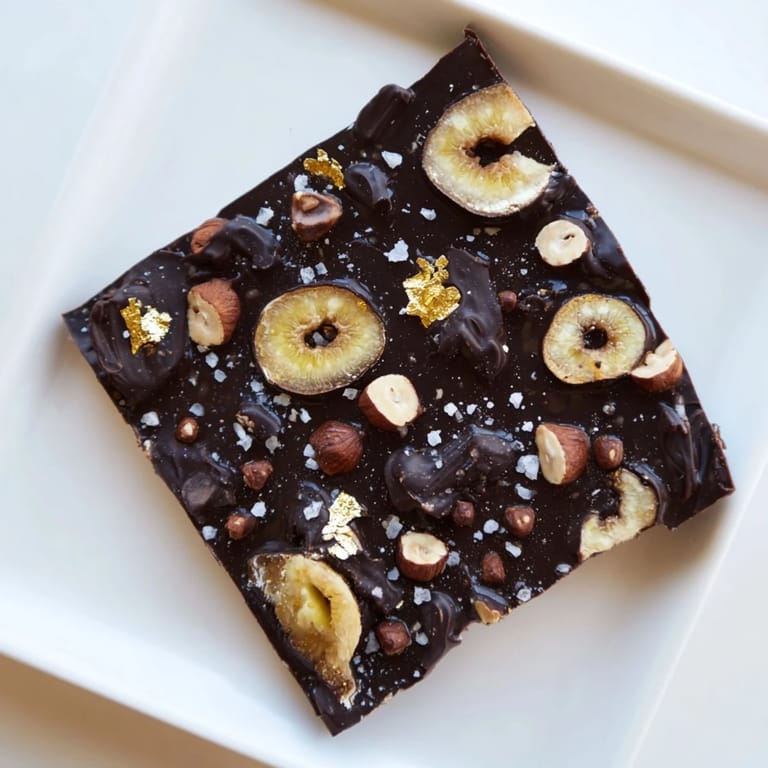
- Scatter the figs, olives, hazelnuts, and cocoa nibs across the surface in a way that feels intentional, then gently press them down into the chocolate. You're looking for no gaps, a surface that looks like a piece of art.
- Final flourish:
- Sprinkle with flaky salt and whatever garnish appeals to you, then slide it into the refrigerator.
- The long wait:
- Two hours might feel like forever, but the chill time is what transforms this from a mixture into something with actual structure and presence.
- Slice and serve:
- Use those parchment handles to lift it out, grab a sharp knife, and cut it into small squares. Serve it however you want—cold straight from the fridge, or let it soften slightly on the counter.
 Pin it
 What surprised me most was how this dessert became a conversation piece, the kind of thing people ask about before they even taste it. It sits on a plate and makes people curious, and that moment of uncertainty before the first bite is when you know you've created something memorable.
Why This Works
The magic lives in the tension between things that shouldn't go together. Sweet figs and briny olives create a flavor conversation that keeps evolving across your palate, while the chocolate acts as the glue that makes it all coherent instead of chaotic. It's bold enough to feel special but simple enough that you're not standing in your kitchen stressed.
Making It Your Own
This is one of those desserts that invites you to experiment. I've swapped hazelnuts for pistachios and never looked back, and a friend tried it with dried apricots instead of figs and said it tasted like a different song playing the same melody. The core stays the same—chocolate, fruit, something briny, something with texture—but the details are yours to play with.
Pairing and Serving
Serve this with something that respects its intensity. A glass of vintage port makes it feel like a special occasion, and dark-roast espresso is the perfect counterpoint if you're keeping it simple. Cold milk works too, if you want to soften the edges.
- Cut the pieces small—these are rich, complex bites that don't need to be enormous.
- Let it sit on the counter for five minutes before serving if you want a slightly softer texture.
- Store it covered in the fridge and it'll keep for a week, though it never lasts that long.
 Pin it
 This mosaic has become my favorite kind of dessert to make for people because it feels like sharing something you've figured out, something that proves that bold flavors and beautiful presentations don't have to be complicated. Make it once, and you'll understand why.
Frequently Asked Questions
- → What type of chocolate is ideal for this dessert?
Use dark chocolate with around 70% cocoa content for a rich, bittersweet flavor that balances the figs and olives.
- → Can the olives be substituted or omitted?
Oil-cured black olives add a unique briny depth, but if preferred, they can be omitted or replaced with another savory element to maintain complexity.
- → How long should the dish be chilled before serving?
Chill the mosaic for at least 2 hours to ensure the chocolate sets firmly and the flavors meld together.
- → Are there plant-based alternatives for the butter and honey?
Yes, plant-based butter and maple syrup can be used as vegan alternatives while preserving texture and sweetness.
- → What is the purpose of roasted hazelnuts in this dish?
Roasted hazelnuts add crunch and a nutty layer that complements the smooth chocolate and fruity figs.
- → How should the slab be sliced for serving?
After setting, use a sharp knife to cut into small squares, making it easy to enjoy bite-sized portions.