 Save
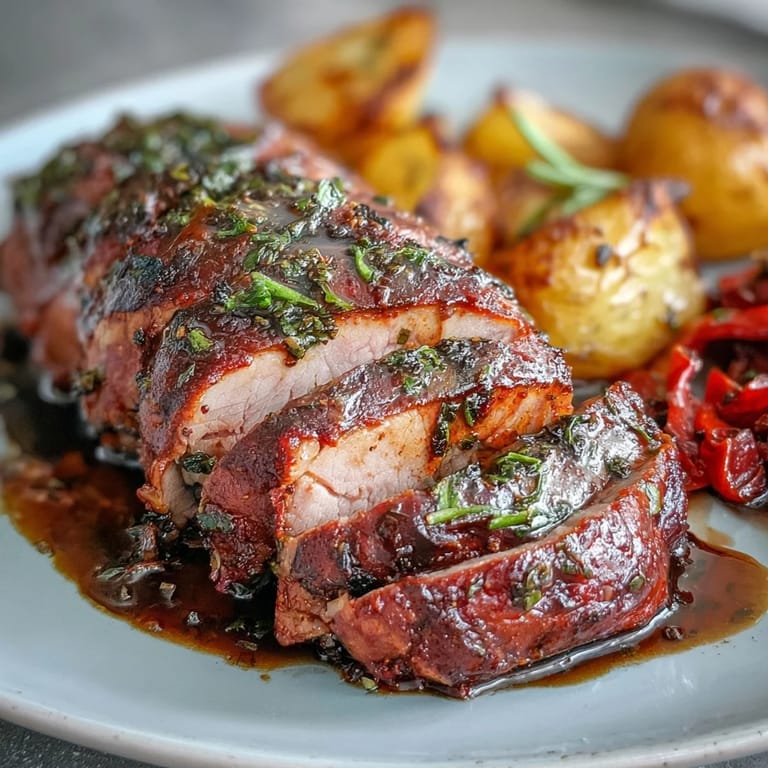
Save Last autumn, I walked through a Madrid market and watched a butcher slice Ibérico pork with the kind of reverence usually reserved for fine wine. He handed me a sample, marbled and sweet, and I knew I had to bring that moment home. The marinade came together that night—garlic, rosemary, and smoked paprika filling my kitchen with a scent that made my neighbors knock. By the time I pulled the roasted fillet from the oven the next evening, I understood why Spanish cooks guard their pork so carefully.
I made this for my sisters birthday last spring, and she still asks about it every time we talk. She swore she didnt like pork until that night, but she went back for thirds and scraped up every bit of the pan juices with a piece of crusty bread. The potatoes were so crispy they crackled when you bit into them, and the red peppers had turned jammy and sweet in the oven. It was one of those meals where everyone went quiet for a few minutes, and that silence felt like the highest compliment.
Ingredients
- Ibérico pork fillet: This is the star, marbled with fat that melts as it cooks, keeping the meat impossibly tender and sweet; if you cant find it, regular pork tenderloin works but wont have quite the same richness.
- Extra virgin olive oil: Use the good stuff here because it carries all the marinade flavors into the meat and crisps the potatoes beautifully.
- Garlic: Fresh cloves minced fine release their sharpness into the marinade and mellow into caramel sweetness when roasted with the peppers.
- Fresh rosemary: Chop it finely so it doesnt overpower, and the piney fragrance will make your kitchen smell like a Spanish hillside.
- Smoked paprika: This is pimentón, the soul of Spanish cooking, adding a smoky depth that regular paprika just cant match.
- Lemon zest and juice: Brightness that cuts through the richness and keeps everything lively instead of heavy.
- New potatoes: Their waxy texture holds up to high heat and gets crispy on the outside while staying creamy inside.
- Fresh thyme: A whisper of earthiness that plays well with the paprika on the potatoes.
- Red bell peppers: They soften and sweeten in the oven, turning almost jammy and adding a pop of color to the plate.
Tired of Takeout? 🥡
Get 10 meals you can make faster than delivery arrives. Seriously.
One email. No spam. Unsubscribe anytime.
Instructions
- Marinate the Pork:
- Whisk together the olive oil, garlic, rosemary, smoked paprika, lemon zest, lemon juice, salt, and pepper in a bowl until it smells like a Spanish summer. Rub it all over the pork fillet, cover it tightly, and let it sleep in the fridge overnight so the flavors sink deep into the meat.
- Prepare the Oven:
- Crank your oven to 220°C so its roaring hot and ready to crisp those potatoes. This high heat is what gives everything that golden, caramelized edge.
- Roast the Potatoes:
- Toss the quartered potatoes with olive oil, salt, pepper, smoked paprika, and thyme until every piece is coated. Spread them out on a baking tray in a single layer and roast for 35 to 40 minutes, giving them a good stir halfway through so they crisp up evenly.
- Roast the Red Peppers:
- Toss the pepper strips with olive oil, sliced garlic, and a pinch of salt, then spread them on a separate tray. Roast for 20 to 25 minutes until theyre tender and their edges start to char just a little.
- Cook the Pork:
- Pull the pork from the marinade and pat it dry with paper towels so it sears properly instead of steaming. Heat a tablespoon of olive oil in an ovenproof skillet over medium high heat, then sear the fillet for 2 to 3 minutes on each side until its deeply browned; slide the whole skillet into the oven and roast for 12 to 15 minutes until the internal temperature hits 63°C, then let it rest for 5 minutes before slicing so the juices stay inside.
- Serve:
- Slice the pork into thick medallions and arrange them on warm plates alongside the potatoes and peppers. Drizzle any pan juices over the top because thats liquid gold you dont want to waste.
 Pin it
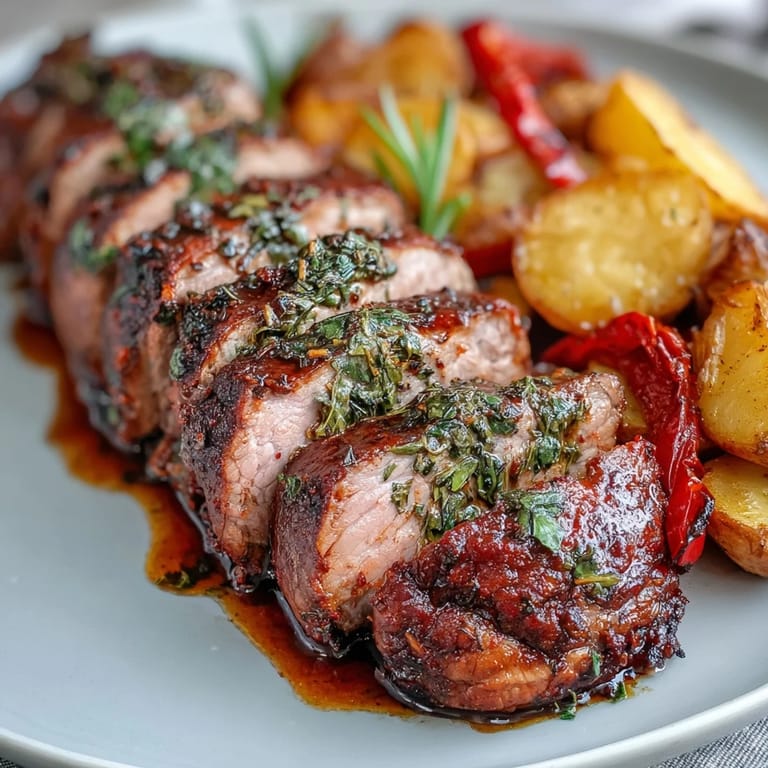
 The first time I sliced into this pork after it rested, the meat was blushing pink in the center and so juicy it pooled on the board. My husband looked up from his plate and said it tasted like vacation, which is exactly what I was hoping for. We ate slowly that night, savoring every bite and mopping up the pan juices with the crispy potato edges. It reminded me that some recipes arent just about feeding people, theyre about giving them a reason to linger at the table a little longer.
Getting the Most From Your Marinade
The magic of this dish starts the night before when you coat the pork in that garlicky, lemony, smoky mixture and let time do the work. I used to rush marinades, thinking an hour was enough, but overnight really does make a difference—the flavors dont just sit on the surface, they travel deep into the meat. If youre short on time, give it at least four hours, but try to plan ahead when you can. The marinade also works beautifully on chicken thighs or lamb chops if you want to experiment beyond pork.
Why High Heat Matters
Roasting at 220°C might feel aggressive, but thats what transforms ordinary potatoes into crispy, golden bites with fluffy interiors. I learned this the hard way after years of roasting at lower temperatures and wondering why my potatoes were never quite right. The high heat also caramelizes the edges of the red peppers, bringing out their natural sweetness and adding little charred bits that taste faintly smoky. Dont be tempted to lower the temperature to play it safe; your oven is supposed to work hard here, and the results are worth it.
Serving and Pairing Ideas
This dish is impressive enough for guests but simple enough for a weeknight when you want to feel a little fancy. I like to serve it with a handful of fresh arugula tossed in lemon juice and olive oil, or sometimes a dollop of garlicky aioli on the side for dipping the potatoes. A Spanish red wine like Rioja or Ribera del Duero complements the smoky paprika and rich pork beautifully, though a crisp white like Albariño works if you prefer something lighter.
- Leftovers make incredible sandwiches on crusty bread with a smear of mustard and some pickled onions.
- Try serving the sliced pork over a bed of sautéed greens like kale or Swiss chard for a lighter presentation.
- If youre feeding a crowd, double the recipe and use two skillets so everything stays hot and juicy.
 Pin it
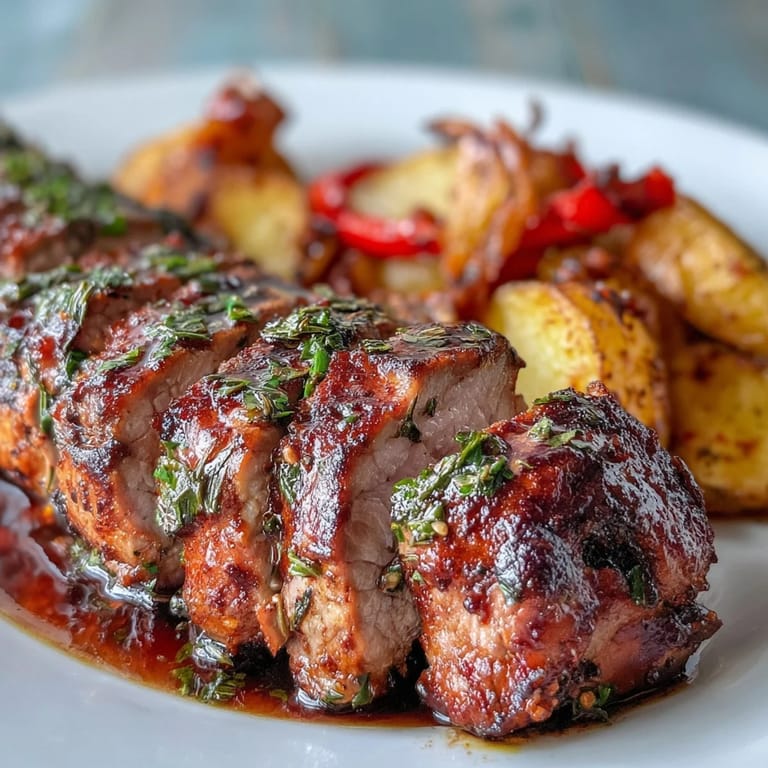
 This is the kind of meal that makes you feel capable and a little bit proud when you pull it off. The house smells incredible, the plate looks like something from a magazine, and everyone leaves the table happy.
Frequently Asked Questions
- → Can I use regular pork tenderloin instead of Ibérico?
Yes, regular pork tenderloin works well as a substitute. Monitor the cooking time closely as it may cook slightly faster than Ibérico pork due to differences in fat content.
- → How long should I marinate the pork?
Marinate the pork overnight or for a minimum of 8 hours. This allows the flavors from the rosemary, smoked paprika, and garlic to fully penetrate the meat, resulting in maximum flavor and tenderness.
- → What internal temperature should the pork reach?
The pork should reach an internal temperature of 63°C (145°F) when measured with a meat thermometer. Let it rest for 5 minutes after cooking to allow juices to redistribute throughout the meat.
- → Can I prepare any components ahead of time?
Yes, the pork can be marinated up to 24 hours in advance. You can also cut the potatoes and peppers earlier in the day, storing them covered in the refrigerator until ready to roast.
- → What wine pairs best with this dish?
A Spanish Rioja or Tempranillo pairs beautifully with the smoky, savory flavors of the pork. The wine's tannins complement the richness of the Ibérico meat while balancing the sweetness of the roasted peppers.
- → How do I know when the potatoes are perfectly crispy?
The potatoes should be golden brown on the outside with crispy edges, and tender when pierced with a fork. Stirring them halfway through roasting ensures even browning on all sides.