 Save
Save I stumbled on this dish while daydreaming about lemon posset after dinner one night. The idea of turning that caramelized sweetness into something savory stuck with me until I finally grabbed my kitchen torch and a chicken breast. The sugar crackled under the flame, releasing this intoxicating burnt-citrus smell that made me wonder why I hadn't tried this sooner. When I tossed the sliced chicken over creamy lemon pasta, it tasted like I'd invented something secret, something I wanted to keep to myself but couldn't help sharing.
The first time I made this for my sister, she stopped mid-bite and asked if I'd secretly taken a cooking class. I hadn't, but watching her scrape her plate clean felt like I had. We sat there with empty bowls and sticky forks, laughing about how something this simple could taste so deliberate. It became our go-to whenever one of us needed cheering up, a little reminder that good food doesn't need to be complicated to feel like care.
Ingredients
- Boneless, skinless chicken breasts: Pat them really dry before seasoning or the sugar won't caramelize properly, just learned that after a soggy first attempt.
- Granulated sugar: This creates the brûlée crust, use regular white sugar because brown sugar burns too fast under the torch.
- Lemon zest and juice: Fresh lemons only, the bottled stuff tastes flat and you lose that floral brightness that makes this dish sing.
- Heavy cream: It turns the sauce luscious and silky, you can swap in crème fraîche if you want a bit more tang.
- Parmigiano-Reggiano: The real stuff melts smoother and tastes sharper, pre-grated never gets that same creamy texture.
- Dried linguine or spaghetti: Long pasta holds the sauce better, plus it looks elegant twisted around the chicken on the plate.
- Garlic: Mince it fine so it melts into the butter and doesn't overpower the lemon.
- Fresh parsley: Adds a pop of color and a clean herbal note that cuts through the richness.
Tired of Takeout? 🥡
Get 10 meals you can make faster than delivery arrives. Seriously.
One email. No spam. Unsubscribe anytime.
Instructions
- Season and Sear the Chicken:
- Dry the chicken breasts with paper towels, then rub them with salt, pepper, and lemon zest. Heat olive oil in a skillet until it shimmers, then sear the chicken for 4 to 5 minutes per side until golden and just cooked through.
- Brûlée the Sugar Crust:
- Sprinkle a tablespoon of sugar evenly over the top of each chicken breast while still in the pan. Use a kitchen torch to caramelize the sugar until it bubbles and turns amber, or slide the skillet under a hot broiler for a minute, watching carefully so it doesn't burn.
- Rest and Slice:
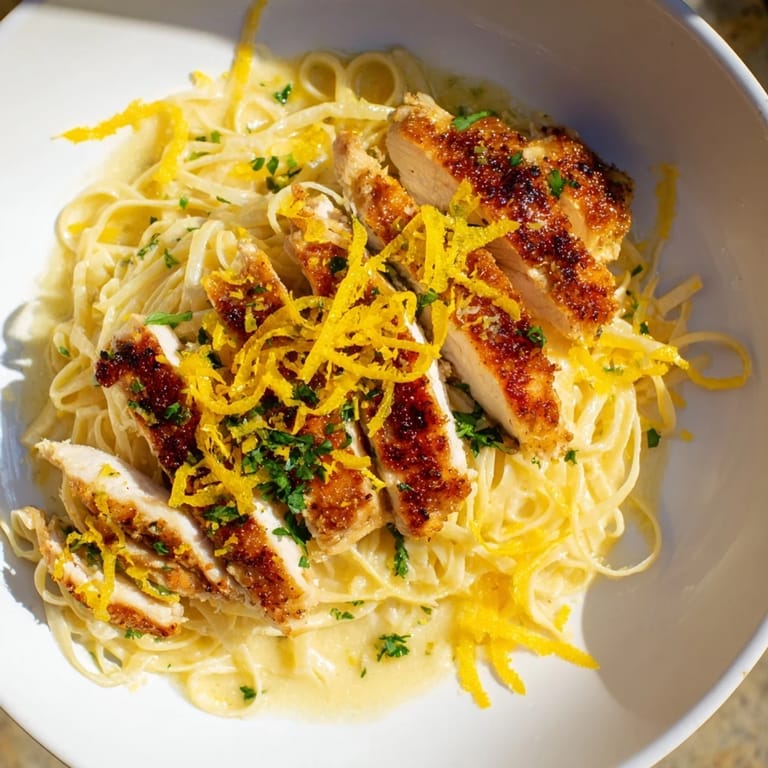
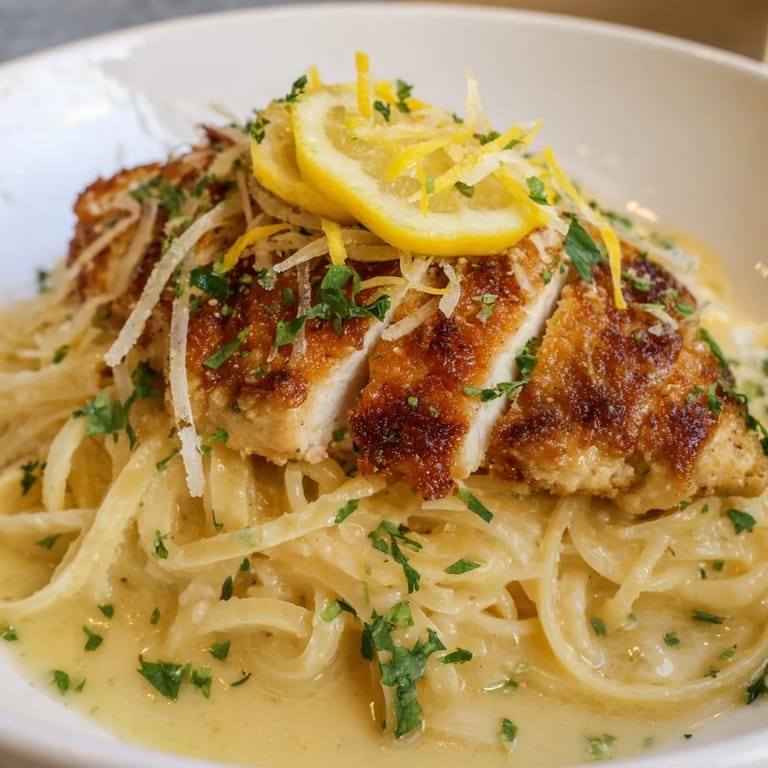
- Let the chicken rest on a cutting board for a few minutes so the juices settle. Slice it thinly on an angle, the caramelized crust will crack slightly and look gorgeous.
- Boil the Pasta:
- Bring a big pot of salted water to a rolling boil and cook the pasta until al dente. Reserve half a cup of the starchy pasta water before draining, it's your secret weapon for a silky sauce.
- Build the Sauce:
- Melt butter and olive oil in a large skillet over medium heat, then add minced garlic and cook until fragrant, about a minute. Stir in lemon zest and juice, pour in the heavy cream, and let it simmer gently until it thickens just a bit.
- Finish with Cheese:
- Add the grated Parmigiano-Reggiano to the sauce and stir until it melts into a smooth, glossy coating. Toss the drained pasta in the sauce, adding splashes of reserved pasta water until it clings to every strand.
- Plate and Garnish:
- Divide the pasta among plates and lay the sliced lemon brûlée chicken on top. Finish with extra lemon zest, a sprinkle of cheese, and fresh parsley leaves for color and freshness.
 Pin it
 One rainy Thursday, I made this dish just for myself and ate it straight from the skillet with a glass of cold white wine. The kitchen smelled like lemon and butter, the kind of smell that makes a quiet night feel intentional instead of lonely. I remember thinking that this is what cooking for one should always feel like, not sad or rushed, but like a small celebration of being exactly where you are.
How to Get the Perfect Brûlée Crust
The trick is to sprinkle the sugar in an even layer and hold the torch about two inches above the surface, moving it in slow circles. If you get too close, the sugar burns before it melts. If you don't have a torch, a preheated broiler works, but you have to watch it like a hawk because it goes from perfect to charred in seconds. I learned this the hard way after setting off my smoke alarm twice in one week.
Pairing and Serving Suggestions
This dish loves a crisp, citrusy white wine like Sauvignon Blanc or Pinot Grigio, something that mirrors the lemon without fighting the cream. I've also served it with a simple arugula salad dressed in olive oil and lemon juice, the peppery greens balance the richness beautifully. If you want a little crunch, toast some pine nuts or panko breadcrumbs in butter and scatter them over the top just before serving.
Make-Ahead and Storage Tips
You can sear and brûlée the chicken a few hours ahead, then slice and reheat it gently in the oven before serving. The pasta is best made fresh, but if you have leftovers, store them separately from the chicken in airtight containers in the fridge. Reheat the pasta with a splash of cream or pasta water to bring the sauce back to life, and warm the chicken gently so the crust doesn't get soggy.
- Leftovers keep for up to two days, but the brûlée crust softens over time.
- Freeze the cooked chicken (before brûléeing) for up to a month if you want to prep ahead.
- Fresh lemon zest added just before serving brightens up any reheated portions.
 Pin it
 This recipe taught me that dessert techniques belong in savory cooking too, and that a little sweetness can make something familiar feel entirely new. I hope it surprises you the same way it surprised me, one beautiful, crackling bite at a time.
Frequently Asked Questions
- → How do you achieve the caramelized lemon-sugar crust on the chicken?
Season the chicken with lemon zest and sugar, then use a kitchen torch or broiler to gently brûlée the sugar until golden and crisp.
- → What type of pasta works best with this dish?
Linguine or spaghetti are ideal as they hold the creamy lemon sauce well without overpowering the chicken.
- → Can the cream be substituted for a lighter alternative?
Yes, crème fraîche can be used for a tangier, lighter sauce without losing the creamy texture.
- → How should I season the sauce to balance flavors?
Use salt, pepper, lemon zest, and juice carefully, tasting throughout to maintain the bright and creamy harmony.
- → Are there any recommended garnishes to enhance the dish?
Extra lemon zest, freshly chopped parsley, and additional grated Parmigiano-Reggiano add freshness and depth.