 Save
Save There's something about the sizzle of onions hitting hot olive oil that immediately transports me to a small café in Tel Aviv, where I watched a cook slide shakshuka onto a table and everyone at that table seemed to pause for a moment. The steam rising off the pan carried the smell of cumin and fresh tomatoes, and I realized right then that this wasn't just eggs in sauce—it was a ritual, a way of turning a handful of vegetables into something that feels generous and alive. When I finally made it at home, I understood why: the sauce builds slowly, the spices whisper rather than shout, and then you crater those eggs into the warmth and wait.
I made this for a Saturday brunch once when friends dropped by unexpectedly, and I had nothing in the fridge but eggs, canned tomatoes, and half a red pepper. Instead of ordering takeout, I grabbed the cast-iron pan and started chopping, and by the time they'd settled at the table with coffee, the apartment smelled like a proper Mediterranean kitchen. One of them broke the yolk and dragged a piece of toast through it, and she just closed her eyes and said nothing—which somehow said everything.
Ingredients
- Olive oil (2 tbsp): Use good oil here—it's one of the few ingredients that tastes directly on your palate, and a fruity, peppery oil makes a real difference.
- Yellow onion (1 medium, finely chopped): The foundation of the whole dish; take your time with the sauté so it becomes sweet and soft rather than sharp.
- Red bell pepper (1, diced): Adds sweetness and color; the red ones are riper and gentler than their green cousins.
- Garlic (3 cloves, minced): Don't skip the minute of cooking after adding it—you'll taste the difference between raw garlic harshness and its toasted sweetness.
- Red chili (1 small, finely chopped, optional): Add as much or as little as your crowd can handle; it builds heat gradually, not aggressively.
- Crushed tomatoes (400 g can): The backbone of the sauce; canned tomatoes are often fresher tasting than fresh ones that have traveled.
- Fresh tomatoes (2 medium, chopped): These add brightness and texture that canned alone can't deliver; chop them by hand rather than a food processor.
- Tomato paste (1 tsp): A small amount concentrates the tomato flavor and deepens the color; don't use less or the sauce feels thin.
- Ground cumin (1 tsp): Toast it briefly in your mind as you're sautéing the aromatics—this spice is the soul of shakshuka.
- Sweet paprika (1 tsp): Choose Hungarian or Spanish paprika if you can; it's richer and less one-note than supermarket versions.
- Ground cayenne pepper (¼ tsp, optional): A quarter teaspoon is enough to whisper heat; add it only if you know your guests appreciate it.
- Ground coriander (½ tsp): Floral and subtle, it prevents the spice blend from tasting flat.
- Salt and black pepper (to taste): Add conservatively at first; you can always add more, but you can't take it back.
- Large eggs (4): Room temperature eggs nestle better into the sauce and cook more evenly than cold ones.
- Fresh parsley (2 tbsp, chopped): A bright, clean finish that cuts through the richness; tear it by hand if you have time.
- Fresh cilantro (2 tbsp, chopped): Adds an herbal complexity; use only if you love it, as cilantro is one of those love-it-or-hate-it ingredients.
- Crumbled feta cheese (optional): If you add it, use good feta with a creamy center; the cheap blocks are too salty and chalky.
Tired of Takeout? 🥡
Get 10 meals you can make faster than delivery arrives. Seriously.
One email. No spam. Unsubscribe anytime.
Instructions
- Start the base:
- Heat olive oil in a large skillet or cast-iron pan over medium heat until it shimmers slightly. You should smell it before it smokes—that's the signal that it's ready.
- Build the aromatics:
- Add the chopped onion and red bell pepper, stirring occasionally, until they soften and the onion turns translucent, about 5 to 7 minutes. The pan should sound gentle and smell sweet, not sharp.
- Wake up the spices:
- Stir in the minced garlic and finely chopped chili (if using), cooking for just 1 minute until fragrant. This brief moment transforms raw garlic into something rounded and warm.
- Build the sauce:
- Add the crushed tomatoes, fresh chopped tomatoes, and tomato paste, stirring everything together until the paste dissolves into the liquid. The mixture should look chunky and loose at this point.
- Season and simmer:
- Sprinkle in the cumin, paprika, cayenne (if you're using it), coriander, salt, and black pepper, stirring to distribute the spices evenly. Let this simmer gently for 10 to 12 minutes, stirring occasionally, until the sauce thickens and loses its raw, watery quality—you'll see the oil begin to separate slightly on the surface, which is exactly what you want.
- Nestle the eggs:
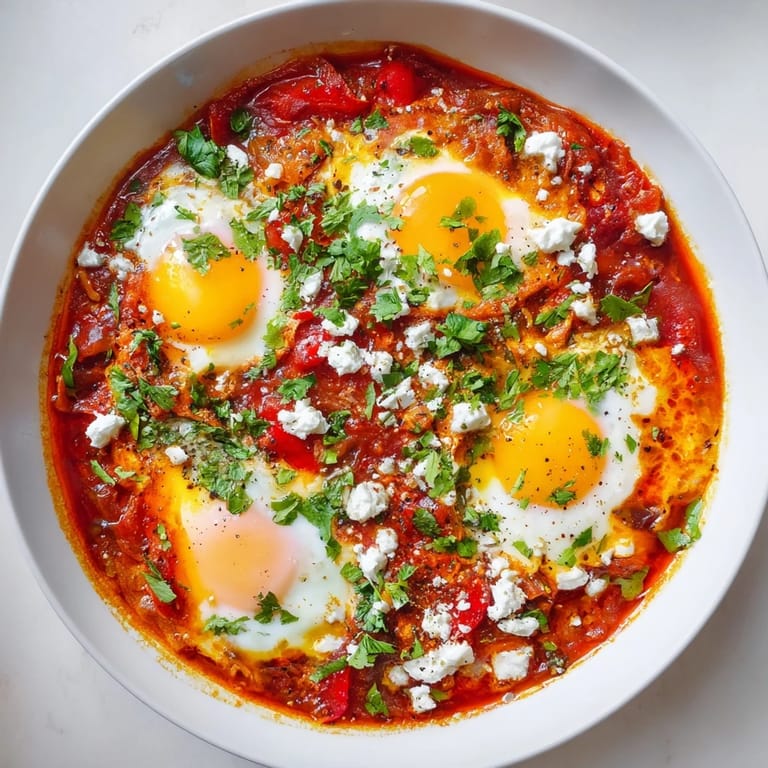
- Using the back of a wooden spoon, gently create 4 small wells in the sauce, spacing them evenly around the pan. Crack an egg into each well, being careful not to break the yolks.
- Finish with gentle heat:
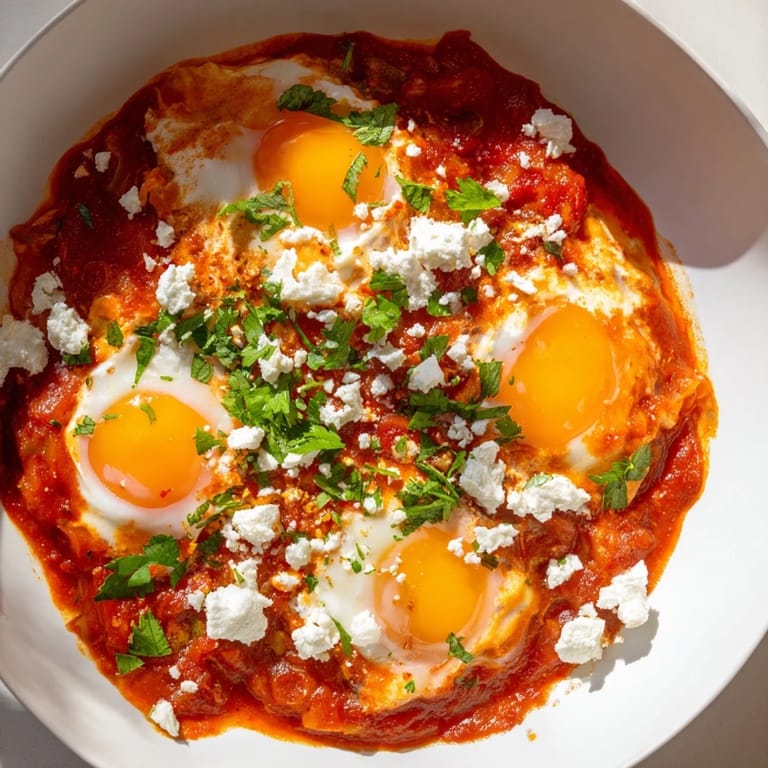
- Cover the pan and reduce the heat to medium-low, cooking for 6 to 8 minutes until the egg whites are completely set but the yolks still jiggle slightly when you nudge the pan. The timing depends entirely on how deeply you want those yolks cooked; start checking at 6 minutes.
- Garnish and serve:
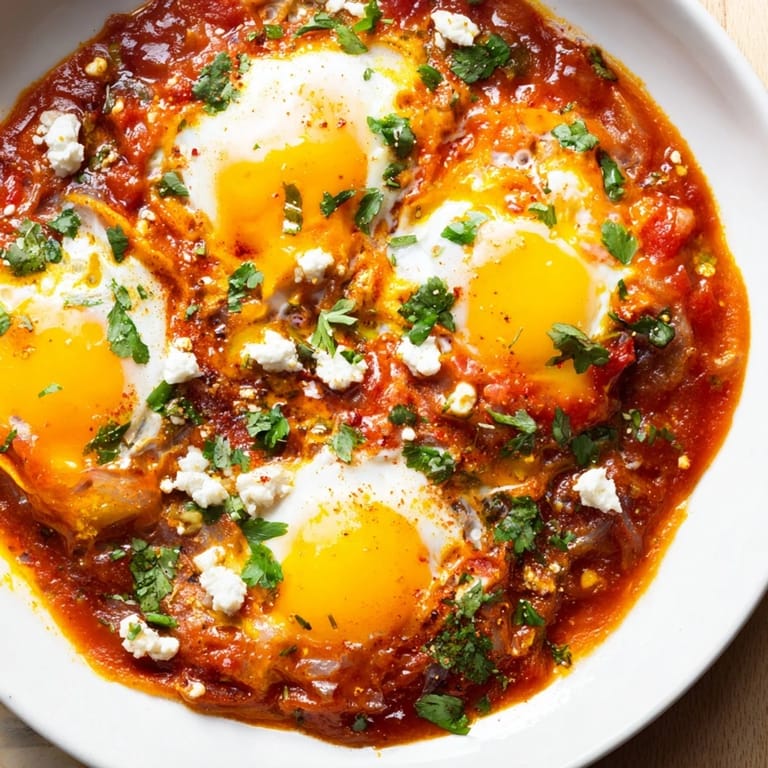
- Remove the pan from heat and scatter the fresh parsley and cilantro over the top. Add crumbled feta if you like, then carry the whole pan to the table and serve immediately while everything is still steaming, ideally with warm pita or crusty bread.
 Pin it
 I remember making this on a weeknight when the day had been long and nothing felt quite right, and somehow the act of chopping vegetables and listening to them soften in the pan became a small meditation. By the time I slid the eggs into their sauce cradles, I'd stopped thinking about everything else, and the dish became a kind of gift I was giving myself without overthinking it.
Why Cast-Iron Matters Here
A cast-iron skillet holds heat more evenly than stainless steel, which means your sauce simmers gently without threatening to scorch at the edges, and the eggs cook at the same pace all around. It also looks beautiful when you carry it to the table, which is half the pleasure of a dish like this—there's no transferring to another plate, just eating directly from the warm pan while it's still steaming. If you don't have cast-iron, a heavy-bottomed stainless or enameled Dutch oven works, though the presentation loses a bit of its casual elegance.
Playing with Variations
The beauty of shakshuka is how forgiving it is; the base sauce is rock-solid, and everything else is flexible. I've made it with sautéed spinach stirred into the sauce just before the eggs go in, which adds an earthy sweetness, and I've roasted thin slices of eggplant and let them soften into the tomato base, which gives it a different texture entirely. Some cooks add a pinch of smoked paprika for a deeper, almost barbecued quality, and others finish with a dollop of labneh or Greek yogurt dropped into the center, which cools the heat beautifully and adds a tangy richness.
Making It a Meal
Shakshuka is technically an appetizer or light lunch, but it's generous enough that four people can happily make a meal of it, especially if you serve it with good bread for soaking up the sauce and maybe a simple salad on the side. I've found that the best occasions for shakshuka are when you're not in a hurry, when you can sit down with people and eat slowly, breaking the yolks and watching the richness blend into the sauce.
- Offer warm pita, crusty sourdough, or even thick slices of focaccia for dragging through the sauce.
- A simple green salad with lemon dressing balances the richness without competing for attention.
- If you're serving it as part of a larger spread, pair it with hummus, labneh, and fresh vegetables for a complete mezze experience.
 Pin it
 There's something quietly powerful about a shared pan of shakshuka—it pulls people together in a way that individual plates never quite do. Serve it hot, eat it slowly, and you'll understand why this humble dish has survived centuries.
Frequently Asked Questions
- → What type of pan is best for cooking this dish?
A large skillet or a cast-iron pan with a lid is ideal to ensure even cooking of the sauce and eggs.
- → Can I adjust the spice level?
Yes, you can add or omit red chili and cayenne pepper to suit your heat preference.
- → What are good accompaniments for this dish?
Warm pita bread, crusty bread, labneh, or Greek yogurt complement the flavors well.
- → Is it possible to add vegetables to this dish?
Yes, sautéed spinach or eggplant can be added for extra texture and flavor variety.
- → How can I achieve a smokier flavor?
Adding a pinch of smoked paprika enhances the smoky notes in the tomato sauce.
- → How do I know when the eggs are perfectly cooked?
Cook covered until the egg whites are set but the yolks remain soft for a creamy texture.