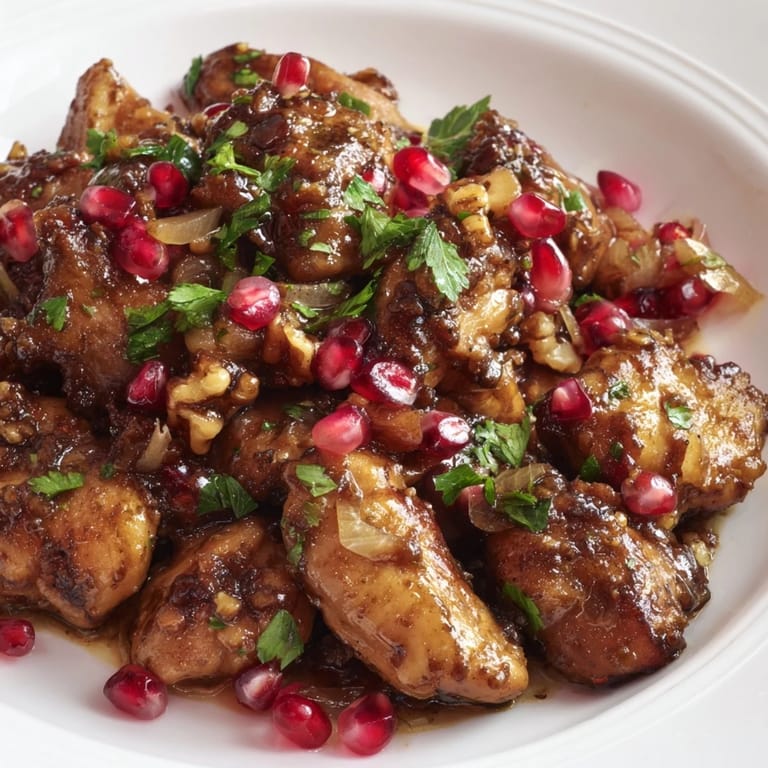
 Save
Save I first tasted fesenjan at a family gathering years ago, watching my aunt stir this deep crimson sauce with such care, the kitchen filling with the most intoxicating aroma of walnuts and pomegranate. She explained it was about balance—sweet against tart, rich against bright—and something clicked about how a single dish could tell the whole story of Persian cooking. The moment I learned to make it myself, I understood why people saved this for special occasions.
I made this for my partner one winter evening when we wanted something that felt celebratory but still cozy, and watching their face when they tasted that first spoonful—that moment when they understood the complexity—made the whole hour and a half of cooking feel worthwhile.
Ingredients
- Boneless chicken thighs or duck (700 g): Thighs stay tender through the long simmer while absorbing the sauce; duck is traditional and richer if you can find it.
- Salt and black pepper (1/2 tsp each): Season the meat generously before it hits the pan—this builds flavor from the ground up.
- Vegetable oil (2 tbsp): Use something neutral so it doesn't compete with the delicate spices.
- Large onion: Finely chopped onions will practically dissolve into the sauce, adding natural sweetness and body.
- Ground walnuts (250 g): Toast them lightly before grinding if you have time; it deepens their flavor and makes the sauce taste less flat.
- Pomegranate molasses (500 ml): This is the soul of the dish—it's tart and complex, nothing like pomegranate juice, so don't substitute.
- Water (500 ml): Keep extra on hand; you might need to adjust the consistency as it simmers.
- Sugar (2 tbsp): Start with less and taste as you go—every pomegranate molasses brand tastes slightly different.
- Ground cinnamon, turmeric, and cardamom (1/2 tsp, 1/4 tsp, 1/4 tsp): These spices whisper in the background; they're what make people ask what that subtle depth is.
Tired of Takeout? 🥡
Get 10 meals you can make faster than delivery arrives. Seriously.
One email. No spam. Unsubscribe anytime.
Instructions
- Season and prepare your meat:
- Pat the chicken or duck dry and season generously with salt and pepper on all sides. This helps them brown properly and builds the foundation of flavor.
- Toast the aromatics:
- Heat oil in a large heavy pot over medium heat and add the onions, letting them soften and turn golden for 8–10 minutes. You want them caramelized at the edges, which adds a subtle sweetness that balances the tang later.
- Brown the meat:
- Nestle the meat into the onions and let it sit undisturbed for a minute or two before turning, allowing it to develop a light crust. This takes about 5–7 minutes total and shouldn't be rushed.
- Toast the walnuts briefly:
- Stir in the ground walnuts and cook for 2–3 minutes, stirring constantly to prevent them from catching on the bottom. You'll notice the mixture getting fragrant and slightly darker.
- Build the sauce:
- Pour in the pomegranate molasses, water, sugar, and spices, stirring everything together until smooth. Taste a tiny bit of sauce before simmering to note where the sweetness-to-tang ratio sits.
- Simmer low and slow:
- Bring everything to a gentle boil, then drop the heat to low, cover, and let it bubble quietly for 1 hour. Stir every 15 minutes or so and taste the meat—it should be getting tender but not falling apart yet.
- Reduce and finish:
- Uncover and simmer for another 30 minutes, stirring more frequently now as the sauce concentrates. You'll see oil from the walnuts rise to the surface, and the sauce will deepen in color and cling to the meat. Adjust the sweetness and seasoning here if needed.
- Serve with reverence:
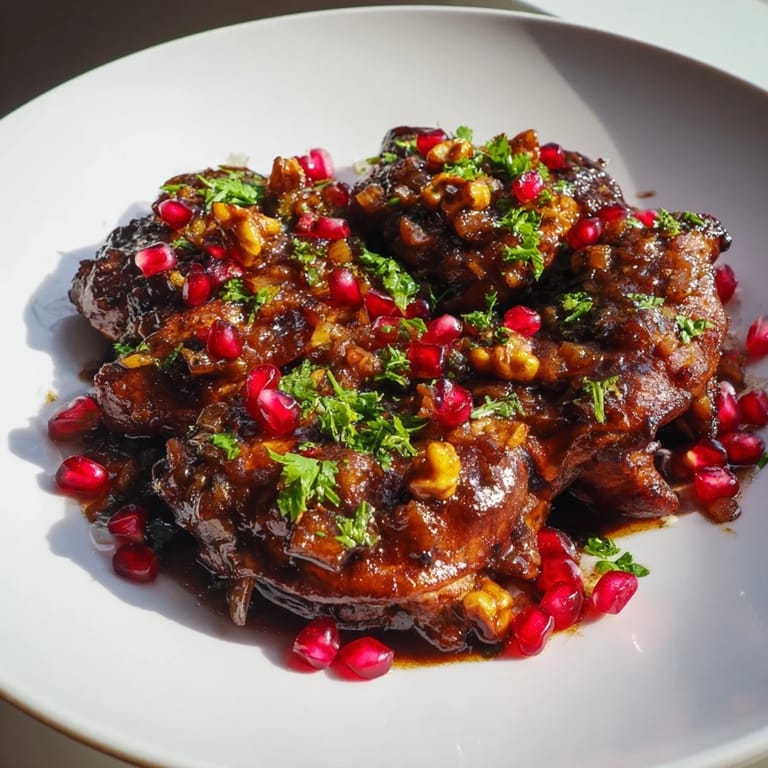
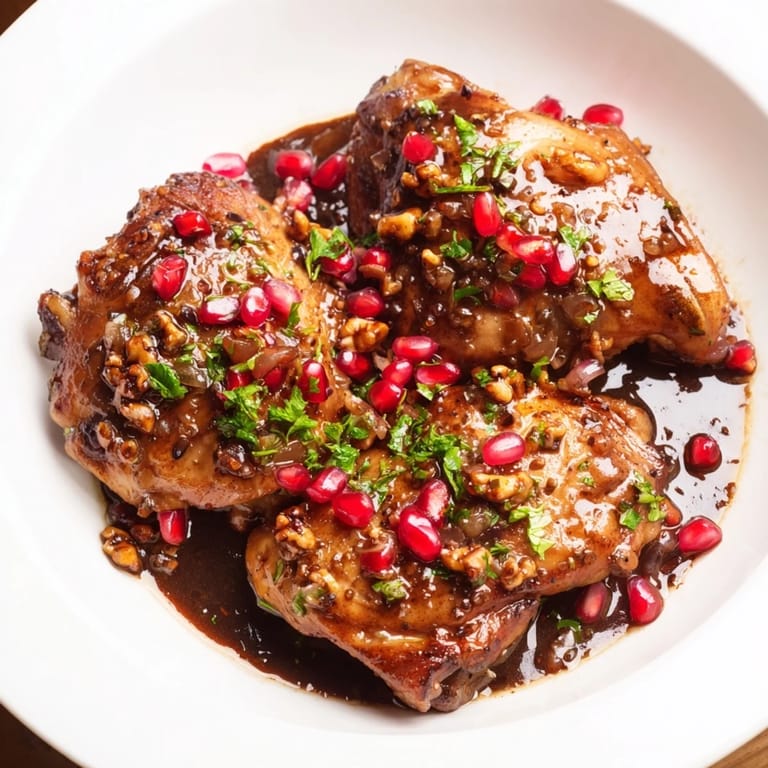
- Transfer to a serving dish, garnish with pomegranate seeds and fresh parsley if you have them, and serve over steamed basmati rice or saffron chelow. The sauce should be rich and glossy, coating each spoonful.
 Pin it
 There's something about fesenjan that turns a regular dinner into an occasion, even if it's just the two of you at the table. When someone asks what makes it special, you realize it's not one thing—it's the patience, the balance, the way it honors a centuries-old tradition while still feeling fresh on your plate.
The Story of the Sauce
The genius of fesenjan is that it doesn't feel fancy even though it absolutely is. The sauce comes from generations of Persian cooks figuring out that ground walnuts and pomegranate molasses together create something deeper than either ingredient alone—a kind of roundness that makes even simple chicken taste like a feast. The spices aren't loud or domineering; they're there to subtly remind you of markets and mountain air.
Timing and Temperature Matter More Than You Think
I used to rush the simmering phase, thinking more heat would save time, but that's when the sauce breaks and the meat gets stringy. The real magic happens at a gentle bubble, low enough that you have to lean in to hear it. The meat gets silky, the sauce becomes velvety, and you can actually taste the individual spices instead of them blurring together.
Variations and Why They Work
Duck is the traditional choice because its richness plays beautifully against the tart sauce, but chicken thighs are honest and accessible and work just as well. If you're cooking vegetarian, mushrooms or eggplant absorb the sauce differently but still create something delicious—they release their own earthiness into the mix. Some cooks add dried fruit like apricots or barberries for extra tang, and there's no wrong answer; fesenjan is forgiving that way.
- Consider making a double batch and freezing half for a night when you want something that tastes impressive but requires zero effort.
- Serve alongside a simple green salad dressed with lemon and olive oil to cut through the richness.
- If pomegranate seeds feel extravagant, a scatter of fresh pomegranate molasses drizzle on top adds visual interest and reinforces the flavor.
 Pin it
 Fesenjan reminds me why cooking matters: it's one of the few things that brings together history, technique, balance, and the simple joy of feeding someone you care about. Every time you make it, you're keeping alive a conversation that's been happening in Persian kitchens for centuries.
Frequently Asked Questions
- → What type of meat works best in this stew?
Boneless chicken thighs or duck pieces are ideal, as they become tender and flavorful when simmered slowly in the walnut-pomegranate sauce.
- → Can this dish be made vegetarian?
Yes, you can replace the meat with mushrooms or eggplant to create a vegetarian-friendly version while preserving the rich sauce flavors.
- → How is the sauce thickened?
The ground walnuts naturally thicken the sauce as it simmers, creating a dense, creamy texture without added thickeners.
- → What spices are used to flavor the stew?
Cinnamon, turmeric, and optional cardamom add warmth and depth, complementing the tangy pomegranate and rich walnuts.
- → What is the recommended side for serving?
Steamed basmati rice or traditional Persian saffron rice pairs perfectly, soaking up the flavorful sauce.
- → How do you adjust sweetness and tang?
Adjust sugar and pomegranate molasses quantities to balance the sweet and sour notes to your preference.