 Save
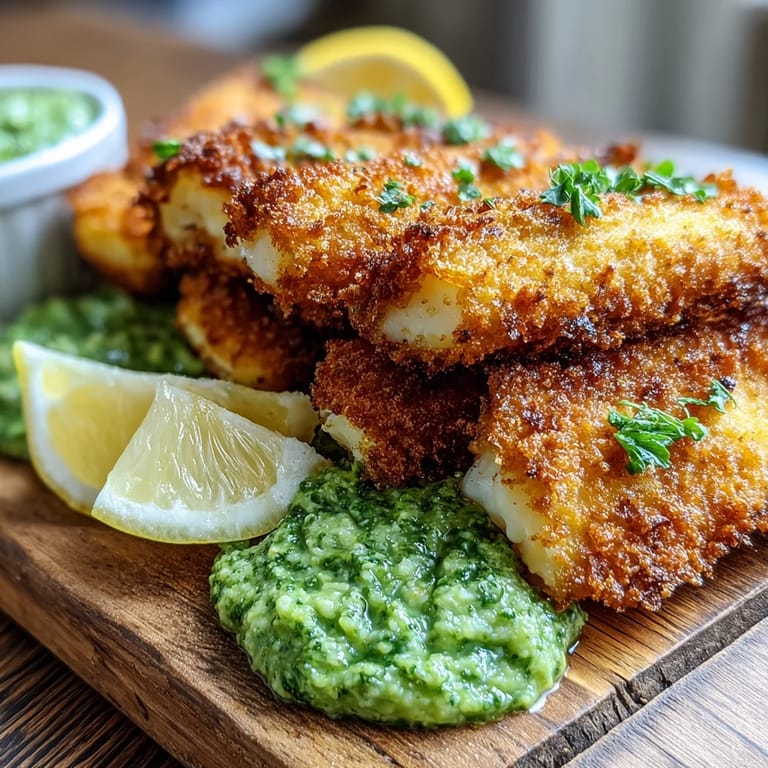
Save My daughter once declared fish fingers boring, so I made these instead. The moment she bit into the first goujon and tasted that salty Parmesan crust against the flaky haddock, her face changed completely. The pea pesto was an afterthought that became the star, bright green and creamy enough to make even frozen peas feel luxurious. Now she asks for them every Friday, and I never feel like I'm making the same tired meal twice.
I served these at a casual dinner party once, calling them fancy fish fingers as a joke. No one laughed because they were too busy eating. One friend scraped the last bit of pesto from the bowl with her finger when she thought I wasn't looking. That's when I knew this recipe had earned its place in my regular rotation.
Ingredients
- Haddock fillets: Choose thick, firm fillets so the goujons hold their shape during coating and baking, and always pat them dry before you start or the breading will slide right off.
- Plain flour: This is your base layer, helping the egg stick properly and creating that essential foundation for a crispy crust.
- Eggs: Beat them well with a fork until completely smooth so every goujon gets an even coat without streaks or clumps.
- Panko breadcrumbs: Their airy, jagged texture gives you that satisfying crunch you can't get from regular breadcrumbs, and they brown beautifully in the oven.
- Parmesan cheese: Finely grated Parmesan melts slightly into the crust, adding a savoury depth and helping the panko turn golden without burning.
- Black pepper, sea salt, smoked paprika: These seasonings wake up the breading, with the paprika adding a subtle warmth and colour that makes the goujons look professionally done.
- Frozen peas: They're sweeter than fresh in winter, and blanching them briefly keeps their colour vivid and their flavour clean.
- Fresh basil: This is what makes the pesto sing, bringing a peppery brightness that balances the richness of the Parmesan and oil.
- Pine nuts: They add a buttery, luxurious texture, but sunflower seeds work brilliantly if you're avoiding nuts or just want to save money.
- Garlic: One small clove is enough to add punch without overwhelming the delicate sweetness of the peas.
- Extra virgin olive oil: Use a good one here because it's not being cooked, and its fruity flavour will come through in every spoonful of pesto.
- Lemon juice: The acidity cuts through the richness and makes the pesto taste fresher and brighter, almost like spring in a bowl.
Tired of Takeout? 🥡
Get 10 meals you can make faster than delivery arrives. Seriously.
One email. No spam. Unsubscribe anytime.
Instructions
- Get the oven ready:
- Preheat your oven to 200°C (180°C fan) and line a baking sheet with parchment paper so nothing sticks. This step matters more than you think because a hot oven from the start ensures the crust crisps up instead of going soggy.
- Set up your breading station:
- Arrange three shallow bowls in a row, one with flour, one with beaten eggs, and one with the panko mixed with Parmesan, salt, pepper, and paprika. Keep them close together so you can move quickly and your hands don't get too messy.
- Coat the haddock strips:
- Dip each piece of fish first into the flour, shaking off the excess, then into the egg, letting the extra drip back into the bowl, and finally press it firmly into the Parmesan panko mixture. Make sure every side is covered completely, then lay them on the baking sheet with a little space between each one.
- Bake until golden:
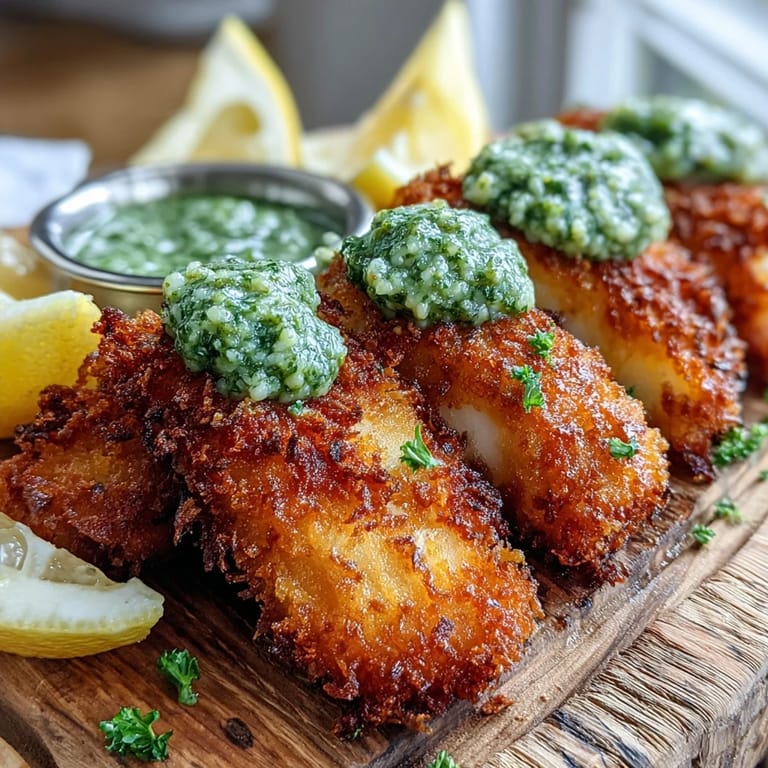
- Lightly spray or drizzle the goujons with olive oil, then bake for 15 to 20 minutes, flipping them halfway through so both sides turn crisp and golden. They're done when the crust is crunchy and the fish flakes easily with a fork.
- Make the pea pesto:
- While the fish bakes, blanch the peas in boiling water for 2 minutes, then drain and run them under cold water to stop the cooking and keep them bright green. Throw them into a food processor with the basil, Parmesan, garlic, pine nuts, olive oil, and lemon juice, then blitz until it's mostly smooth but still has a bit of texture, and season with salt and pepper to taste.
- Serve hot:
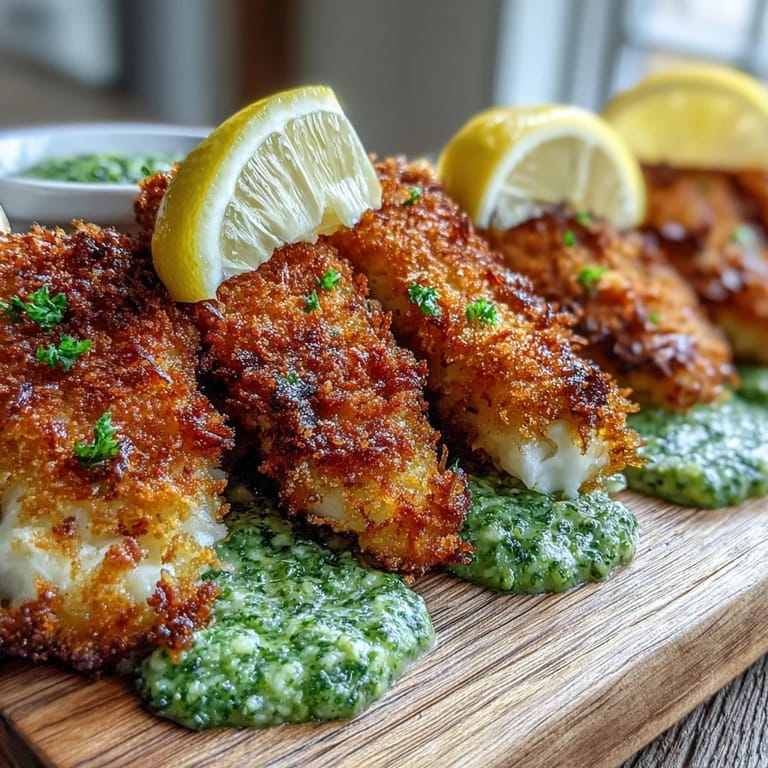
- Plate the goujons while they're still hot and crispy, with a generous spoonful of pea pesto on the side and lemon wedges for squeezing. If you want to make it feel like a proper meal, add some mixed salad leaves dressed simply with olive oil and a pinch of salt.
 Pin it
 The first time I made this for myself on a quiet Tuesday night, I ate standing at the counter with the pesto jar in one hand and a goujon in the other. There was no one to impress, no table to set, just me and a meal that tasted like I'd actually bothered to care. Sometimes that's enough to make a dish feel special.
Choosing Your Fish
Haddock works beautifully here because it's firm and mild, but cod or pollock are just as good if that's what's available or on sale. I've even used sustainably caught coley when I wanted to try something different, and it held up perfectly. The key is making sure the fillets are thick enough to cut into proper strips without falling apart, and always check they're sustainably sourced because it makes a difference to how the oceans look for the next generation.
Making It Ahead
You can coat the goujons a few hours in advance and keep them covered in the fridge until you're ready to bake, which is brilliant if you're hosting and don't want to be stuck breading fish while guests arrive. The pesto keeps well in the fridge for up to three days in a sealed jar with a thin layer of olive oil on top to stop it browning. Just give it a good stir before serving because the oil will separate slightly, and taste it again in case it needs a squeeze more lemon after sitting.
Serving Suggestions
These goujons are wonderful with a simple green salad and some crusty bread to mop up the pesto, but they also work as part of a bigger spread with roasted vegetables or a bowl of buttery new potatoes. My kids love them with oven chips and a pile of raw carrot sticks, turning it into a deconstructed fish and chips that feels less heavy. If you're feeling fancy, serve them as a starter with the pesto in a little dish for dipping and watch them disappear before the main course even arrives.
- Pair with a crisp Sauvignon Blanc or a dry sparkling wine if you're drinking, or a chilled elderflower tonic if you're not.
- Leftover goujons reheat surprisingly well in a hot oven for 5 minutes, though they're never quite as crispy as the first time.
- The pesto is incredible stirred through hot pasta the next day, thinned with a splash of pasta water and topped with more Parmesan.
 Pin it
 This recipe has become one of those reliable favourites I turn to when I want something that feels a bit special without requiring too much effort. It proves that you don't need a deep fryer or hours of prep to make something worth remembering.
Frequently Asked Questions
- → Can I use a different type of fish?
Yes, cod or pollock work excellently as substitutes for haddock. Choose firm white fish that will hold its shape when cut into strips and coated.
- → How do I make this gluten-free?
Simply replace the plain flour with gluten-free flour and use gluten-free breadcrumbs instead of panko. The rest of the preparation remains the same.
- → Can I make the pea pesto in advance?
Absolutely. The pea pesto can be prepared up to 2 days ahead and stored in an airtight container in the refrigerator. Drizzle a thin layer of olive oil on top to prevent browning.
- → What can I use instead of pine nuts?
Toasted sunflower seeds make an excellent nut-free alternative with a similar texture and taste. Walnuts or almonds also work well if nut allergies aren't a concern.
- → Can these be fried instead of baked?
Yes, you can shallow fry the goujons in vegetable oil over medium-high heat for 3-4 minutes per side until golden and cooked through. Drain on paper towels before serving.
- → How do I know when the haddock is cooked?
The goujons are ready when the crust is golden brown and the fish flakes easily with a fork. The internal temperature should reach 63°C (145°F).