 Save
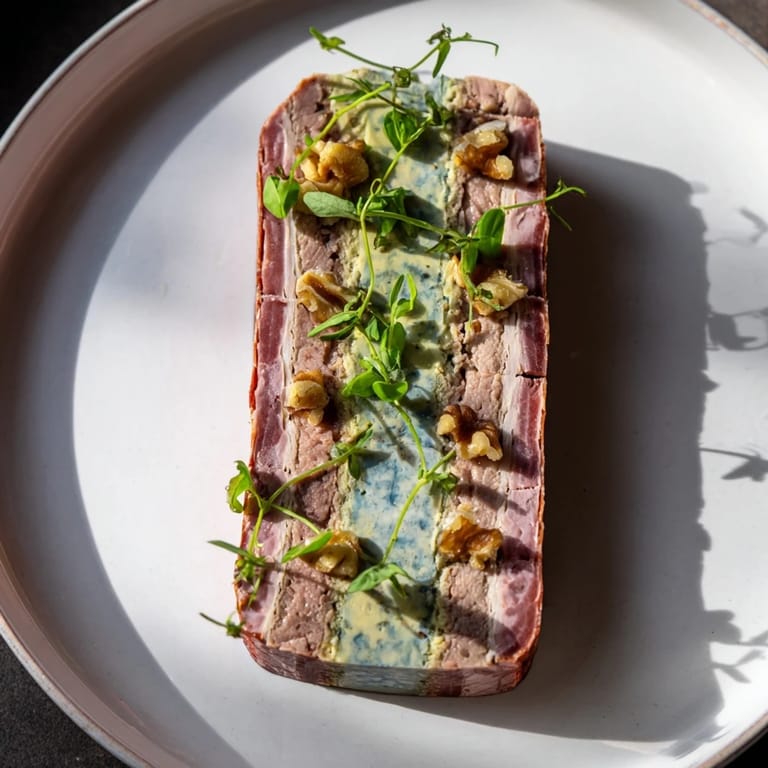
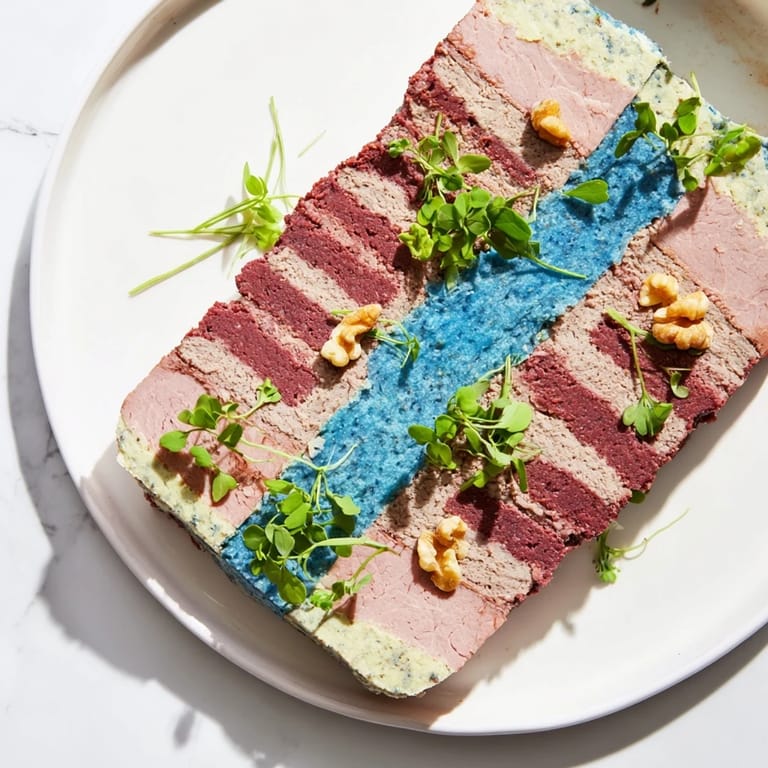
Save The Grand Canyon Rim came to life in my kitchen on a rainy afternoon when I was flipping through travel photos and felt a strange pull to cook something that captured the majesty of those layered cliffs. I'd been playing with the idea of a meat terrine for months, but it wasn't until I stared at that canyon's striations of red, orange, and shadow that I knew exactly what I wanted to build. The challenge excited me, that nervous energy you get before attempting something that feels just beyond your skill level. I started sketching layers on a piece of paper, imagining a river of blue cheese cutting through the meat like water carving through stone. Within an hour, I had a plan and a reason to finally justify buying that beautiful block of Danish blue.
I made this for a dinner party where everyone was supposed to bring something, and someone actually brought store-bought dessert after tasting this. That moment of quiet, focused attention around the table when I sliced into it and the blue cheese river revealed itself felt like a small magic trick. One guest asked for the recipe immediately, and another said it was the most impressive thing anyone had ever served them in their own kitchen. I remember feeling proud but also a little smug, which I probably shouldn't admit.
Ingredients
- Beef sirloin, thinly sliced (300 g): Provides a deep, minerally foundation and takes on the binding layer beautifully without falling apart.
- Turkey breast, thinly sliced (250 g): Offers a lighter note that keeps the terrine from feeling too heavy, and it absorbs flavors while staying tender.
- Smoked ham, thinly sliced (200 g): Adds smoke and salt that makes every bite interesting, and the color variation helps create those canyon-like strata.
- Pork loin, thinly sliced (200 g): The most delicate of the meats here, and it bridges flavors between the beef and turkey.
- Blue cheese, crumbled (150 g): This is your river, your visual statement, and it needs to be a cheese you actually like eating on its own.
- Cream cheese, softened (100 g): Acts as the glue for the blue cheese mixture, keeping it smooth and spreadable while maintaining structure.
- Heavy cream (30 ml for the river, 60 ml for binding): The cream for the river mousse should be just enough to make it spreadable, while the binding cream helps hold the whole structure together.
- Fresh chives, finely chopped (1 tbsp): A quiet flavor that doesn't overshadow the blue cheese but adds a grassy note if you taste carefully.
- Fresh parsley, finely chopped (1 tbsp): Brings a fresh brightness that cuts through the richness.
- Eggs (4 large): These are your secret binder, creating a custard that holds everything together without tasting eggy if you don't overdo it.
- Whole milk (120 ml): Tempers the eggs and helps create a gentle binding matrix.
- Salt and pepper: Don't skip seasoning the binding layer separately, because it won't season itself as it bakes.
Tired of Takeout? 🥡
Get 10 meals you can make faster than delivery arrives. Seriously.
One email. No spam. Unsubscribe anytime.
Instructions
- Set your stage:
- Preheat your oven to 160°C and line your loaf pan with plastic wrap, leaving enough overhang that you can fold it over like a envelope at the end. This step matters more than it sounds, because it makes unmolding infinitely less stressful and keeps the whole thing from drying out.
- Make your binding custard:
- Whisk together eggs, milk, heavy cream, salt, and pepper until it's pale and foamy. This is your edible glue, so make sure it's well combined and seasoned generously.
- Craft the blue cheese river:
- Blend crumbled blue cheese with softened cream cheese, heavy cream, chives, and parsley until it's smooth and spreadable like soft butter. Taste it before you commit it to the terrine.
- Begin the canyon architecture:
- Start layering beef, turkey, ham, and pork in overlapping slices along the pan, angling them slightly downward to mimic canyon walls. Work thoughtfully here, because the visual impact happens in this moment.
- Bind as you layer:
- After every two or three meat layers, brush lightly with the egg mixture using a pastry brush or the back of a spoon. You want it moist enough to hold everything together, not swimming in liquid.
- Install the river:
- About halfway up the pan, spoon the blue cheese mixture in a thick line down the center, then continue layering meats around and over it, maintaining that downward angle. This is your chance to get creative with the visual.
- Seal the terrine:
- Layer a final sheet or two of meat on top, then fold the overhanging plastic wrap over to seal everything inside like a present. Cover tightly with foil for good measure.
- Set it in a water bath:
- Place your loaf pan into a larger roasting dish and fill the outer dish with hot water until it comes halfway up the sides. This gentle, humid heat cooks the binding layer through without turning the meat rubbery.
- Bake with patience:
- Bake for 1 hour 15 minutes until the center is set but the whole thing still feels slightly tender when you press it gently. You're looking for the texture of set custard, not rubber.
- Cool completely:
- Remove from the oven and let it cool all the way to room temperature before refrigerating, because this allows the structure to firm up gradually. Then refrigerate for at least 4 hours, though overnight is better.
- Unmold with confidence:
- Run a thin knife around the edges, then invert onto a cutting board or serving platter and pull away the plastic wrap gently. Slice thickly to reveal all your layers and that blue cheese river running through the middle.
 Pin it
 There's a moment when you slice into this and see that blue cheese vein running through all those layers of meat, and the canyon metaphor actually works, and someone at your table takes a breath. That's when you know the effort was worth it. I think that's when food stops being just sustenance and becomes a conversation, a memory, something people talk about months later.
Why This Works as a Showstopper
This terrine works because it surprises on every level. The visual is unexpected, the flavors are layered and complex without being confusing, and it feels special without tasting overwrought. You're using straightforward ingredients treated with care, which is actually the definition of elegant cooking. When people taste it, they're eating something they've never had before, and that shift from expectation to reality is what makes it memorable. It's the kind of dish that makes you feel like a real cook, not because it's difficult, but because it looks like it should be.
Building Flavor Through Layering
The genius of this dish is that each meat layer brings its own personality. The beef grounds everything with umami depth, the turkey keeps it refined, the ham adds smoke and salt, and the pork brings delicate sweetness. When you slice through, all of those flavors hit you at once, but not chaotically. The blue cheese river cuts through with its sharp, salty personality, and somehow it ties everything together instead of competing. I've learned that when you're layering flavors, restraint matters more than abundance. Each ingredient has space to be itself.
Serving and Pairing Suggestions
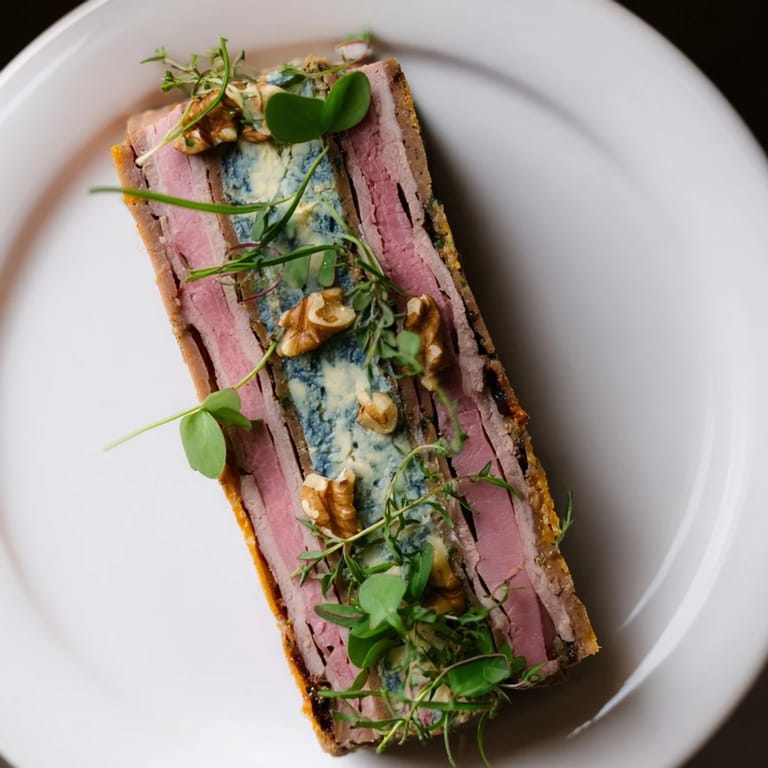
Serve this chilled or at cool room temperature, sliced thick enough that you see all the layers. Pair it with crusty bread that can stand up to the richness, or toasted brioche if you want to lean into luxury. A light red wine like Pinot Noir or a crisp white like Sauvignon Blanc both work beautifully because they cut through the richness without overwhelming the subtle flavors. I've also served this with a simple green salad dressed with sherry vinaigrette, and that acidity was exactly what the plate needed to feel balanced.
- Toast brioche or bread beforehand so it has texture and won't get soggy under the terrine's richness.
- If you're making this ahead, unmold it the morning you're serving and keep it covered loosely in the refrigerator.
- Leftover slices are still delicious the next day, and they're perfect with a simple grain or salad for lunch.
 Pin it
 This is the kind of dish that reminds you why cooking matters. It's not just about feeding people, it's about creating something they've never seen before, something that makes them pause and actually pay attention to what they're eating. Make it, serve it, and let the blue cheese river do the talking.
Frequently Asked Questions
- → How do I create the canyon cliff effect?
Arrange the sliced meats in overlapping layers sloping downward alternately to mimic canyon walls.
- → What is the blue cheese river made of?
It combines blue cheese, cream cheese, heavy cream, chives, parsley, and black pepper blended into a smooth mousse.
- → Why use a bain-marie for baking?
Baking in a bain-marie ensures gentle, even cooking and helps the terrine set without drying out.
- → Can I substitute the blue cheese mousse?
Yes, herbed goat cheese mousse offers a milder alternative while maintaining a creamy texture.
- → What garnishes complement this dish?
Microgreens, edible flowers, and toasted walnuts add freshness and texture to the presentation.
- → How should I serve the layered terrine?
Slice thickly to reveal the layers and serve alongside toasted brioche or crusty bread and a light salad.