 Save
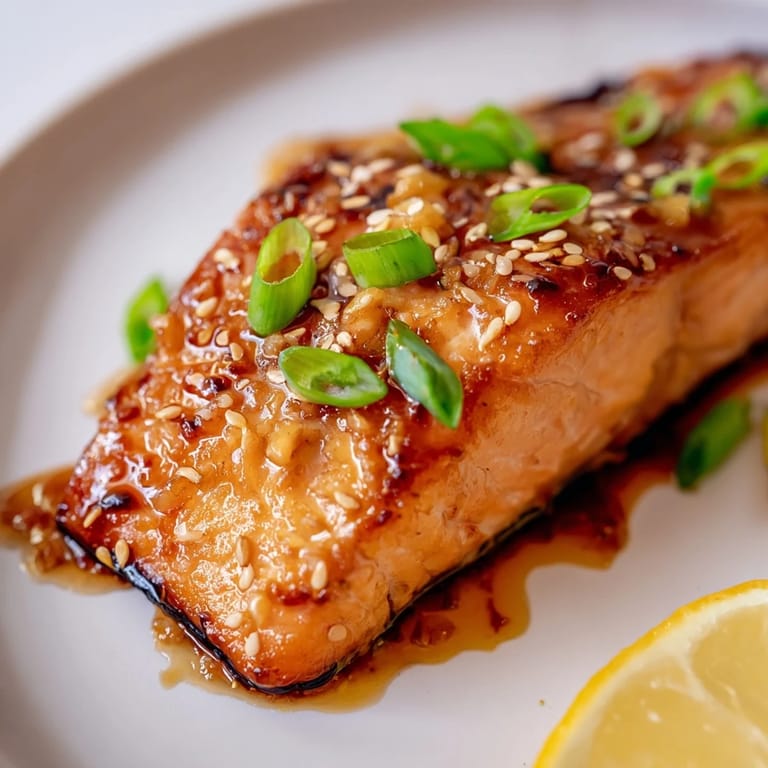
Save There's something about the sizzle of salmon hitting a hot pan that stops me mid-conversation every time. I discovered this ginger-soy glaze years ago when I was trying to impress someone at a dinner party and accidentally grabbed the wrong bottle from my spice rack—turns out that happy mistake led to this now-favorite weeknight staple. The glaze clings to the fish like it was meant to be there, sweet and salty and utterly forgiving, even if you're not sure what you're doing. What I love most is that it comes together faster than you'd expect, turning an ordinary Tuesday into something that feels intentional.
I made this for my sister one spring evening when she was going through a rough patch, and I remember how she paused after the first bite and just smiled—not because she was being polite, but because sometimes food catches you when you need it. She asked for the recipe that night, and now it's something we both make when we want to feel like we're taking care of ourselves. It's become our quiet ritual, proof that good cooking doesn't require hours or fancy techniques, just the willingness to try.
Ingredients
- Salmon fillets (4, skin-on, 6 oz each): The skin-on part is crucial—it crisps up beautifully and keeps the flesh moist underneath, so don't skip it even if boneless feels easier.
- Kosher salt and freshly ground black pepper: Season generously on both sides; the salt draws out moisture so the skin can crisp properly.
- Low-sodium soy sauce (1/4 cup): Low-sodium gives you control over the final salt level and lets the ginger shine through without overpowering the fish.
- Honey (2 tbsp): It balances the salty-savory elements and caramelizes slightly as it reduces, creating a subtle gloss.
- Fresh ginger (1 tbsp, grated): Don't use ground ginger here; the fresh stuff adds a brightness that the dried version simply can't match.
- Garlic (2 cloves, minced): Mince it fine so it distributes evenly through the glaze and doesn't overpower any single bite.
- Rice vinegar (1 tbsp): This adds a gentle acidity that cuts through the richness and prevents the glaze from feeling cloying.
- Sesame oil (1 tsp): A little goes a long way here; it's the whisper that makes people ask what the secret ingredient is.
- Sesame seeds and green onions (for garnish): Toasted sesame seeds add a nutty crunch, and fresh green onions bring a sharp, oniony note that wakes up your palate at the end.
Tired of Takeout? 🥡
Get 10 meals you can make faster than delivery arrives. Seriously.
One email. No spam. Unsubscribe anytime.
Instructions
- Prepare your fillets:
- Pat the salmon thoroughly dry with paper towels—this is the quiet step that changes everything, because dry skin means crispy skin. Season both sides with salt and pepper, and let them sit for just a minute so the seasoning adheres.
- Make your glaze:
- Whisk together the soy sauce, honey, ginger, garlic, rice vinegar, and sesame oil in a small bowl until the honey dissolves. Taste it if you're brave; it should taste a little too salty and a little too sweet, because it will mellow out once it hits the hot pan.
- Heat your pan properly:
- Get your large nonstick or cast iron skillet hot over medium-high heat—you'll know it's ready when a drop of water skitters across the surface. Add just a whisper of neutral oil if your pan isn't naturally nonstick.
- Sear the salmon skin-side down:
- Place the fillets skin-side down in the hot pan and resist the urge to move them for a full four minutes. This is where patience pays off; the skin will crisp and release itself from the pan when it's ready.
- Cook the other side briefly:
- Flip carefully and cook for just two to three minutes on the flesh side, which doesn't need much time since it's already cooked through underneath from the heat of the pan.
- Add the glaze and finish:
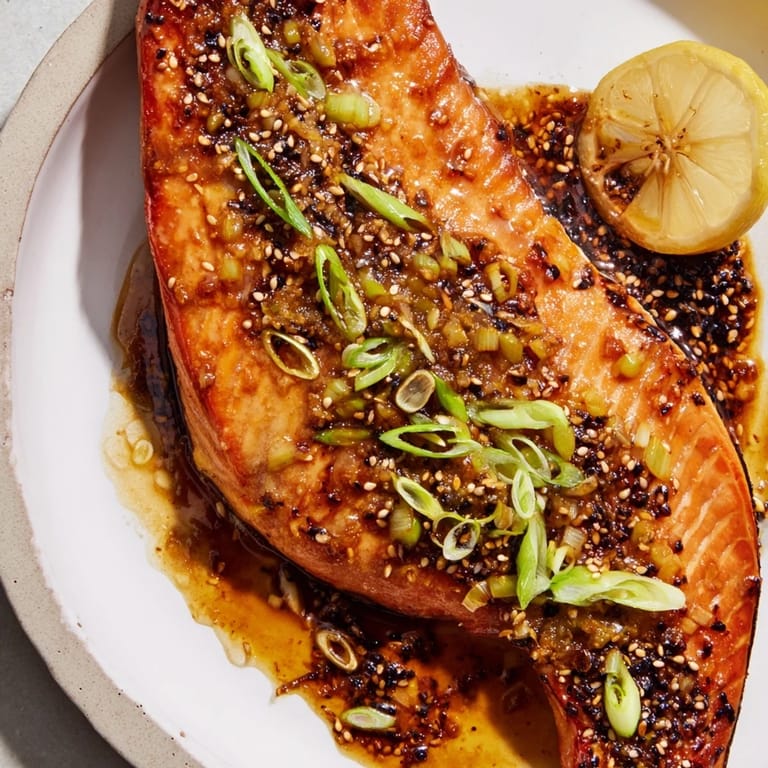
- Lower the heat to medium-low and pour the glaze over the fillets, then spend the next two to three minutes spooning the bubbling sauce back over the fish. You'll see it reduce slightly and cling to the salmon, and that's when you know it's done.
- Rest and serve:
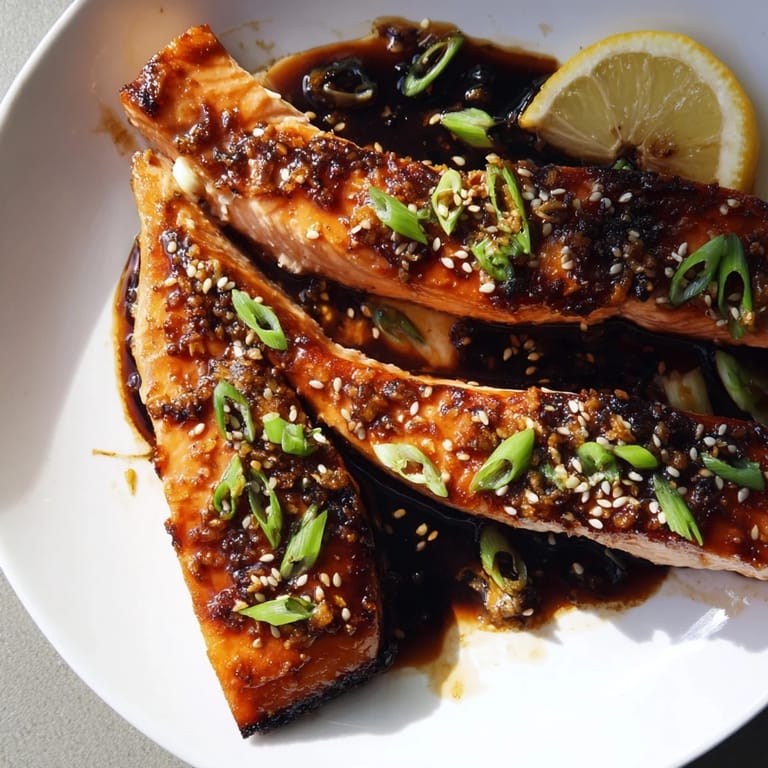
- Pull the pan off the heat and spoon that glossy, reduced glaze over each fillet as you plate it. Serve immediately while everything is warm.
 Pin it
 One quiet Sunday morning, I made this for just myself, no occasion or audience, and I realized somewhere between the first and second bite that cooking for yourself with the same care you'd use for company is its own kind of self-respect. That's when this recipe stopped being a weeknight shortcut and became something deeper—proof that elegance doesn't require effort, just intention.
The Secret of Crispy Skin
Crispy salmon skin is a skill that reveals itself through repetition and patience, not technique. The key is temperature—your pan needs to be hot enough that the fish sizzles immediately, but not so hot that the outside chars before the inside cooks. I learned to listen for that initial, sharp sizzle and trust it, rather than checking constantly. Once you get the sound right, everything else follows naturally.
Why This Glaze Works
The magic of this glaze is that it respects the salmon instead of fighting it—the soy sauce provides umami depth, the honey adds sweetness and helps it caramelize, the ginger brings brightness, and the rice vinegar keeps everything from feeling heavy. Each ingredient has a job, and none of them overshadow the fish. I've experimented with dozens of variations, and this balance keeps calling me back.
Making It Your Own
This recipe is forgiving enough to bend toward your tastes without breaking. Some nights I add a pinch of red chili flakes if I'm in a spicy mood, other times I swap the honey for maple syrup because I have it on hand and I like the subtly deeper flavor it brings. The structure stays solid; only the details shift.
- Add 1/2 teaspoon of red chili flakes to the glaze if you want heat that builds gently rather than strikes all at once.
- Serve it over steamed jasmine rice to soak up every drop of glaze, or alongside quickly sautéed greens for a lighter plate.
- Make the glaze a few hours ahead and let it sit in the fridge; it will taste even more integrated when you use it, though bring it back to room temperature first.
 Pin it
 This meal has become my go-to when I want to feel like I'm cooking well without second-guessing myself, and I hope it does the same for you. It's the kind of dish that proves good food doesn't need to be complicated to be memorable.