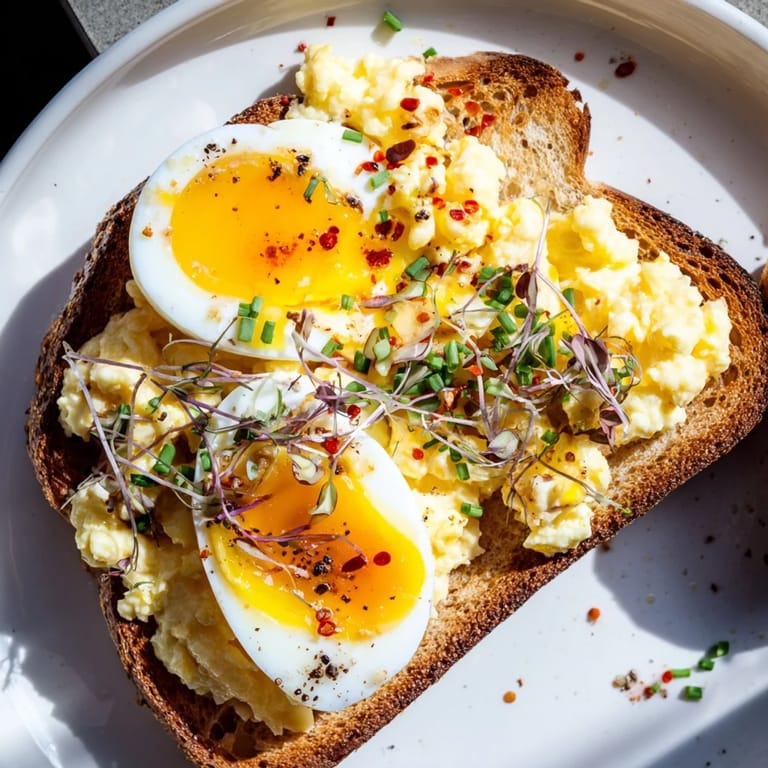
 Save
Save There's something almost playful about a breakfast that asks you to taste three different ways of cooking the same ingredient on one plate. I discovered this egg flight on a lazy Sunday morning when I had exactly three eggs left and couldn't decide which preparation I wanted most, so I made them all. The contrast of textures—creamy scrambled against the jammy yolk of the soft-boiled, with the fried egg's crispy edges tying it together—turned out to be more exciting than any single style could be alone.
I remember making this for a friend who was skeptical that eggs could ever be "interesting" for breakfast. Watching her face when she tried all three preparations in one bite—that quiet moment when her fork stopped midway because she was genuinely thinking about what she was tasting—made me understand why this dish mattered. It's not fancy, but it's thoughtful.
Ingredients
- Sourdough or country-style bread, one large slice: You want something with enough structure to hold the weight of three eggs without falling apart; the slight tang of sourdough plays beautifully against the richness of the yolks.
- Three large eggs: Fresh eggs matter more here than anywhere else—the yolks will be brighter, and the whites will have better structure when fried.
- Unsalted butter, 1 tablespoon: Split between the scramble and the fry, it builds a gentle richness without overwhelming the delicate egg flavors.
- Olive oil, 1 teaspoon: Added to the pan with the fried egg, it prevents sticking and creates those crispy, lacy edges everyone wants.
- Salt and freshly ground black pepper, to taste: Season as you go, especially the soft-boiled egg which sits plain and benefits from a delicate hand with seasoning.
- Chives, chili flakes, and microgreens (optional): These aren't decoration—they add brightness and a gentle heat that cuts through the richness.
Tired of Takeout? 🥡
Get 10 meals you can make faster than delivery arrives. Seriously.
One email. No spam. Unsubscribe anytime.
Instructions
- Toast your canvas:
- Preheat the oven to 180°C (350°F) and place your bread slice on a baking sheet for 5 to 7 minutes until the edges turn golden and the inside stays tender enough to bite through without shattering. You're looking for that moment when the bread is firm but still has give.
- Create the soft-boiled moment:
- Bring water to a rolling boil in a small pot, then gently lower in one egg and set a timer for 6 and a half minutes. When the timer goes off, transfer it immediately to ice water—this stops the cooking and lets you peel it without the yolk getting chalky.
- Scramble with patience:
- In your nonstick skillet over medium-low heat, melt half a tablespoon of butter and whisk one raw egg with a tiny pinch of salt and pepper into the pan. This is where patience matters: stir slowly and gently with a spatula, letting the eggs set into creamy, tender curds rather than rushing into brown, rubbery bits.
- Fry with confidence:
- Wipe out the skillet, add the remaining butter and olive oil over medium heat, and crack in your third egg. Let the whites set and turn opaque while the yolk stays glossy and slightly jiggly, about 2 to 3 minutes, then season carefully with salt and pepper.
- Compose your plate:
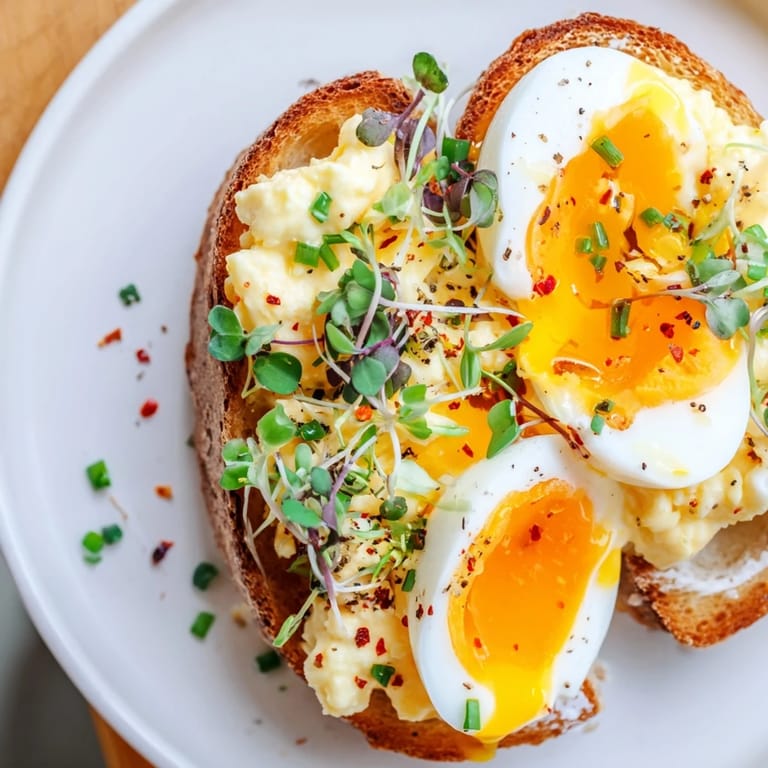
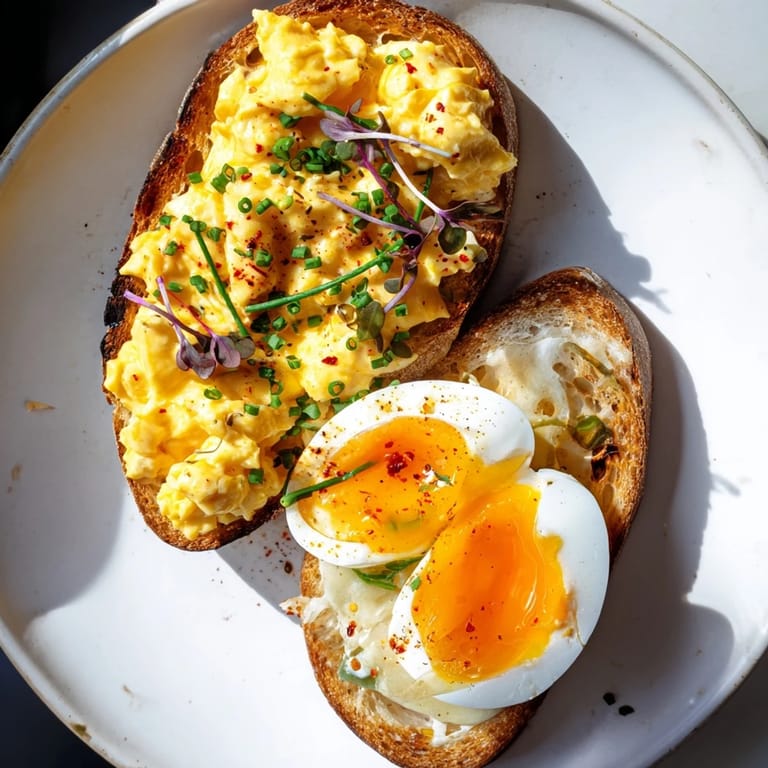
- Place the toasted bread on a plate and divide it into thirds in your mind: scrambled eggs on the left, halved soft-boiled on the center, fried egg on the right. This arrangement lets you taste each preparation as its own moment, or all together in one bite.
- Finish with intention:
- Sprinkle chives, a pinch of chili flakes, and a handful of microgreens over the whole thing, then serve immediately while everything is still warm and the fried egg yolk hasn't set.
 Pin it
 This breakfast became my answer to the question, 'What do you eat when you want something that feels special but doesn't require a recipe you've memorized?' There's no stress in it, just three things you probably already know how to cook, arranged in a way that suddenly feels like you've created something.
Why These Three Preparations
Each cooking method draws out something different from the egg. Scrambling breaks the yolk and white together into a unified, creamy texture. Soft-boiling concentrates the richness of the yolk while keeping the white tender and almost delicate. Frying keeps everything separate until you want it to mingle, and that runny yolk becomes a sauce for the toast and the other eggs. Together, they tell the story of how heat changes a single ingredient in three completely different ways.
The Toast Matters More Than You Think
I spent years making eggs on mediocre bread, and I always wondered why they felt flat. The moment I started using sourdough or country-style bread toasted until it was crisp on the outside and still yielding within, everything changed. The bread became a vehicle rather than an afterthought, its slight tartness and hearty texture catching every yolk and holding the whole plate together.
Variations and Swaps
This plate is endlessly flexible once you understand the principle. You can swap in poached eggs for soft-boiled if you prefer that silkier texture, or try an omelette folded into thirds instead of the scrambled version if you want something more structured. Add avocado slices for creaminess, smoked salmon for smoke and salt, or quickly sautéed spinach for earthiness and green.
- Use gluten-free bread if you need to, though the flavor will be slightly different and less toasty.
- If dairy is a concern, brush the bread with olive oil instead of toasting in butter, and cook all three eggs in just oil.
- Microgreens aren't just pretty—they add a peppery bite that cuts through richness and wakes up the entire plate.
 Pin it
 This is the kind of breakfast that proves you don't need complexity to feel like you've done something good for yourself. It's meditation in egg form, a small plate that asks you to slow down.
Frequently Asked Questions
- → What types of eggs are used in the dish?
Three styles: scrambled, soft-boiled, and fried are prepared to offer a variety of textures and flavors.
- → Can the bread be substituted?
Yes, sourdough or country-style bread works best, but gluten-free alternatives can be used if needed.
- → How is the soft-boiled egg cooked for the right consistency?
Boil the egg for approximately 6½ minutes, then cool in ice water before peeling and halving.
- → What garnishes complement the toast?
Fresh chives, chili flakes, and microgreens add color and a subtle flavor lift to the dish.
- → Are there suggestions for adding nutrition?
Try avocado slices, smoked salmon, or sautéed spinach for extra nutrients and flavor variety.