 Save
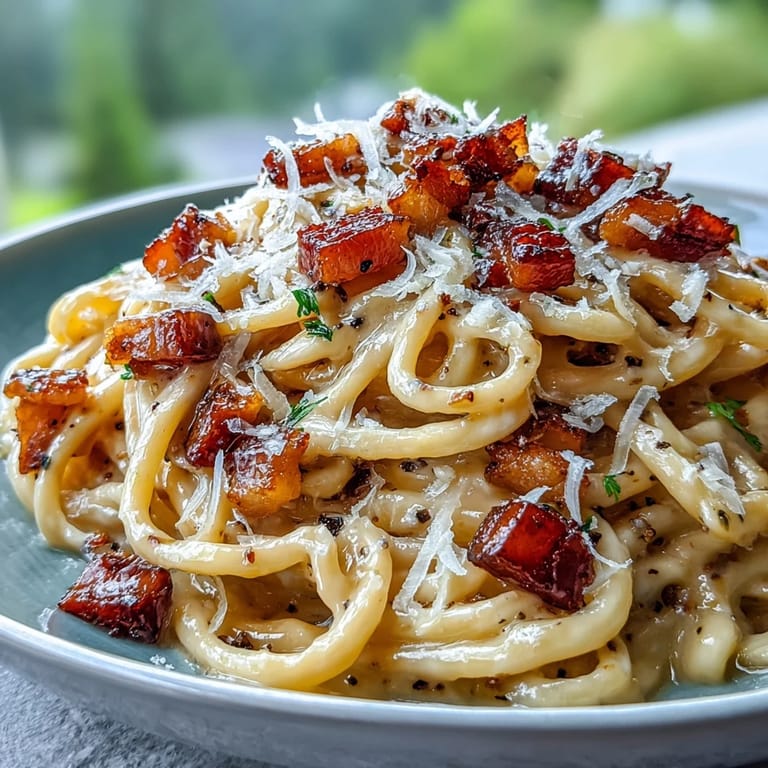
Save The spiraliser sat in my drawer for months before I finally pulled it out on a rainy Tuesday, determined to do something interesting with the odd-looking celeriac I'd grabbed at the market. I wasn't expecting much—honestly, I thought it might taste like dirt—but within minutes of tossing those ribbons with salty pancetta and silky egg, I realized I'd stumbled onto something that didn't need apologies or explanations. It just worked. My partner walked in, sniffed the air, and asked if we were having real pasta, and I didn't correct him until he'd already taken three bites.
I made this for a friend who was trying to cut back on pasta but missed it desperately, the kind of person who talks about spaghetti the way some people talk about ex-lovers. She was skeptical when I told her what it was, but she finished her entire plate and then scraped the skillet with a piece of lettuce to get the last bits of sauce. That's when I knew this wasn't just a workaround—it was legitimately delicious on its own terms.
Ingredients
- Celeriac: This knobby root vegetable turns tender and slightly sweet when cooked, and spiralising it gives you long, noodle-like strands that hold onto sauce beautifully without going mushy.
- Pancetta: The rendered fat becomes the cooking medium for the celeriac, and those crispy bits add bursts of salty richness in every bite.
- Eggs and egg yolks: The extra yolks make the sauce luxuriously creamy without any cream, and whisking them with Parmesan ahead of time ensures they emulsify smoothly instead of scrambling.
- Parmesan cheese: Use the real stuff and grate it yourself—pre-grated varieties often contain anti-caking agents that prevent the sauce from becoming silky.
- Butter: It adds a subtle richness and helps the celeriac cook evenly without sticking to the pan.
- Olive oil: Just enough to get the pancetta started without making the dish greasy.
- Black pepper and sea salt: Freshly cracked pepper is non-negotiable here, it's not just seasoning but part of the dish's identity.
Tired of Takeout? 🥡
Get 10 meals you can make faster than delivery arrives. Seriously.
One email. No spam. Unsubscribe anytime.
Instructions
- Prep the celeriac:
- Peel away the rough outer skin and run it through your spiraliser to create long, curly strands. They'll look a bit like thick spaghetti, and that's exactly what you want.
- Crisp the pancetta:
- Heat olive oil in a large skillet over medium heat, then add diced pancetta and let it sizzle until the edges turn golden and crispy, about 5 to 7 minutes. Remove the pancetta but leave that beautiful rendered fat right where it is.
- Make the egg mixture:
- Whisk together whole eggs, extra yolks, grated Parmesan, a generous amount of black pepper, and just a pinch of salt. The mixture should look thick and pale yellow.
- Cook the celeriac:
- Drop butter into the same skillet with the pancetta fat and let it melt, then add your spiralised celeriac. Toss and sauté for 4 to 6 minutes until it softens but still has a little bite, like al dente pasta.
- Bring it together:
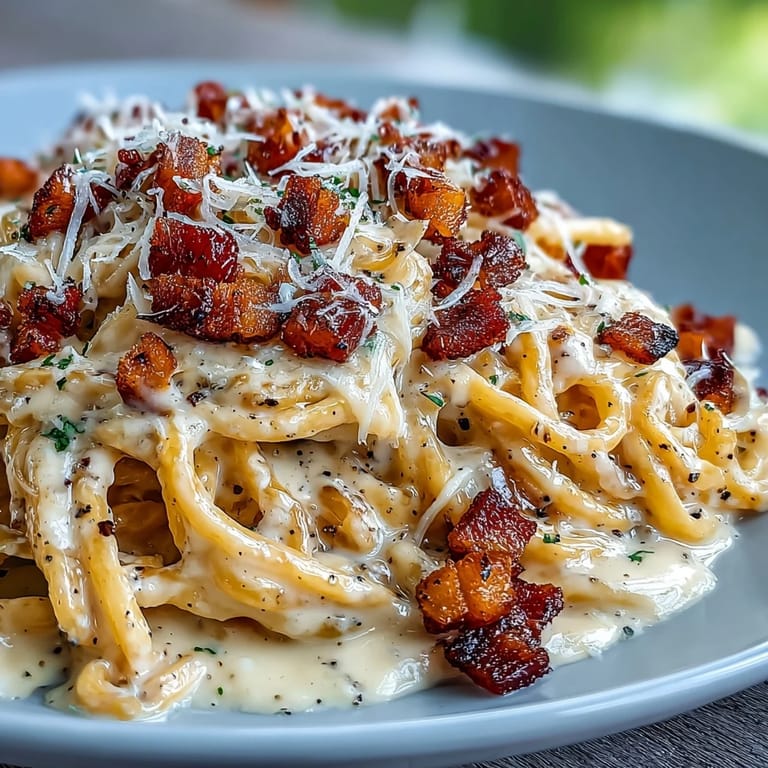
- Pull the skillet off the heat completely, then immediately pour in the egg mixture and toss everything together with tongs, working quickly so the residual heat gently cooks the eggs into a glossy, creamy sauce. If it looks too thick, splash in a tablespoon or two of hot water.
- Serve right away:
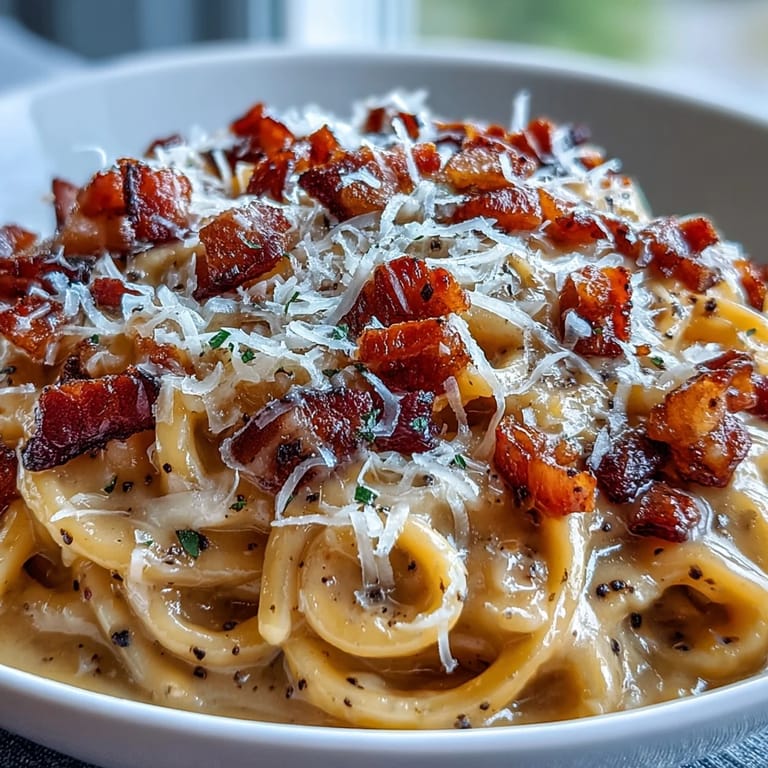
- Plate it up while it's still steaming, then shower it with extra Parmesan and a few more grinds of black pepper. Carbonara waits for no one.
 Pin it
 There was a Sunday afternoon when I made this for my parents, who are deeply traditional about Italian food and generally suspicious of vegetable substitutes. My dad took one bite, paused, and said it reminded him of a celery root dish his grandmother used to make, which wasn't true but felt like the highest compliment he could offer. My mom just asked for seconds, which in her language means the same thing.
How to Spiralise Celeriac Without Losing Your Mind
Celeriac is round and uneven, which makes it tricky to spiralise compared to zucchini or sweet potato. I've found that slicing off the top and bottom to create flat, stable surfaces makes all the difference—it won't wobble or slip as you crank the handle. If you don't have a spiraliser, you can use a julienne peeler or even a sharp knife to cut thin matchsticks, though it takes a bit longer. The key is to keep the strands relatively uniform so they cook at the same rate.
What to Do With Leftovers
Carbonara is one of those dishes that really shines when it's freshly made, but leftovers can be gently reheated in a skillet over low heat with a splash of water or cream to loosen the sauce. It won't be quite as silky as the first time, but it's still satisfying, especially for a quick lunch the next day. I've also tossed cold leftovers into a green salad with a bit of lemon juice and olive oil, and it worked better than I expected.
Pairing and Serving Suggestions
This dish is rich enough to stand on its own, but a simple arugula salad with lemon vinaigrette cuts through the creaminess and adds a peppery freshness that balances the plate. A crisp white wine like Pinot Grigio or Vermentino is a natural match, though I've also enjoyed it with a light-bodied red when the weather turns cold. If you want to make it a fuller meal, serve it alongside roasted asparagus or sautéed greens.
- Top with a handful of toasted pine nuts or walnuts for extra texture.
- Add a pinch of red pepper flakes if you like a subtle kick of heat.
- Garnish with fresh parsley or chives to brighten up the presentation.
 Pin it
 This recipe taught me that sometimes the best versions of classic dishes come from accidents, curiosity, and a willingness to let vegetables surprise you. I hope it becomes one of those meals you return to when you want comfort without compromise.
Frequently Asked Questions
- → Can I prepare the celeriac noodles in advance?
Yes, you can spiralise the celeriac up to 24 hours ahead. Store the noodles in an airtight container in the refrigerator, patting them dry before cooking to remove excess moisture.
- → What can I substitute for pancetta?
Streaky bacon works perfectly as a direct substitute. For a vegetarian version, try smoked tofu or crispy mushrooms for umami depth. Prosciutto can also add a delicate, salty flavor.
- → How do I prevent the eggs from scrambling?
Remove the skillet from heat before adding the egg mixture, and toss vigorously to coat the noodles. The residual heat gently cooks the eggs into a creamy sauce rather than scrambling them.
- → Can I use pre-grated Parmesan cheese?
Freshly grated Parmesan is recommended for the best texture and flavor. Pre-grated varieties often contain anti-caking agents that can affect the creaminess of the sauce.
- → What wine pairs best with this dish?
A crisp white wine like Pinot Grigio or Vermentino complements the creamy sauce and pancetta beautifully. Alternatively, a light-bodied Chardonnay without heavy oak works wonderfully.
- → How do I know when celeriac noodles are properly cooked?
Celeriac should be tender but retain a slight bite, similar to al dente pasta. Cooking for 4-6 minutes ensures they're not mushy while still being pleasantly soft.