 Save
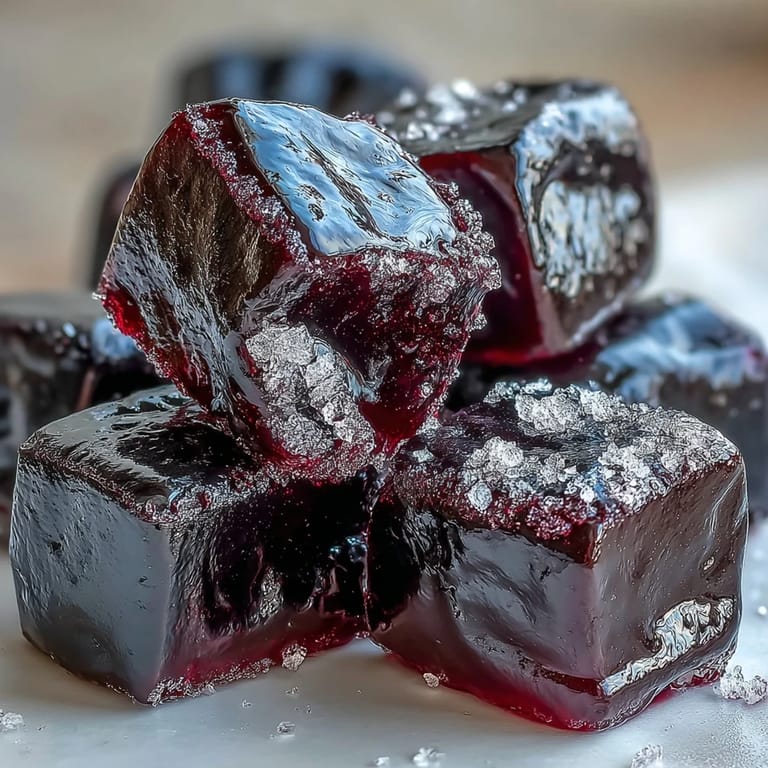
Save There's something magical about the moment you taste a candy that feels unexpected—when two flavors you'd never consciously paired suddenly make perfect sense together. I discovered this pairing quite by accident on a gray afternoon, standing in a Scandinavian candy shop, holding a bag of licorice pastilles next to a jar of black currant gummies. The shop owner noticed my hesitation and smiled, whispering that the real trick was making them yourself, where you could control the balance. That conversation became this recipe, and now I can't imagine these two flavors apart.
I made my first batch for a friend who'd been craving something sophisticated but chewy, something that wouldn't dissolve on the tongue immediately. Her face when she bit into one—that slight wince of surprise at the tartness, followed by the slow recognition of licorice warmth—made me realize this recipe was worth perfecting. Now whenever someone visits and spots the box on my kitchen counter, they always reach for another piece before they've even swallowed the first.
Ingredients
- Black currant purée: This is the soul of the candy, providing a bright, almost wine-like tartness that balances the anise notes beautifully; frozen currants work just as well as fresh, and straining removes any grit that would interfere with the chewy texture.
- Lemon juice: A tablespoon cuts through the richness and prevents the candy from becoming cloying, almost like a secret whisper beneath the main flavors.
- Granulated sugar and corn syrup: Together they reach that perfect hard-crack temperature without crystallizing, which would ruin your otherwise smooth, glossy mixture.
- Powdered gelatin: This is what gives the candy its characteristic chew—too little and it's floppy, too much and it becomes rubbery, so don't skip the blooming step.
- Licorice extract: Start with less than you think you need; this stuff is potent and very personal in how much people want to taste it.
- Salt: A whisper of it amplifies both the currant and licorice without announcing itself, making the flavors feel rounder and more interesting.
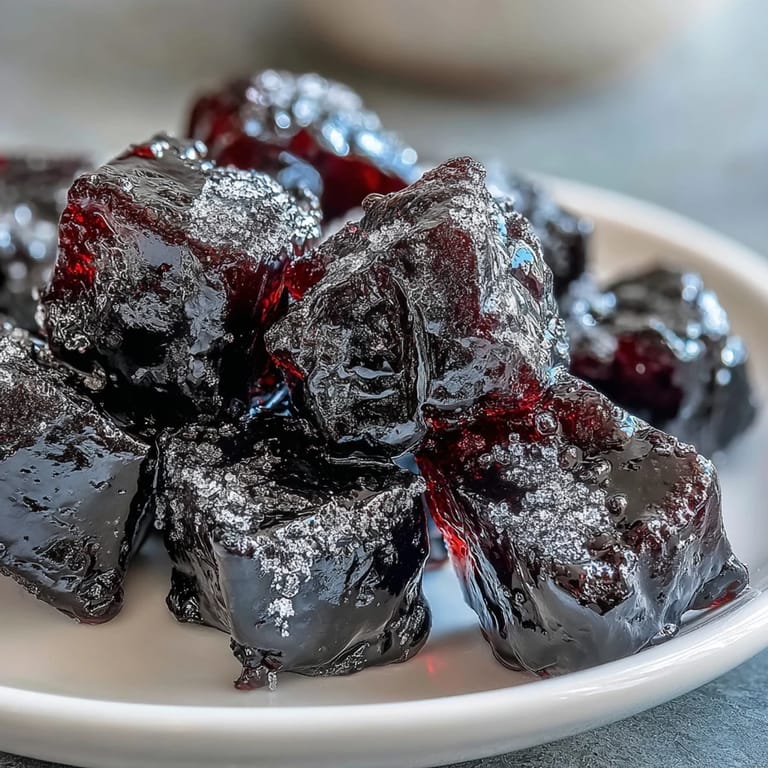
- Confectioners sugar and cornstarch coating: This prevents the candies from sticking together and adds a subtle sweetness that eases into the boldness of each piece.
Tired of Takeout? 🥡
Get 10 meals you can make faster than delivery arrives. Seriously.
One email. No spam. Unsubscribe anytime.
Instructions
- Prepare your stage:
- Line that 8x8-inch pan with parchment, leaving a slight overhang on two sides so you can lift the whole slab out later—this is a small move that saves tremendous frustration. A light grease helps the parchment stay put.
- Bloom the gelatin:
- Sprinkle it over cold water and let it sit for 10 minutes—this hydration step is non-negotiable if you want a smooth final texture. If you skip it, you'll end up with grainy, lumpy candy no matter how well you whisk.
- Warm the fruit base:
- Gently heat the black currant purée with lemon juice, letting it warm through but never boil; you're just waking up its flavors, not cooking them away. The smell at this point is incredible—floral and sharp all at once.
- Make the syrup:
- Combine sugar, corn syrup, and water in a separate pan and watch it carefully as it comes to a boil. Once the sugar dissolves, stop stirring—let the thermometer do the thinking while you wait for it to reach exactly 250°F (121°C), which takes about 8–10 minutes.
- Marry the hot syrup with gelatin:
- Pour that hot, gleaming syrup over your bloomed gelatin and whisk until completely smooth and the gelatin has dissolved into invisibility. This is the moment where everything comes together, so take your time and really whisk.
- Combine syrup and fruit:
- Now pour this glossy mixture into your warm currant purée in a thin stream, whisking constantly so you build a smooth, homogeneous mass with no lumps. If you dump it all at once, you risk clumps that won't whisk out.
- Season to taste:
- Stir in your licorice extract and salt, then taste a tiny dab on a cool spoon—this is when you decide if you want more licorice depth or if the balance feels right. Remember, flavors concentrate slightly as the candy sets, so don't over-correct.
- Pour and spread:
- Work quickly once you pour into the pan; this mixture sets faster than you'd expect. Use an offset spatula or the back of a spoon to spread it into an even layer, pushing it into the corners.
- Let time do the work:
- Resist the urge to refrigerate; cool at room temperature for 1–2 hours until the slab is firm but not rock-hard. You'll feel it transition under a light touch—that's when you know it's ready.
- Cut and coat:
- Mix your confectioners sugar and cornstarch, dust a cutting board generously, and turn out the slab onto it. Cut into 1-inch squares with a sharp, occasionally damp knife (it keeps the blade from sticking), then toss in the coating to prevent pieces from bonding to each other.
 Pin it
 These candies have become my secret gift, the thing I make when I want someone to know I've spent real time thinking about what they like. There's something intimate about offering someone a confection you've carefully balanced and tasted and adjusted—it says you were thinking about their palate, not just following a formula.
The Science of Chew
Gelatin is what separates these from gummies or hard candies, but it's a delicate balance. The protein strands from the gelatin create a matrix that holds the moisture in the sugar syrup, giving you that specific texture that's soft enough to bite but structured enough to hold its shape. Too many bakers think more gelatin equals better texture, but actually, you're aiming for a structure that's just firm enough to cut cleanly and chew easily. Temperature matters here too—if your syrup is too cool when you pour it over the gelatin, the mixture will seize up and become grainy instead of smooth.
Flavor Pairing Philosophy
Black currant and licorice seem like an odd couple until you realize they're speaking the same language—both have these dark, almost wine-like, slightly floral undertones. The currant brings brightness and tartness, while the licorice adds warmth and depth, and together they create something more interesting than either could be alone. This is why the lemon juice and salt are so important; they're not adding new flavors but rather clarifying and amplifying the main act, like musicians in a backing band.
Storing and Serving Your Candies
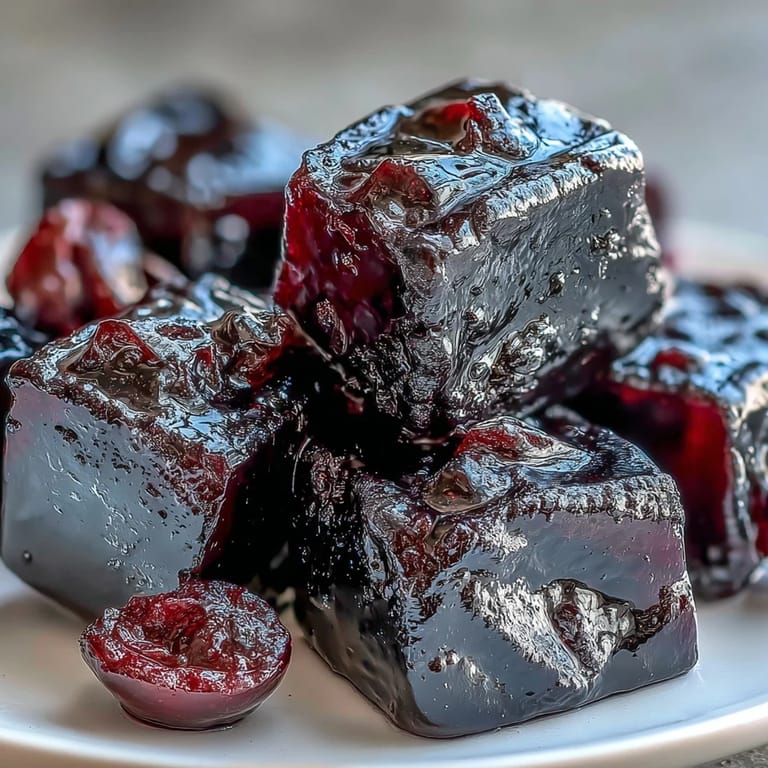
These keep beautifully for up to a week in an airtight container, and honestly, I've found they taste even better on day two or three as the licorice flavor settles in and becomes more integrated. Store them at room temperature away from humidity—a candy dish or cookie tin works perfectly. If you find they're sticking together despite the coating, you can dust them again with more confectioners sugar mixture before putting them away, but usually, the initial coating does the job.
- Layer them between parchment paper if you're stacking them in a container to prevent sticking.
- Keep them away from direct sunlight, which can cause the colors to fade over time.
- If they do get a bit soft on a humid day, a few hours in a cool, dry place firms them back up.
 Pin it
 Making candy at home transforms your relationship with sweets—suddenly they're not just something you eat but something you've built, tested, and refined. This recipe is your invitation into that world, where a little patience and attention to temperature create something that tastes far more special than the sum of its simple ingredients.
Frequently Asked Questions
- → How do I achieve the perfect chewy texture?
Bloom gelatin properly and combine carefully with hot sugar syrup and purée to ensure smooth, chewy candy.
- → Can I substitute licorice extract with something else?
Anise extract can be used as a milder alternative, adjusting quantity to taste.
- → What is the best way to prevent candies from sticking together?
Coat the cooled candy pieces with a mixture of confectioners sugar and cornstarch before storing.
- → How should the candies be stored for freshness?
Keep candies in an airtight container at room temperature for up to one week.
- → Are there variations to the fruit base used in this confection?
Black raspberry or blackberry purée can replace black currant for different flavor profiles.