 Save
Save Wild rice found its way into my kitchen on a crisp autumn evening when a farmer's market vendor insisted I try something beyond the usual white and brown varieties. She described it as nutty and chewy, almost meaty in texture, and I was skeptical until I actually tasted it. That first pilaf I made was simple but revelatory, and it's become the dish I reach for whenever I want something that feels both comforting and a little bit special. The earthy mushrooms seemed like a natural pairing, and now I can't imagine making this without them.
I once served this at a potluck where a friend arrived with store-bought sides, took one bite of my pilaf, and immediately asked for the recipe written down. What stuck with me wasn't the compliment itself but watching her close her eyes while chewing, really tasting it instead of just eating. That's when I realized this humble grain dish had something genuine going for it.
Ingredients
- Wild rice: Rinsing it first removes any debris and prevents a cloudy broth, something I learned after my first batch came out looking murky.
- Low-sodium vegetable broth and water: The combination gives you control over the salt level while keeping costs reasonable, and the water prevents the rice from tasting too heavily broths.
- Olive oil: Use a quality one since it's doing the heavy lifting in flavor here, not just cooking.
- Yellow onion, garlic, and celery: This trio is the flavor foundation, and taking time to chop them evenly means they'll cook at the same rate and meld beautifully together.
- Cremini or button mushrooms: Cremini have a slightly earthier taste and hold their shape better than buttons, but either works; slice them uniformly so they brown evenly instead of some steaming while others crisp.
- Carrot: It adds natural sweetness and color, balancing the deep earthiness of everything else.
- Fresh thyme and bay leaf: These herbs create a subtle backbone of flavor that makes people wonder what makes this taste so good without being able to pinpoint it.
- Fresh parsley and optional almonds: Parsley brings brightness at the end, while almonds add a textural surprise and roasted nuttiness that echoes the wild rice itself.
Tired of Takeout? 🥡
Get 10 meals you can make faster than delivery arrives. Seriously.
One email. No spam. Unsubscribe anytime.
Instructions
- Start the wild rice:
- Bring the rinsed wild rice, vegetable broth, and water to a boil in a medium saucepan, then lower the heat, cover it, and let it simmer gently for 40 to 45 minutes. You'll know it's done when the grains have split slightly at the ends and the liquid is mostly absorbed.
- Build your flavor base:
- While the rice is cooking, warm olive oil in a large skillet over medium heat and add the chopped onion, celery, and carrot. Let these soften together for 5 to 6 minutes, stirring occasionally so they cook evenly without browning.
- Develop the mushroom magic:
- Add the minced garlic and sliced mushrooms to the skillet and cook for 6 to 8 minutes, stirring from time to time as the mushrooms release their moisture and then start to golden. You'll see the pan go from wet to silky as the liquid evaporates, which is when they develop real depth.
- Season with intention:
- Stir in the thyme, bay leaf, salt, and pepper, cooking for just one more minute so the herbs warm and release their essence. Remove the bay leaf before moving forward.
- Bring it together gently:
- Add the cooked wild rice to the mushroom mixture and fold it all together carefully, tasting as you go. If it needs more salt or pepper, this is your moment to adjust it to your preference.
- Finish and serve:
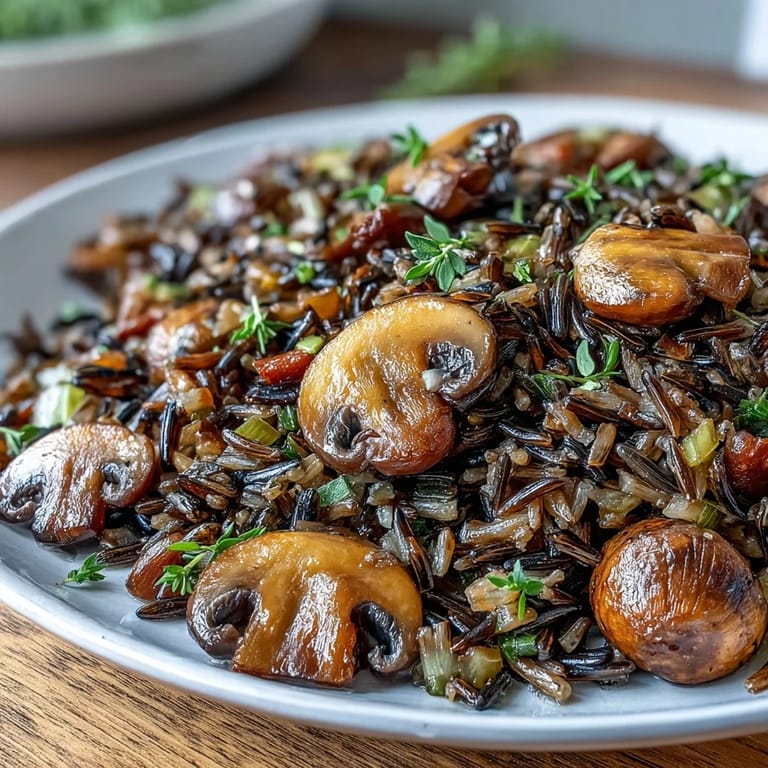
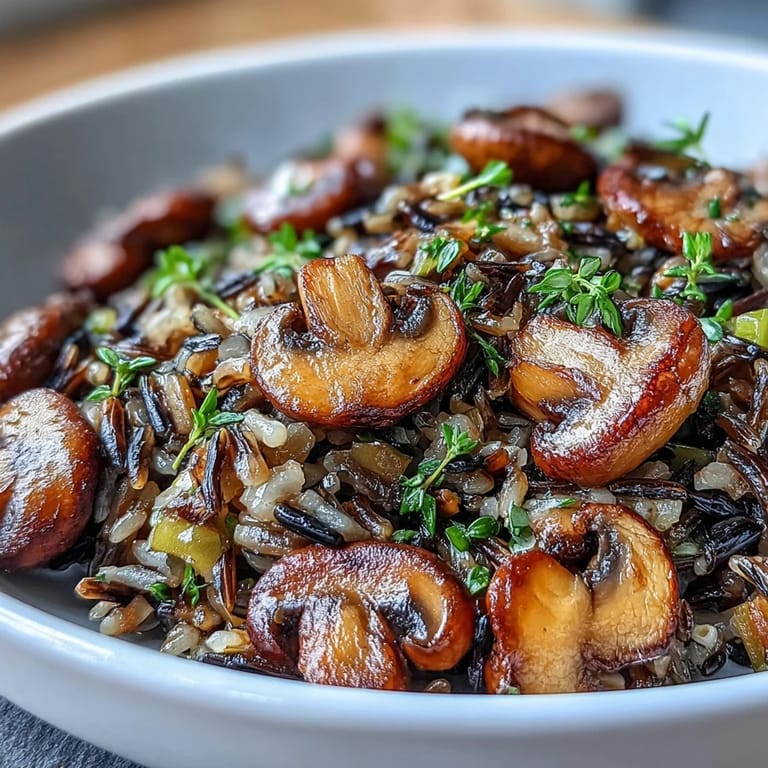
- Transfer everything to a serving dish and scatter fresh parsley and toasted almonds over the top if using them. Serve it while it's still warm so the textures and flavors are at their best.
 Pin it
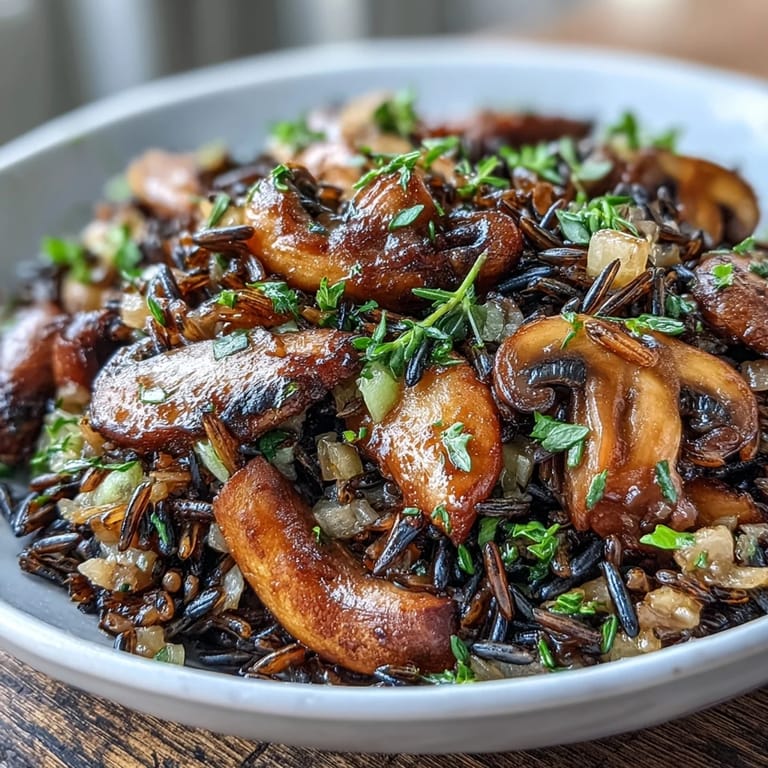
 There's a quiet moment in cooking this dish when you fold the wild rice into those caramelized mushrooms and the whole kitchen suddenly smells like something you'd travel to a farmhouse in the country to eat. That's the moment I remember why I love cooking at all.
The Texture Story
Wild rice has a completely different mouthfeel than conventional rice, with a slight chewiness and almost a pop when you bite into it. The mushrooms add creaminess without any cream, and together they create a dish that's satisfying enough to eat as a main course but humble enough to sit quietly beside roasted chicken or fish. The celery and carrot contribute gentle sweetness that keeps everything balanced.
Make-Ahead Wisdom
This pilaf actually improves slightly if you make it a day ahead because the flavors have time to get to know each other. Store it covered in the refrigerator and reheat it gently in a skillet with a splash of broth or water, stirring occasionally so it warms evenly without drying out. The almonds should be added fresh right before serving so they stay crispy.
Variations and Flexibility
Once you understand the structure of this dish, you can play with it fearlessly. Swap in different vegetables, add a pour of dry white wine when the mushrooms are cooking, or use half wild rice and half brown rice for a slightly different texture and shorter cooking time. The foundations are solid enough to welcome your own ideas.
- A splash of balsamic vinegar stirred in at the end adds subtle depth without overpowering the earthiness.
- Toasted walnuts or pecans work beautifully if you don't have almonds on hand.
- For extra richness, stir in a handful of finely grated Gruyère cheese right before serving, though it becomes a vegetarian side rather than a vegan option.
 Pin it
 This pilaf has become my answer to the question of what to bring when someone asks for a side dish that feeds a crowd without fussing. It's honest food that tastes like you actually cared, which is maybe the best thing any dish can be.
Frequently Asked Questions
- → Can I make this wild rice pilaf ahead of time?
Yes, prepare the dish up to 2 days in advance. Store in an airtight container in the refrigerator and reheat gently on the stovetop or in the microwave, adding a splash of water or broth if needed to refresh the texture.
- → What type of mushrooms work best in this pilaf?
Cremini or button mushrooms are ideal for their meaty texture and mild earthy flavor. You can also use shiitake for deeper umami or porcini for intense mushroom notes. Mix varieties for a more complex flavor profile.
- → Is wild rice gluten-free?
True wild rice is naturally gluten-free, making this dish suitable for those with gluten sensitivities. Always ensure your vegetable broth is certified gluten-free, as some brands contain barley-derived additives.
- → Can I substitute other grains for wild rice?
Brown rice, farro, or a wild rice blend work well as alternatives. Adjust cooking times accordingly—brown rice requires similar timing, while farro may cook faster. Keep in mind that the nutty flavor profile will change slightly.
- → How do I prevent the wild rice from becoming mushy?
Simmer gently rather than boiling vigorously, and check for doneness around the 40-minute mark. Drain any excess liquid immediately once the grains are tender and have split open. Avoid overcooking, as wild rice continues to soften off the heat.
- → What proteins pair well with this pilaf?
Roasted chicken, turkey, or pork complement the earthy flavors beautifully. Grilled salmon or pan-seared tofu also work well. As a vegetarian main, serve with a simple green salad or crusty bread for a complete meal.