 Save
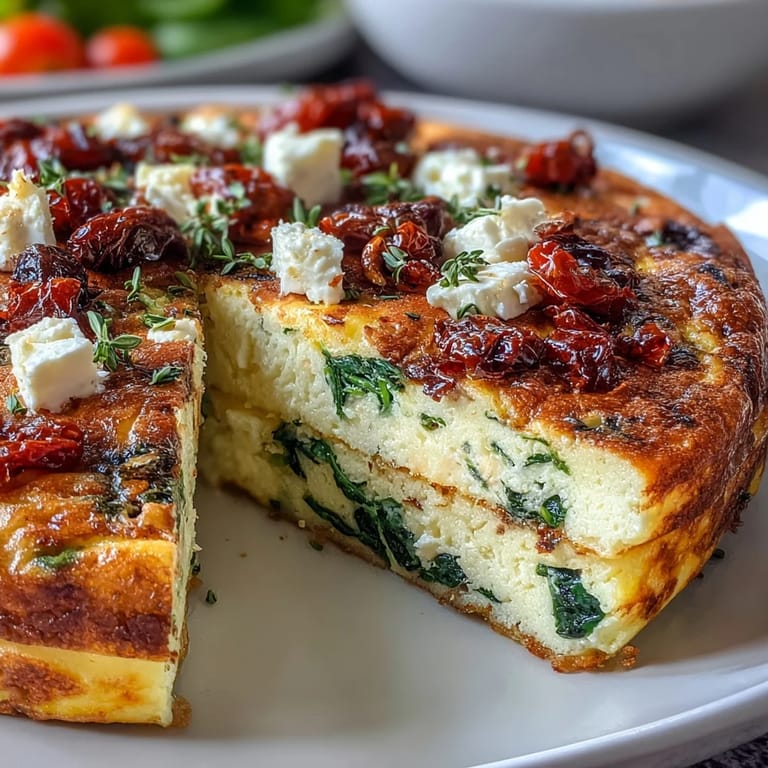
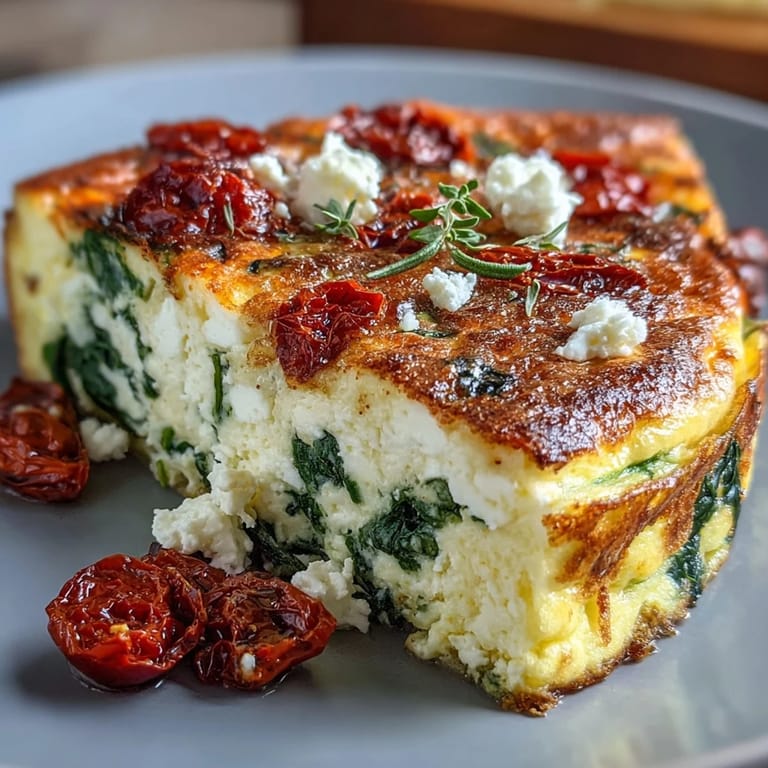
Save A Sunday morning at my friend's apartment, and she pulled this frittata from the oven with such quiet confidence that I had to ask for the recipe immediately. The kitchen smelled like warm olive oil and those little bursts of tangy feta, and watching it come together took less time than brewing coffee. She'd learned it from a cooking class in Athens, she said, though honestly it felt more like a happy accident than anything formal. That's when I realized a good frittata isn't about precision—it's about knowing when to let the oven do the heavy lifting.
I made this for my neighbor once when she was recovering from surgery, and she actually called me from her kitchen two days later to say she'd made it again herself. That's the moment I knew this recipe worked—not because it looked impressive, but because it tasted good enough that someone wanted to repeat it. She's made it at least a dozen times since, she tells me, always with the same sun-dried tomatoes from the Italian market down the street.
Ingredients
- Fresh baby spinach (2 cups): Rough chop it and don't stress about perfect sizes—the wilting in the pan will sort out most texture anyway.
- Sun-dried tomatoes (1/2 cup, drained): These are packed in oil for a reason; that flavor seeps into everything around them, so don't rinse them aggressively.
- Yellow onion (1 small, finely chopped): The sweetness of yellow onion is crucial here—it balances the funk of the feta and the intensity of the tomatoes.
- Garlic (1 clove, minced): One clove is enough; too much will overpower the delicate Mediterranean vibe you're building.
- Large eggs (6): Don't use tiny eggs or extra-large ones—you want the standard size for proper cooking time and texture.
- Whole milk (1/4 cup): This keeps the eggs tender instead of bouncy; use whole milk or cream, never skim.
- Feta cheese (1/2 cup, crumbled): Crumble it by hand if possible—the irregular pieces distribute better than pre-crumbled versions.
- Grated Parmesan (1/4 cup): The Parmesan adds a salty, nutty depth that feta alone can't quite deliver.
- Dried oregano (1/2 tsp): Mediterranean dried oregano tastes different than regular stuff; if you have access to it, grab it.
- Black pepper and salt (1/4 tsp each): Go easy on salt since both cheeses carry their own saltiness—you can always add more after tasting.
- Olive oil (2 tbsp): Use good olive oil, the kind you actually like the taste of, because it's doing real flavor work here.
Tired of Takeout? 🥡
Get 10 meals you can make faster than delivery arrives. Seriously.
One email. No spam. Unsubscribe anytime.
Instructions
- Get your oven ready:
- Preheat to 375°F (190°C) while you prepare everything else—frittatas move fast once you start cooking, so being ready matters.
- Build your flavor base:
- Heat olive oil in a 10-inch ovenproof skillet over medium heat, then sauté the onion until it turns soft and translucent, about 3 to 4 minutes. Add the garlic and cook just one more minute—you want it fragrant but not brown.
- Wilt and toss:
- Stir in the spinach and watch it collapse into the pan, which takes about 2 minutes and is weirdly satisfying. Add the sun-dried tomatoes next and cook for one minute more to let their oil warm through.
- Mix your egg base:
- In a bowl, whisk together the eggs, milk, oregano, salt, and pepper until the mixture is smooth and pale. Fold in both the feta and Parmesan, stirring until the cheeses are scattered throughout.
- Bring it together on the stove:
- Pour the egg mixture over the vegetables in the skillet and stir gently just once to combine, then let it cook on the stovetop for 2 to 3 minutes until you see the edges starting to set and pull slightly away from the pan.
- Let the oven finish the job:
- Transfer the entire skillet to the oven and bake for 10 to 12 minutes until the center is just set (a tiny jiggle in the middle is fine) and the top has taken on a light golden color. The wait is the hardest part.
- Cool and serve:
- Pull it from the oven and let it cool for a few minutes—this makes slicing so much cleaner. Serve it warm or even at room temperature if you prefer.
 Pin it
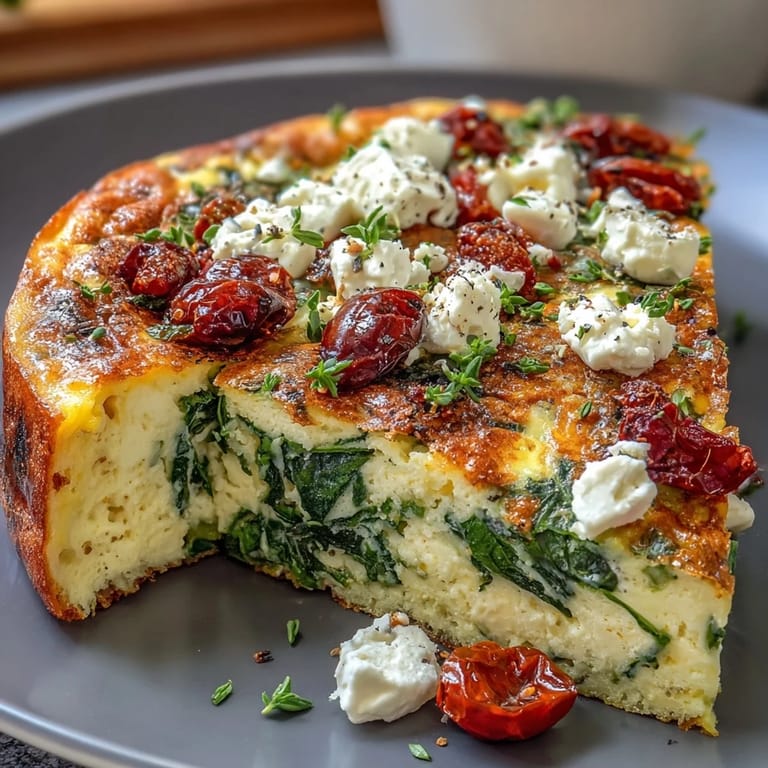
 My sister once brought this to a potluck where someone had made three salads and one crock-pot casserole, and by the time everyone turned around, my sister's frittata was gone. It wasn't fancy or plated like a restaurant, just honest food that people kept returning to. That's when I stopped thinking of frittatas as brunch food and started seeing them as the kind of thing that actually brings people back for seconds.
Why This Works as Breakfast and Dinner
Eggs at breakfast feel expected, but eggs for dinner somehow feel like a gift—like you've discovered something the rest of the world hasn't caught on to yet. The vegetables keep it grounded and interesting, the cheese adds enough richness that you don't miss meat, and everything cooks so fast you could practically make it on a weeknight. I've learned that a good frittata is really just permission to stop overthinking dinner and start working with what tastes good together.
Switching It Up Without Losing the Magic
Once you understand the basic structure—sautéed vegetables, whisked eggs with dairy, cheese, herbs—you can swap almost anything in without breaking it. Some nights I use roasted red peppers instead of sun-dried tomatoes, other times I add mushrooms or zucchini, and it's never failed me. The only rule I follow is keeping the total vegetable volume roughly the same so the eggs cook at the expected pace.
Pairing and Serving Suggestions
Serve this warm with a simple arugula salad dressed in lemon juice and olive oil, or cold the next day sliced between crusty bread with a smear of hummus. A crisp white wine like Sauvignon Blanc or even a light rosé makes it feel restaurant-worthy without any extra cooking. If you're feeding a crowd, slice it into eight pieces instead of four and suddenly you have appetizers.
- A side of fresh fruit—grapes, berries, or orange slices—cuts through the richness and makes the meal feel complete.
- Keep leftovers in the fridge for up to three days and slice them cold or reheat gently in a low oven.
- This freezes surprisingly well if you want to make two and stash one for a future morning when you don't feel like cooking.
 Pin it
 This frittata taught me that the best meals don't require complicated techniques or an exhausting ingredient list—they just need vegetables that taste good, eggs that are treated gently, and the confidence to trust your oven. Make it once and you'll understand why my neighbor keeps coming back to it.
Frequently Asked Questions
- → Can frozen spinach be used instead of fresh?
Yes, thawed and well-drained frozen spinach works well as a substitute without compromising texture or flavor.
- → How do sun-dried tomatoes affect the flavor?
They provide a sweet and tangy depth that balances the creamy feta and mild spinach, enhancing the overall taste.
- → What is the best cooking method for this dish?
Start by sautéing the vegetables on the stovetop, then transfer the skillet to a preheated oven to bake until the center sets and edges are lightly golden.
- → Can this dish accommodate dietary restrictions?
It is naturally gluten-free and vegetarian; for dairy-free options, substitute plant-based cheeses and omit Parmesan.
- → What dishes pair well with this frittata?
Pair it with a crisp green salad, crusty bread, or a glass of chilled Sauvignon Blanc for a balanced meal.