 Save
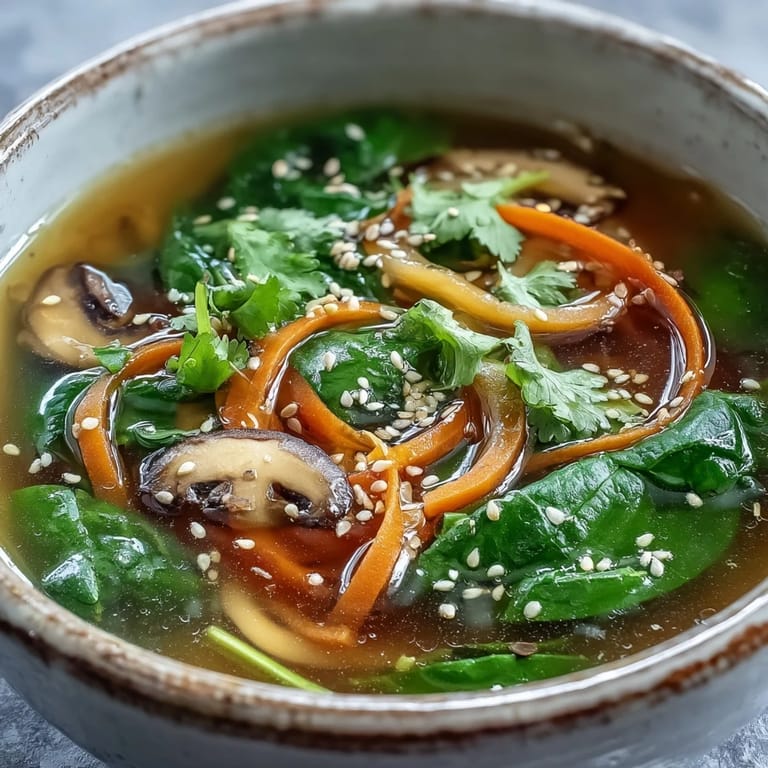
Save Last winter, when a stubborn cold had me feeling miserable, I found myself craving something healing beyond the standard chicken soup. In my kitchen, with snow falling outside, I tossed together ginger, garlic, and some forgotten shiitakes lurking in my fridge. The steam from that first batch of miso ginger soup cleared my sinuses immediately, and the gentle heat spread through my body like a warm embrace. I've been perfecting the recipe ever since, finding it's exactly what my body craves when temperatures drop.
I once made this soup for my friend who was visiting from Florida and completely unprepared for our brutal Midwest winter. She arrived shivering and miserable after her flight was delayed, and I quickly warmed up this soup while she thawed by the radiator. The look on her face after the first spoonful told me everything I needed to know. She asked for the recipe three times before leaving and now makes it whenever she feels homesick for our friendship.
Ingredients
- Fresh ginger: Get a plump, firm piece and use the edge of a spoon to peel it easily, which I learned after years of massacring it with a vegetable peeler.
- Miso paste: White or yellow miso works best here for their milder flavor that won't overpower the delicate vegetables, though I've used red in a pinch when that's all I had.
- Shiitake mushrooms: Their meaty texture and earthy flavor create substantial body in this light soup, and I've found removing the tough stems before slicing makes for a better eating experience.
- Vegetable broth: The base of your soup determines so much of the final flavor, so get a good quality low-sodium one or make your own if you've got vegetable scraps saved up in the freezer.
- Baby spinach or bok choy: They wilt beautifully into the hot broth, adding a pop of green and loads of nutrients without any bitterness that can come from heartier greens.
Tired of Takeout? 🥡
Get 10 meals you can make faster than delivery arrives. Seriously.
One email. No spam. Unsubscribe anytime.
Instructions
- Infuse the broth:
- Bring your vegetable broth to a gentle simmer, then add those thin slices of ginger and garlic. You'll know it's ready when your kitchen fills with a warm, spicy aroma that makes your sinuses tingle pleasantly.
- Add the vegetables:
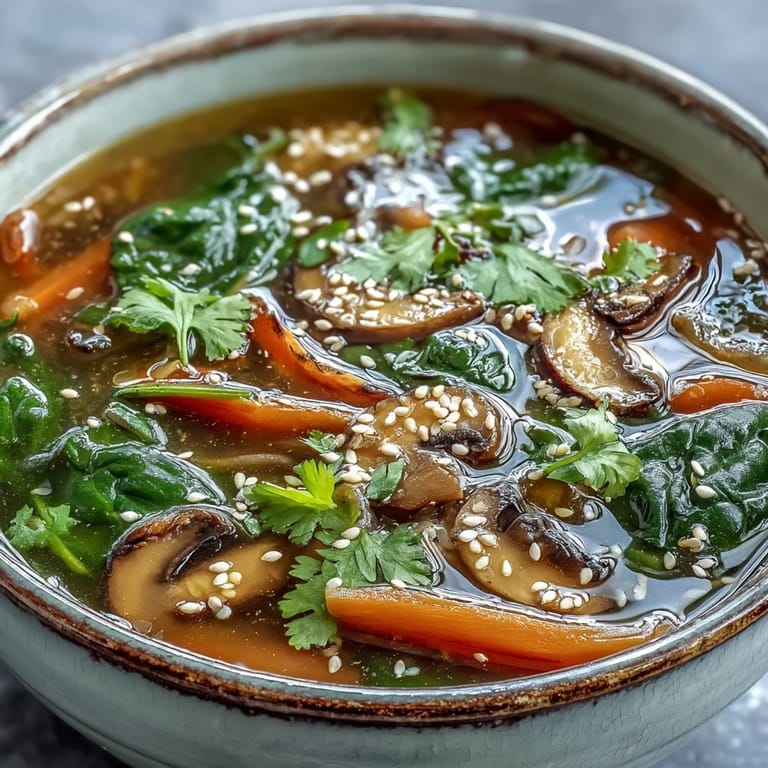
- Slide in your mushrooms and carrots, watching as they gradually soften and release their flavors into the broth. The mushrooms will darken slightly and shrink as they cook.
- Incorporate the miso:
- This step is crucial for preserving all those beneficial probiotics. Ladle some hot broth into a separate bowl, whisk in your miso until smooth, then return it to the pot with the heat turned low.
- Finish with greens:
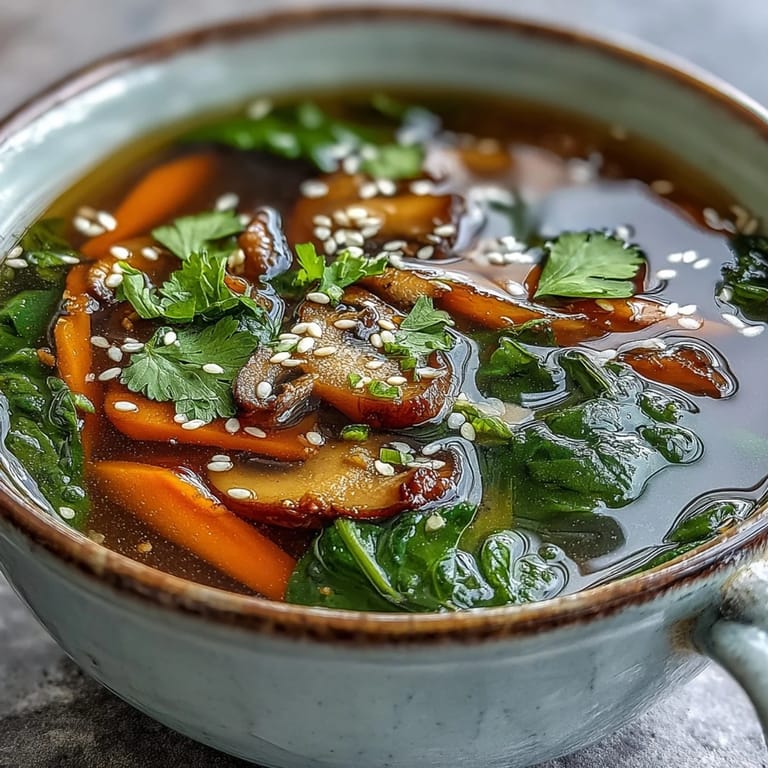
- Add your spinach or bok choy and green onions just before serving, stirring until they wilt but still maintain their bright color. You want them just softened but not mushy.
- Garnish with care:
- Each bowl deserves a sprinkle of toasted sesame seeds which add a nutty crunch that contrasts beautifully with the silky broth. If you enjoy a bit of heat, that drizzle of chili oil creates gorgeous red swirls across the surface.
 Pin it
 When my neighbor was going through chemotherapy last year, this was the only thing she could stomach some days. I'd bring over a fresh batch twice a week, and she said the ginger helped with her nausea while the vegetables gave her strength. We'd sit together at her kitchen table, steaming bowls between us, sometimes talking, sometimes just being present. Food became medicine, connection, and comfort all at once.
Seasonal Variations
While I created this as a winter soup, it adapts beautifully to other seasons with minor tweaks. In spring, I add tender asparagus tips and fresh peas. Summer calls for corn kernels and cherry tomatoes that burst with sweetness. Fall brings diced sweet potato and kale, which require a few extra minutes of cooking time but add heartiness as the temperatures begin to drop again.
Making It a Complete Meal
On evenings when I need something more substantial, I transform this soup into a complete meal with minimal effort. Sometimes I'll drop in some cubed firm tofu during the last five minutes, or prepare soba noodles separately and add them to individual bowls before ladling the hot soup over top. The key is keeping the additions simple so they complement rather than compete with the delicate balance of flavors in the broth.
Storage and Reheating
This soup actually tastes even better the next day once the flavors have had time to meld together in the refrigerator. Just remember that reheating requires gentle handling to preserve both texture and nutritional benefits.
- Store the soup without garnishes in an airtight container in the refrigerator for up to 3 days.
- Reheat individual portions over medium-low heat just until steaming, never boiling.
- If the soup thickens in storage, add a splash of water or broth when reheating to restore its original consistency.
 Pin it
 Whether you're fighting off winter blues or simply seeking a moment of warmth and peace, this miso ginger soup offers nourishment that goes beyond mere calories. It's become my liquid sanctuary in a bowl, and I hope it brings the same comfort to your table.
Frequently Asked Questions
- → Why shouldn't I boil miso?
Boiling miso destroys the beneficial probiotics and enzymes that make fermented miso so healthy. Always whisk miso into warm (not boiling) broth and keep the heat at a gentle simmer.
- → Can I use different types of miso?
White miso offers a milder, sweeter flavor perfect for delicate soups. Red miso provides a deeper, more intense taste. Yellow miso falls somewhere between—slightly stronger than white but not as bold as red.
- → How do I store leftover soup?
Store in an airtight container in the refrigerator for up to 3 days. The vegetables will soften over time. Reheat gently on low heat without boiling to preserve the miso's beneficial properties.
- → What protein can I add?
Cubed silken tofu works beautifully for added protein without overpowering the delicate flavors. Edamame, cooked chicken, or shrimp also pair well if you're not keeping it strictly vegetarian.
- → Can I make this gluten-free?
Most traditional miso contains soy, which is gluten-free, but some brands add barley or wheat. Look for certified gluten-free miso paste and double-check your vegetable broth label to ensure it's safe.