 Save
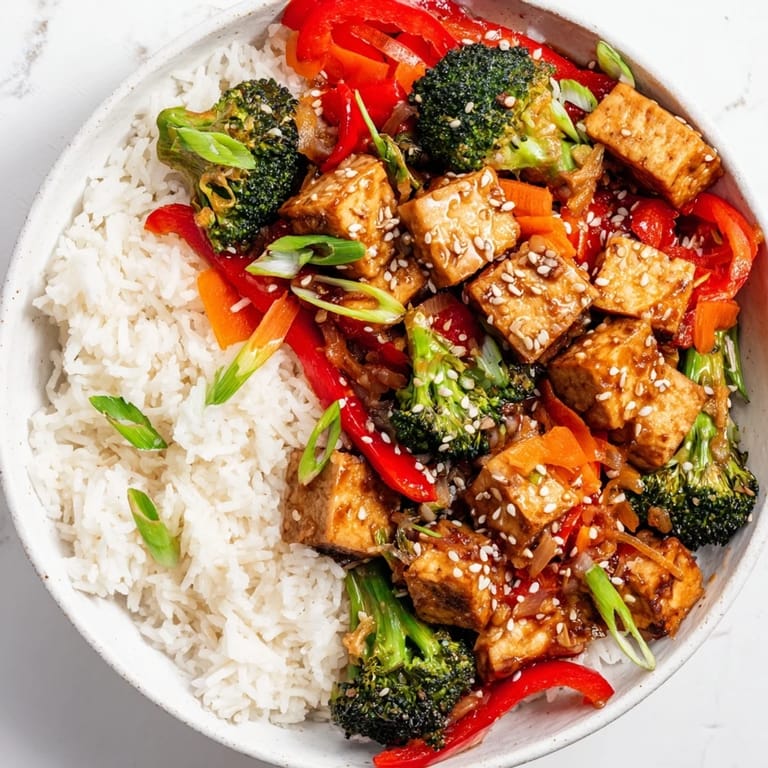
Save There's something about the sizzle of tofu hitting hot oil that still catches me off guard every time. I discovered these honey garlic bowls on a Tuesday night when I had nothing in the fridge but firm tofu, some vegetables getting their last chance, and a jar of honey that seemed to mock my usual go-to stir-fry routine. The first time I made them, the sauce broke, the tofu stuck, and I nearly gave up halfway through—but then something shifted when I added that cornstarch slurry and watched everything come together into this glossy, caramelized dream. Now I make them constantly, and even my friends who claim they don't love tofu end up asking for seconds.
I made these for my roommate during his first week of being vegetarian, and I watched his face change when he took the first bite—like he'd been expecting something virtuous and boring, but instead got something genuinely crave-worthy. He's since made them twice without asking for help, which somehow felt like the highest compliment.
Ingredients
- Firm tofu (400 g): The secret is in the pressing—this removes moisture so it can actually brown instead of steam, and it's the difference between mushy and magnificent.
- Cornstarch (2 tbsp for coating): This creates that delicate crispy exterior that shatters slightly when you bite down, way better than flour.
- Vegetable oil (3 tbsp total): Use something with a high smoke point; I learned this the hard way when my first batch came out smoky and bitter.
- Soy sauce (3 tbsp): Low sodium lets you taste everything else, but regular soy sauce works fine if that's what you have.
- Honey (2 tbsp): This is what makes the sauce glossy and gives it that restaurant appeal, though maple syrup works beautifully if you're vegan.
- Rice vinegar (1 tbsp): The acid cuts through the richness and keeps the sauce from feeling one-note.
- Garlic (3 cloves) and ginger (1 tsp): Mince these fine so they distribute evenly and you get flavor in every bite instead of occasionally hitting a chunk.
- Sesame oil (1 tsp): Just a teaspoon is enough to add that toasted depth without overwhelming the dish.
- Bell pepper, broccoli, carrot: Mix these however you like, but I've found these three work together because they have slightly different cook times and textures.
- Jasmine or brown rice (2 cups cooked): Jasmine rice is lighter and fluffier; brown rice is nuttier but takes longer to cook, so plan ahead.
- Sesame seeds and green onions: These are the finishing touches that make it look like you spent way more effort than you actually did.
Tired of Takeout? 🥡
Get 10 meals you can make faster than delivery arrives. Seriously.
One email. No spam. Unsubscribe anytime.
Instructions
- Press your tofu like you mean it:
- Wrap the block in a clean kitchen towel and place it on a cutting board, then weight it down with something heavy (I use a cast iron skillet and a few cans) for 15 minutes. You'll be amazed how much liquid comes out, and this step is what makes the difference between tofu that crisps up and tofu that releases steam and gets sad.
- Coat with cornstarch strategically:
- After cubing, toss everything in a small bowl with the cornstarch so every side is lightly covered. Don't dump it straight into the oil or you'll get clumps.
- Get your skillet screaming hot:
- Heat the oil over medium-high heat until it shimmers and almost smokes, then add your tofu cubes in a single layer (don't crowd the pan or they'll steam). Leave them alone for 3-4 minutes until they're golden and crispy, then flip and repeat—the patience here is everything.
- Mix your sauce while the tofu cooks:
- In a small bowl, whisk together the soy sauce, honey, water, rice vinegar, minced garlic, ginger, and sesame oil until smooth. Tasting it now gives you a chance to adjust the balance before it hits the pan.
- Sauté your vegetables with precision:
- Once the tofu is set aside, add fresh oil to the same skillet and cook the bell pepper, broccoli, and carrot for 3-4 minutes until they're tender-crisp. You want them to have some give but still hold their shape and color.
- Bring everything home together:
- Return the crispy tofu to the skillet, pour the sauce over everything, and stir constantly for about a minute. Then mix your cornstarch slurry (1 tsp cornstarch whisked into 1 tbsp water) and pour it in while stirring—watch it thicken right before your eyes in about 2 minutes, which is deeply satisfying.
- Plate it with intention:
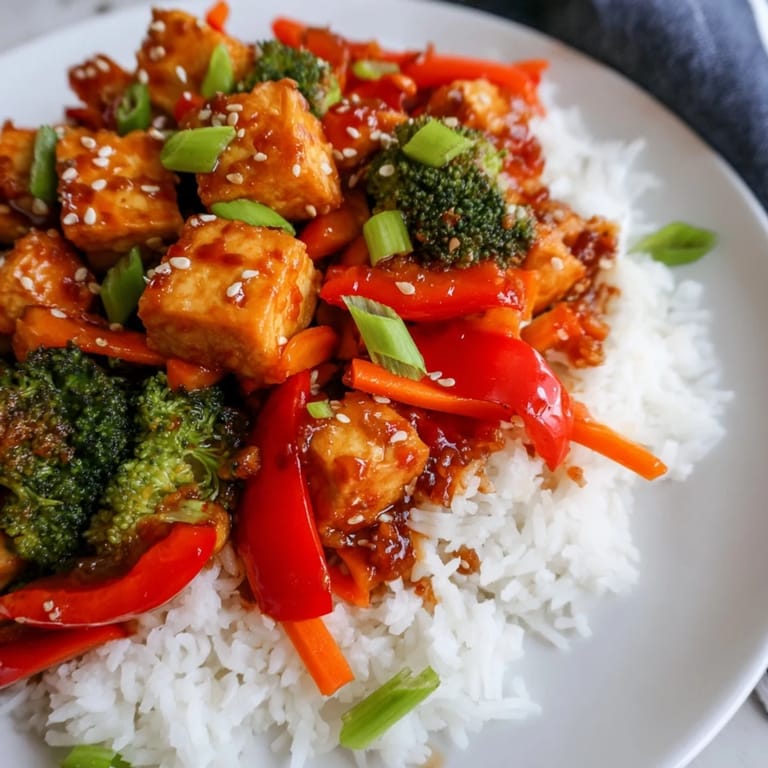
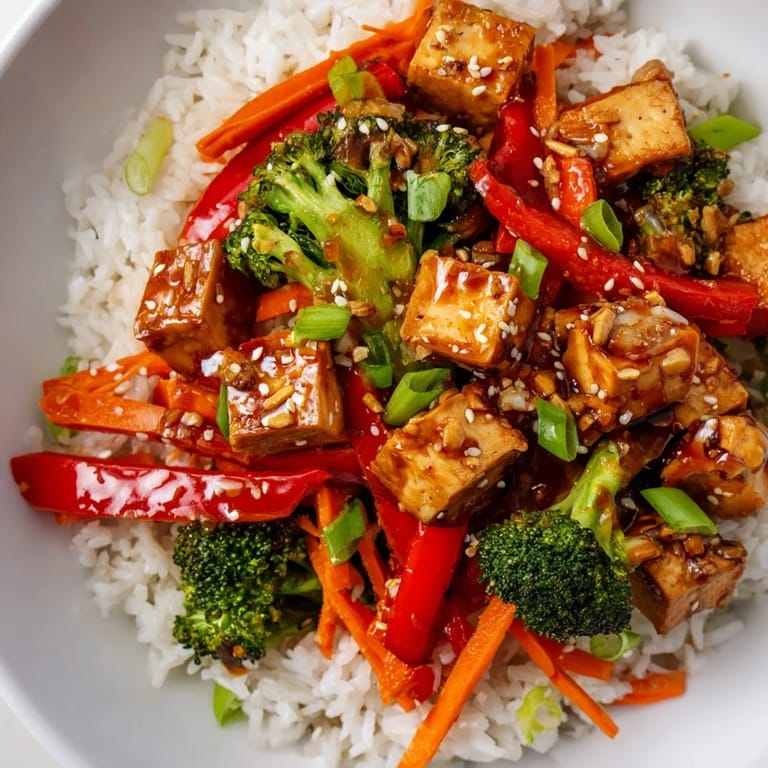
- Spoon rice into bowls, top with the tofu and vegetable mixture, then drizzle that glossy sauce over everything and finish with a scatter of sesame seeds and green onions.
 Pin it
 These bowls became my answer to the question 'but what do you eat?' from every meat-eating relative at family dinners. There's something quiet and powerful about serving something plant-based that doesn't apologize for itself or try to mimic meat—it just stands there, glossy and fragrant and completely satisfying, and watching people enjoy it without pity has become its own kind of victory.
The Golden Rules of Crispy Tofu
The biggest mistake I made for years was thinking tofu had to be soft and delicate, when actually it wants to be pressed, coated, and treated like it can handle high heat. Once I stopped babying it, everything changed. The cornstarch coating is your secret weapon—it creates this delicate, shattering crust that appeals even to people who think they don't like tofu. And here's the thing nobody tells you: the oil temperature matters more than the brand of tofu or the type of skillet you're using, so take your time getting it actually hot before anything touches the pan.
Building Layers of Flavor
The sauce is where all the magic lives, and it's so simple that it almost feels like cheating. What makes it work is that you're combining sweet (honey), salty (soy), acidic (vinegar), savory (garlic and ginger), and nutty (sesame oil) in proportions that make your brain light up. I spent years making complicated sauces with five kinds of spices, and then I made this and realized that sometimes less is more. The cornstarch slurry at the end isn't just thickening—it's also creating a silky mouthfeel that makes the sauce cling to everything instead of pooling at the bottom of the bowl.
Making It Your Own
The beauty of this bowl is that it's a framework, not a rulebook. I've made it with snap peas, mushrooms, edamame, baby corn, whatever looked good at the farmers market that week. I've even added a pinch of red pepper flakes when I wanted heat, or a splash of lime juice if I was in a brighter mood. The sauce stays consistent, the tofu method stays consistent, and everything else is just you playing around in your own kitchen.
- If you're making this for someone vegan, swap the honey for maple syrup or agave, and suddenly it becomes a gift you can give with zero guilt.
- Brown rice takes longer to cook than jasmine, so if you're using it, start the rice before you even begin prepping ingredients.
- Leftovers actually taste better the next day when the flavors have time to meld, which is the kind of weeknight dinner that keeps giving.
 Pin it
 These bowls have become the meal I make when I want to feel capable and nourished at the same time, and somehow they've also become the meal that converts skeptics. Make them once and you'll have them in your regular rotation forever.
Frequently Asked Questions
- → How can I make the tofu crispier?
Press tofu thoroughly to remove moisture, then coat evenly with cornstarch before frying in hot oil until golden on all sides.
- → What vegetables work best in this dish?
Bell pepper, broccoli, and carrots provide vibrant colors and textures, but snap peas, edamame, or mushrooms can be great additions.
- → Can I substitute honey with a vegan alternative?
Yes, maple syrup or agave nectar can be used to achieve a similar sweetness and consistency in the sauce.
- → How do I thicken the honey garlic sauce?
Mix cornstarch with water and stir it into the simmering sauce to gently thicken it within a couple of minutes.
- → What rice pairs well with this dish?
Fluffy jasmine or brown rice both complement the savory-sweet sauce and provide a wholesome base for the tofu and vegetables.