 Save
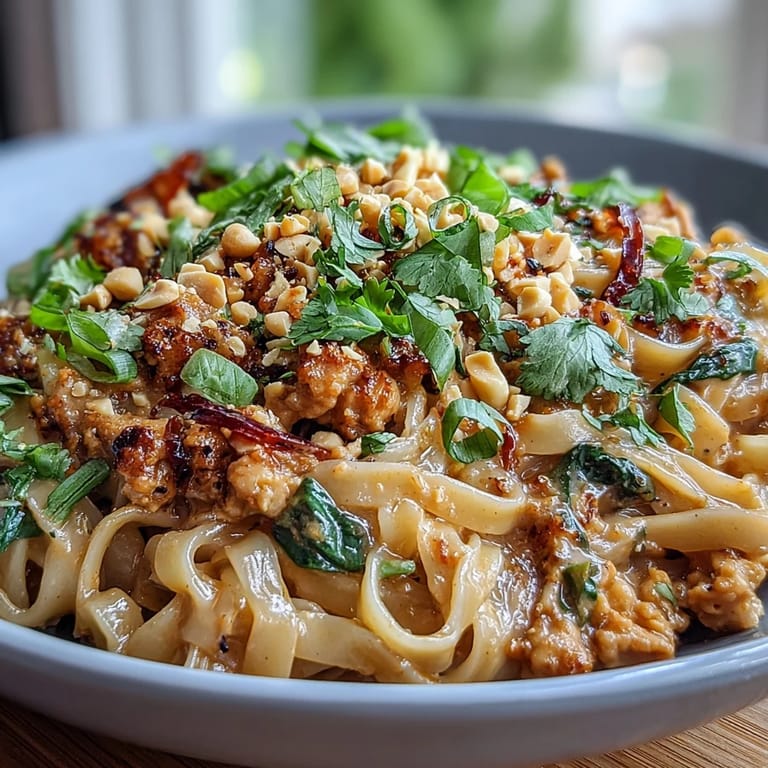
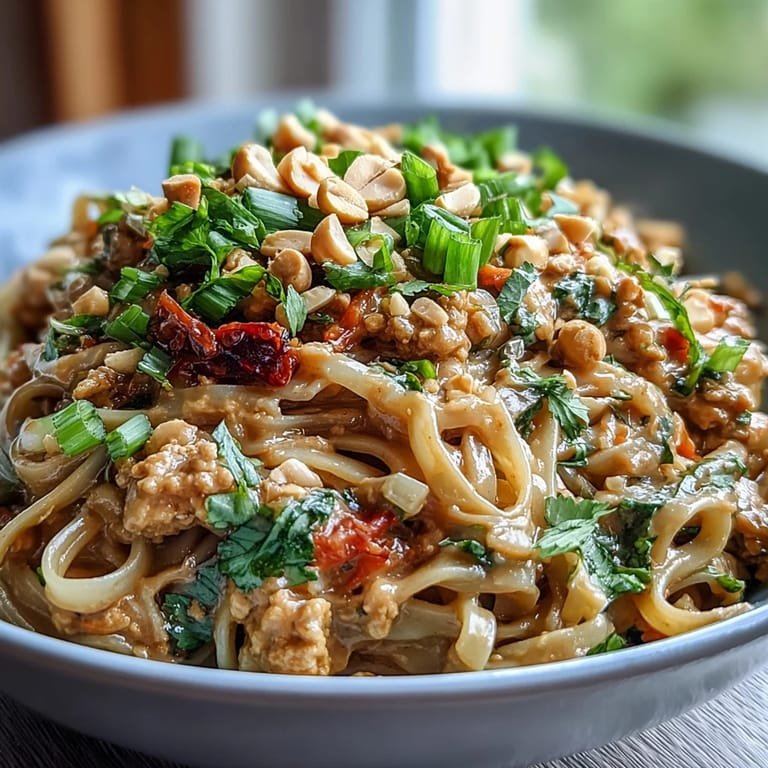
Save There's something magical about the sizzle that happens when you dump everything into one pan and let it meld together. I discovered this creamy Thai-inspired noodle technique on a Tuesday night when I was too tired to dirty multiple pots, and somehow that one-pan approach became the whole point. The way the noodles soak up that peanut sauce while the chicken crisps at the edges feels like controlled chaos in the best way. Now it's become my go-to when I need something that tastes like I spent hours cooking but actually takes less than forty minutes. Friends always assume there's more technique involved than there actually is.
I'll never forget the first time I made this for my sister who had just gone vegetarian and was worried I'd forgotten how to cook for her. When I served it with crispy tofu instead of chicken and explained the whole thing was finished in under an hour, she actually teared up a little. That's when I realized this dish isn't just about feeding people—it's about making them feel seen. Now whenever she visits, this is what she requests, and I love that something so simple became meaningful.
Ingredients
- Ground chicken (1 lb): The protein backbone that browns quickly and distributes flavor throughout the pan; make sure it's at room temperature so it browns rather than steams.
- Wide rice noodles (10 oz): These absorb sauce beautifully without getting gummy, and they cook right in the pan instead of requiring a separate pot of boiling water.
- Red bell pepper and carrots: The brightness here cuts through the richness of the peanut sauce and adds a satisfying crunch that lasts even after cooking.
- Snap peas and green onions: These stay crisp-tender if you don't overcook them, and they add a fresh textural contrast that keeps the dish from feeling heavy.
- Garlic and fresh ginger: These two are the aromatic foundation; fresh ginger especially makes a noticeable difference in depth compared to ground.
- Creamy peanut butter: Use a good quality natural version if you can, as it makes the sauce taste less like a condiment and more like something you're building from scratch.
- Soy sauce and hoisin: Together they create an umami base that grounds all the other flavors; low-sodium is important so you can control the saltiness.
- Rice vinegar and lime juice: The acid brightens everything and prevents the sauce from tasting one-dimensional or overly sweet.
- Toasted sesame oil and honey: A touch of each adds depth and a subtle sweetness that balances the heat and salt without overpowering.
- Sriracha or chili garlic sauce: This is where you control the heat level; start with less and taste as you go because it keeps building.
- Chicken or vegetable broth (1.5 cups): This is what transforms the pan into a gentle cooking environment for the noodles; vegetable broth works beautifully if you're going that direction.
- Roasted peanuts and cilantro: These garnishes are where the dish gets its final personality, adding crunch and freshness right at the moment you're about to eat.
Tired of Takeout? 🥡
Get 10 meals you can make faster than delivery arrives. Seriously.
One email. No spam. Unsubscribe anytime.
Instructions
- Get Your Protein Started:
- Heat a drizzle of oil in your large skillet over medium-high heat, then add the ground chicken and break it up with a spoon as it cooks. You're looking for that golden-brown color on the edges, which takes about five minutes, then set it aside if there's excess liquid pooling in the pan.
- Build the Aromatic Base:
- Return the pan to medium-high, add minced garlic, grated ginger, and the white parts of your green onions, and let them perfume the oil for about a minute until your kitchen smells distinctly like dinner. This is the moment where you're setting the flavor foundation for everything else.
- Add Your Fresh Vegetables:
- Toss in your sliced bell pepper, shredded carrots, and snap peas, stirring them around for two to three minutes until they're just starting to soften but still have some resistance when you bite down. The goal is that moment between raw and overcooked where everything still tastes bright.
- Spread the Noodles:
- Scatter your dry rice noodles directly into the pan over the vegetables, spreading them out so they're in a relatively even layer. This looks chaotic but it's actually perfect because each strand will get coated in sauce as it cooks.
- Make Your Sauce:
- In a separate bowl, whisk together the peanut butter, soy sauce, hoisin, rice vinegar, honey, sesame oil, sriracha, and broth until it's smooth and unified. Pour this directly over the noodles and vegetables, then give it a good stir to distribute everything evenly.
- Let Everything Cook Together:
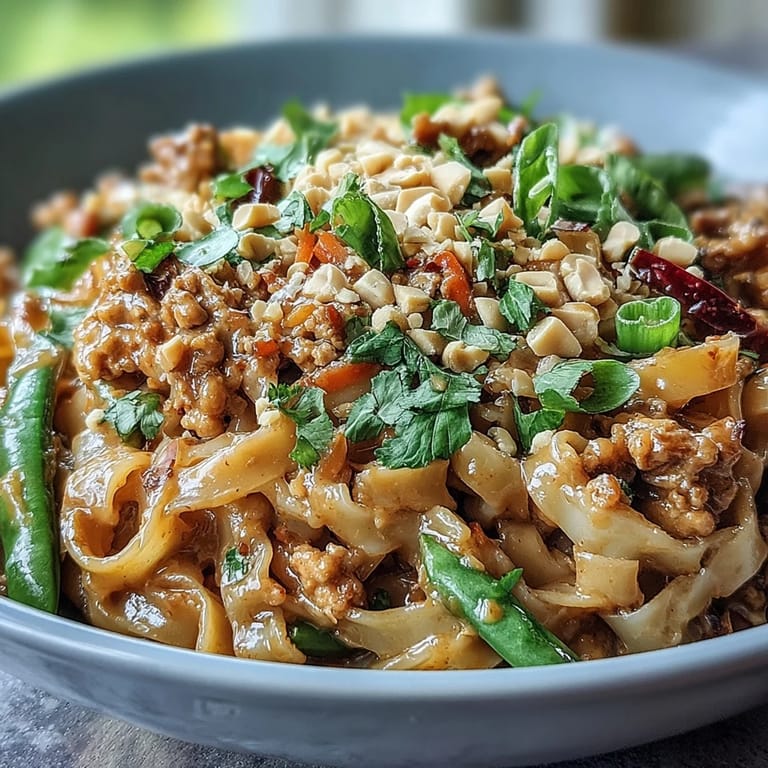
- Bring the whole pan to a simmer, cover it, and let it cook for four to six minutes, stirring occasionally, until the noodles have softened and absorbed most of the sauce. You'll notice the liquid thickens slightly as the noodles release their starch, which is exactly what you want.
- Bring Back the Chicken and Finish:
- Return your cooked chicken to the pan, toss everything together over low heat for two to three minutes until it's all creamy and well combined, then squeeze in the lime juice. This final lime juice is non-negotiable because it brightens everything and prevents the whole dish from tasting heavy.
 Pin it
 There was this moment during a friend's dinner party when someone asked for the recipe, and instead of just writing it down, we ended up cooking it together the next weekend. That collaboration taught me that the best recipes aren't just instructions—they're invitations. Every time I make this now, I think about that afternoon and how food becomes memory when you share it with intention.
The One-Pan Magic That Changed Everything
The beauty of the one-pan technique is that you're building layers of flavor in the same space, so each component influences the others. When the vegetables soften, they release their natural sweetness into the sauce. When the noodles cook directly in the peanut mixture, they absorb it at a cellular level instead of just getting coated. This isn't laziness—it's actually more flavorful than the traditional method of cooking everything separately and combining at the end.
Why This Tastes Like Thai Food Without Being Complicated
Thai cuisine relies on balancing four flavors—salty, sour, sweet, and spicy—and this dish does that through its sauce components. The soy sauce and hoisin bring salt and depth, the rice vinegar and lime add brightness, the honey rounds everything with sweetness, and the sriracha gives you heat. Once you understand this balance, you realize you can adjust any of these elements to your preference without throwing off the whole dish. It's actually more forgiving than it looks, which is maybe why it became such a reliable favorite.
Protein Swaps and Personal Preferences
Ground turkey cooks in the exact same time and with nearly identical browning as chicken, making it a seamless substitute if that's what you have on hand. Crumbled extra-firm tofu works beautifully if you're cooking for someone vegetarian or just want to lighten the dish—press it well beforehand so it actually browns instead of steaming. I've even done a mix of both when cooking for a group with different preferences, and it honestly stretched the dish further while maintaining that satisfying protein quality.
- Press tofu between paper towels with a weight on top for at least fifteen minutes before cooking so it releases excess moisture and can actually crisp up.
- If using turkey, don't feel like you need to adjust cooking time—it behaves almost identically to chicken in this application.
- The sauce carries enough flavor that whatever protein you choose will taste complete and well-integrated into the dish.
 Pin it
 This recipe became my answer to the question I used to dread: what's for dinner? Now I dread it a lot less. There's something grounding about knowing you can create something this satisfying in the time it takes to change clothes after work.
Frequently Asked Questions
- → Can I make these peanut noodles vegetarian?
Absolutely. Substitute crumbled tofu or your favorite plant-based ground alternative for the chicken. Use vegetable broth instead of chicken broth to keep the dish entirely plant-based while maintaining all the creamy peanut flavor.
- → What's the potsticker noodle technique?
This method involves cooking dry noodles directly in the pan with sauce and liquid instead of boiling separately. The noodles simmer and absorb the flavorful cooking liquid, becoming perfectly tender while soaking up the Thai peanut sauce for maximum flavor penetration.
- → Can I adjust the spice level?
Certainly. Start with 1 teaspoon of sriracha for mild heat, or increase to 2 teaspoons for medium spice. You can also add chili flakes to the garnish, serve with extra hot sauce on the side, or omit the sriracha entirely for a no-heat version that's still full of flavor.
- → How do I store and reheat leftovers?
Store cooled noodles in an airtight container in the refrigerator for up to 4 days. The sauce thickens when chilled, so add a splash of broth or water when reheating on the stovetop over medium-low heat, stirring until warmed through and creamy again.
- → Can I use different noodles?
Wide rice noodles work best for texture and sauce absorption, but you can substitute flat rice noodles, udon, or even linguine. Adjust cooking time slightly as thinner noodles will cook faster, and add more broth if needed to prevent drying out.
- → Is this dish gluten-free?
The dish can be made gluten-free by using tamari instead of soy sauce and ensuring your hoisin sauce is certified gluten-free. Rice noodles are naturally gluten-free, making this an easy adaptation for those avoiding gluten while still enjoying the creamy Thai peanut flavors.