 Save
Save There's something about watching kale soften into a pot of simmering broth that makes you feel like you're actually taking care of yourself. My neighbor Maria handed me a bunch of kale one autumn afternoon, still damp from her garden, and challenged me to do something with it besides the usual salad routine. That's when I discovered this soup, and honestly, it's become my go-to when the weather turns and I need something that feels both nourishing and deeply satisfying. The creamy white beans, the earthy herbs, and that final shower of Parmesan transform simple ingredients into something restaurant-quality but completely achievable at home.
I made this for my partner during our first winter in a new apartment, when the kitchen still felt unfamiliar and cold. Something about the smell of thyme and rosemary filling those empty rooms changed the whole feeling of the place. By the time we sat down with steaming bowls, it felt less like we were eating dinner and more like we'd already started building something there. That soup became the reason we'd linger at the table on Sunday nights, planning the week ahead.
Ingredients
- Olive oil: Use a good quality extra virgin for both sautéing and drizzling at the end, since it shows up in the final flavor.
- Yellow onion, carrots, and celery: This trio is the backbone of so much good cooking, and taking the five minutes to dice them properly makes everything that follows easier.
- Garlic cloves: Mince them fine and add after the vegetables soften, so they perfume the pot without burning or turning bitter.
- Kale: Remove those tough stems completely, then chop the leaves into bite-sized pieces so they integrate seamlessly into each spoonful.
- Diced tomatoes: Drain them well so the soup stays brothy and doesn't become watery or overwhelming.
- Cannellini beans: Rinse them thoroughly under cold water to remove excess starch and that tinny canned flavor.
- Vegetable broth and water: The combination gives you enough liquid to simmer without tasting too concentrated or thin.
- Dried thyme and rosemary: These herbs are essential to the Tuscan identity of this dish, so don't skip them or swap them out lightly.
- Bay leaf: One leaf infuses the whole pot with subtle depth; remember to fish it out before serving.
- Crushed red pepper flakes: Optional, but a whisper of heat balances the earthiness of the beans and greens beautifully.
- Salt and black pepper: Taste as you go, because these will be your final adjustments to make everything sing.
- Parmesan cheese: Grate it fresh just before serving so it melts slightly from the heat of the soup and doesn't sit as a hard, cold topping.
- Extra virgin olive oil for drizzling: This final swirl is the difference between a good bowl of soup and something you'll crave again.
- Fresh parsley: A handful scattered on top adds color, freshness, and a subtle herbaceous note that brightens everything.
Tired of Takeout? 🥡
Get 10 meals you can make faster than delivery arrives. Seriously.
One email. No spam. Unsubscribe anytime.
Instructions
- Build your flavor base:
- Heat the olive oil in a large pot over medium heat and add the diced onion, carrots, and celery together. Let them soften for five to six minutes, stirring occasionally, until the onion turns translucent and everything smells sweet and caramelized. This step matters more than you'd think, because these vegetables are about to become the foundation that holds everything together.
- Wake up the garlic:
- Stir in the minced garlic and cook for just about one minute, until it becomes fragrant and releases its sharp edge into the warm oil. Don't walk away during this moment, because the difference between perfect garlic and burnt garlic is about thirty seconds.
- Introduce the kale:
- Add your chopped kale directly to the pot and sauté for two to three minutes, stirring gently, until it wilts and surrenders to the heat. You'll watch it transform from bright and sturdy to tender and dark, which is exactly what you want.
- Bring everything together:
- Pour in the drained tomatoes, rinsed beans, vegetable broth, water, and all your seasonings at once, then give everything a good stir to combine. The pot should smell incredible at this point, like an Italian kitchen on a busy day.
- Let it simmer gently:
- Bring the soup to a boil over medium-high heat, then lower the heat and let it simmer uncovered for about twenty-five minutes, stirring occasionally. The longer it simmers, the more the flavors meld together, so don't rush this part even though it's tempting.
- Decide on texture:
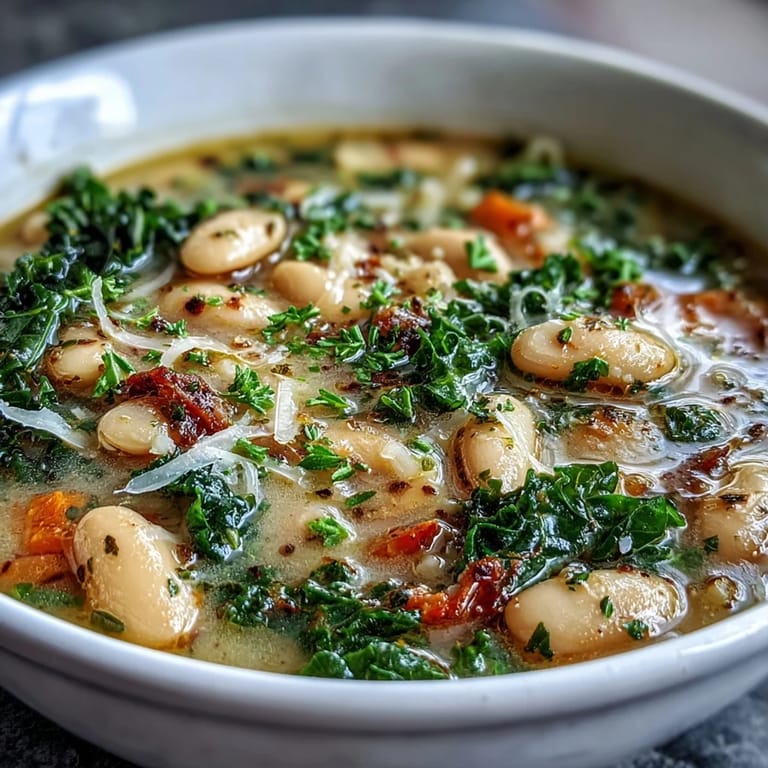
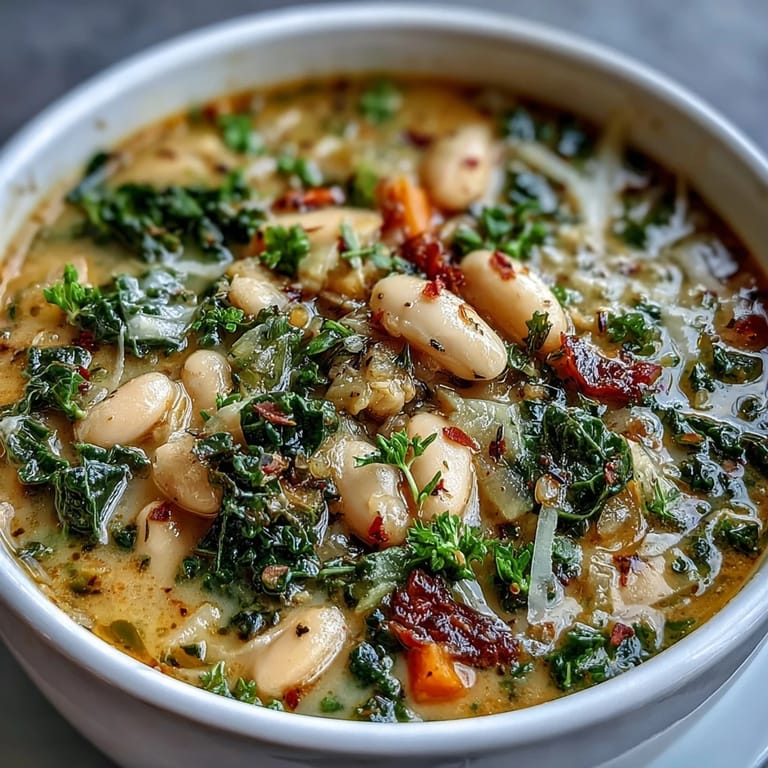
- Remove the bay leaf, then take a potato masher and gently crush some of the beans directly in the pot if you prefer a creamier, thicker soup. This step is optional, so if you like yours brothier and more rustic, just skip it entirely.
- Taste and adjust:
- Taste a spoonful carefully and season with salt and freshly ground black pepper until it feels balanced and complete. Sometimes it needs just a pinch, sometimes it needs more than you'd expect.
- Serve with ceremony:
- Ladle the soup into bowls and top each one with a generous handful of freshly grated Parmesan, a drizzle of excellent olive oil, and a sprinkle of fresh parsley. The warmth of the soup will melt the cheese slightly, creating little pockets of richness in every bite.
 Pin it
 My sister called me one Tuesday evening when she was fighting a cold, and I made this soup and brought it over in a thermos. When she took that first spoonful, she closed her eyes, and I realized food can do something beyond nourish your body or satisfy your hunger. It can be a quiet act of saying I'm thinking of you without any words at all. That's when this soup stopped being just a recipe for me and became something with actual meaning.
The Magic of Humble Ingredients
Italian cooking has always been about respecting simple, quality ingredients rather than trying to show off with complexity. This soup is proof of that philosophy, because nothing on the ingredient list is exotic or expensive, yet together they create something that tastes like it took hours. There's a lesson in that for any home cook: sometimes the best results come not from fancy techniques, but from understanding how basic elements transform when you give them time, heat, and attention.
Customizing Without Losing the Soul
The beauty of this soup is that it welcomes improvisation while still maintaining its essential character. If you don't have kale, spinach will work beautifully and will cook even faster, giving you a slightly lighter texture. You can add white wine when you sauté the vegetables, you can throw in fresh herbs like thyme instead of dried, you can even add a splash of balsamic vinegar at the end for subtle sweetness. The core identity remains Tuscan and comforting regardless of what you adjust.
Making It Your Own in the Kitchen
Every time you make this soup, you're allowed to make it differently based on what's in your kitchen, what mood you're in, and what your body needs that day. That's the real gift of knowing how to cook rather than just follow recipes blindly. Once you've made this once or twice, you'll start to see where you can add or subtract, where you can be bold and where you should play it safe. That's when cooking stops feeling like following instructions and starts feeling like conversation.
- Serve with crusty bread to soak up the broth, because that combination turns soup into something more substantial.
- Make a big batch on Sunday and portion it into containers for the week, knowing it will taste even better on day three or four.
- Remember that this soup freezes beautifully, so you can store it and pull it out on nights when you need comfort without effort.
 Pin it
 This soup has become my answer to almost everything: a busy weeknight, a friend who needs feeding, a kitchen that feels cold and needs warmth. Make it once and you'll understand why.
Frequently Asked Questions
- → What beans are used in this dish?
Cannellini beans are used for their creamy texture and mild flavor that complements the kale and herbs.
- → Can I substitute kale with other greens?
Yes, spinach or Swiss chard can be used as alternatives for a different but fresh leafy flavor.
- → How can I make the broth richer?
Mashing some of the beans in the pot creates a creamier texture that enriches the broth naturally.
- → What herbs enhance the flavor?
Dried thyme and rosemary provide a classic Italian aroma, balanced with a bay leaf and optional crushed red pepper flakes.
- → Is Parmesan essential to the final taste?
Parmesan adds a savory, rich finish, but can be omitted or replaced with plant-based alternatives for dietary preferences.