 Save
Save I discovered these crispy rice bites at a tiny Japanese-American fusion pop-up, tucked into a converted warehouse kitchen where the smell of frying rice mixed with fresh wasabi seemed to hang in the air permanently. The chef—a grandmother who'd spent decades perfecting sushi rolls before experimenting with hot oil and textural contrasts—handed me one still warm from the pan, and the way the crispy exterior shattered against the creamy, spicy tuna inside felt like breaking into something secret. That moment sparked an obsession to recreate them at home, and after a few batches, I realized the magic wasn't complicated: good rice, proper seasoning, and enough heat to make it snap.
My first successful batch landed on a Tuesday night when my roommate came home unexpectedly with his new partner, and I panicked slightly about having nothing impressive to offer beyond leftovers. I pulled these out, still warm from the skillet, arranged them on a plate with a small dish of soy sauce, and watched their faces light up. That's when I knew I'd nailed it—not because the recipe was perfect, but because food that makes people pause mid-conversation and ask for the recipe is food that matters.
Ingredients
- Sushi rice: The foundation everything else depends on; rinse it thoroughly until the water runs clear, which removes excess starch and ensures each grain stays distinct when fried.
- Rice vinegar, sugar, and salt: This trio is what seasons the rice properly and gives it that subtle sweetness that balances the spicy tuna topping.
- Sushi-grade tuna: Non-negotiable for both safety and flavor—ask your fishmonger to slice it or dice it for you if you're uncomfortable with a knife.
- Kewpie mayonnaise: Creamier and slightly sweeter than standard mayo, which makes a real difference in the tuna mixture's texture.
- Sriracha: Use whatever brand you like, but taste as you go because heat levels vary and you want the spice to complement, not overpower.
- Sesame oil and toasted sesame seeds: These add an earthy depth that ties the whole thing together in a way other ingredients simply can't.
- Vegetable oil for frying: Choose one with a high smoke point; I use refined canola or grapeseed oil.
Tired of Takeout? 🥡
Get 10 meals you can make faster than delivery arrives. Seriously.
One email. No spam. Unsubscribe anytime.
Instructions
- Cook the rice with intention:
- Rinse it under cold running water, swirling with your fingers until the water runs completely clear—this step is boring but absolutely essential for crispy, non-mushy results later. Combine with water in a saucepan, bring to a boil, then drop the heat low, cover, and let it steam for 15 minutes without peeking.
- Season while it's still warm:
- Microwave the vinegar, sugar, and salt mixture just long enough to dissolve the sugar, then gently fold it into the hot rice using a wooden spoon or shamoji (a rice paddle). The warm rice absorbs the seasoning better than cool rice would.
- Press and chill the foundation:
- Line your pan with plastic wrap and press the cooled rice firmly and evenly into an 8x8-inch pan to about 3/4 inch thick. Refrigerate for at least an hour—overnight is even better because the colder, firmer rice fries up crispier and holds its shape better.
- Prepare the spicy tuna topping:
- Combine your diced tuna with mayo, sriracha, soy sauce, sesame oil, green onion, and sesame seeds in a bowl, stirring gently so you don't break down the delicate fish too much. Taste and adjust heat or salt to your preference, then refrigerate until you need it.
- Cut with a sharp, clean knife:
- Remove the rice slab from the pan by lifting the plastic wrap, then use a knife dipped in water between cuts to create 16 evenly sized pieces. Wet knife prevents sticking and dragging.
- Fry until golden and shattered:
- Heat 1/2 inch of oil in a nonstick skillet over medium-high heat and test it by dropping a tiny grain of rice in—if it sizzles immediately, the oil is ready. Fry pieces in batches (don't crowd the pan) for 2–3 minutes per side until they're golden brown and make that satisfying crispy sound when you move them around with your spatula.
- Assemble just before serving:
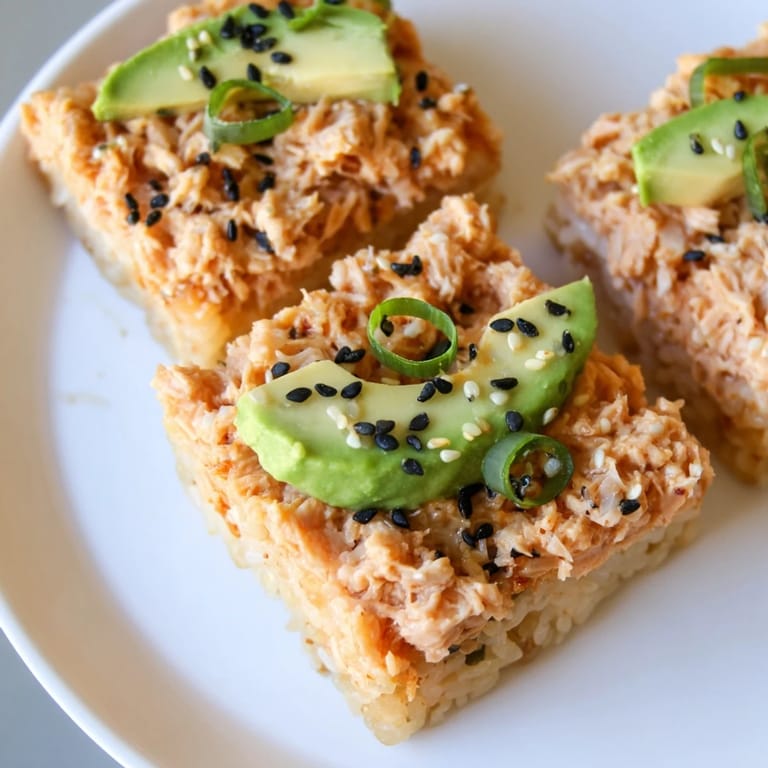
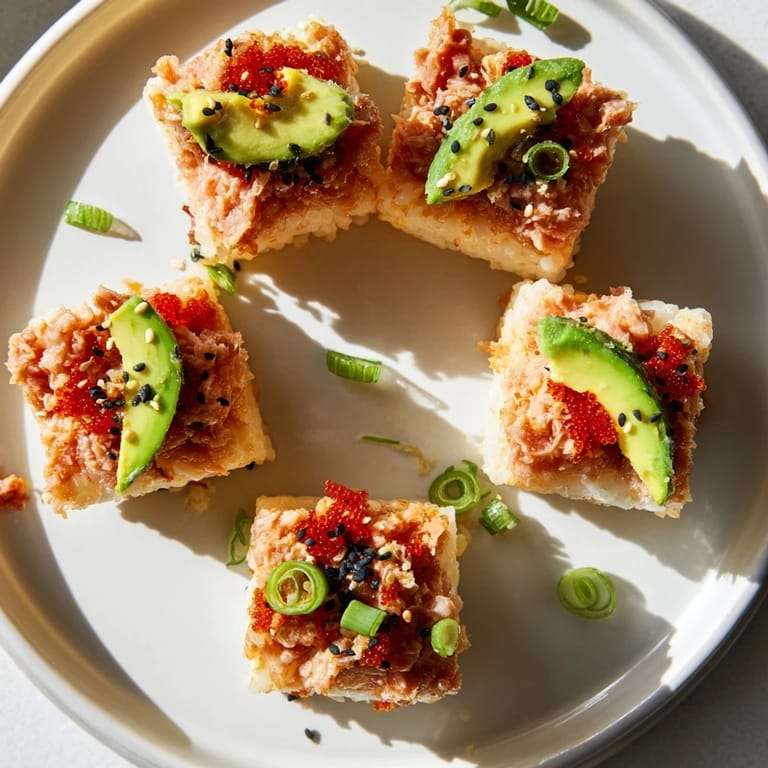
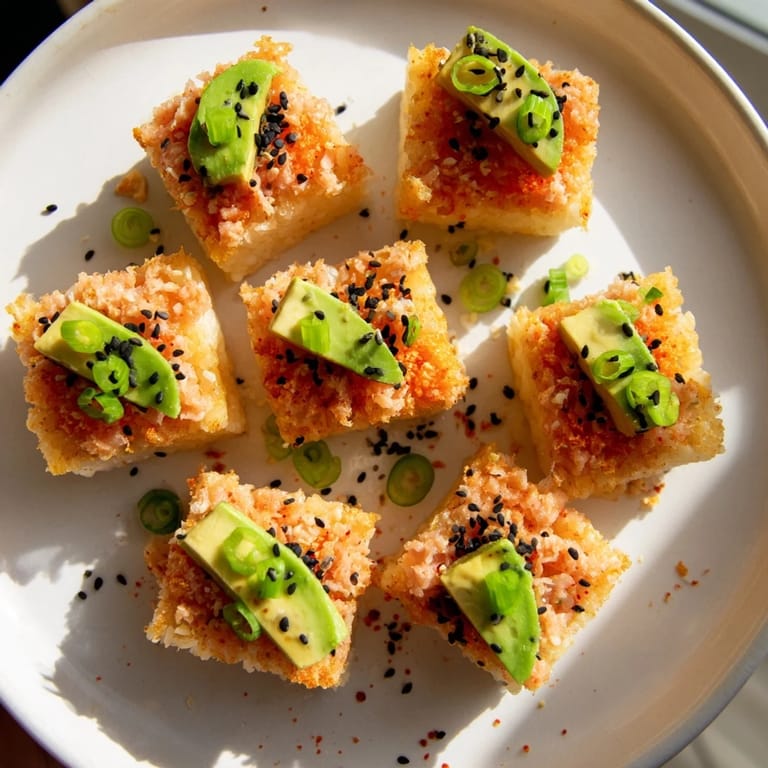
- Top each warm (or room temperature) rice square with a generous spoonful of spicy tuna, then add a thin piece of avocado. Sprinkle with black sesame seeds and green onion if using, and serve right away while the rice is still at its crispiest.
 Pin it
 There's something deeply satisfying about watching someone's face when they bite into one of these and realize that the crispiness is real, not an illusion. A friend once described the sensation as eating sophisticated potato chips topped with sushi, and honestly, that's exactly right.
Why Temperature Control Matters More Than You'd Think
Oil temperature is the difference between crispy perfection and greasy disappointment, and I learned this the hard way by trying to fry multiple batches at once in an already-cooling skillet. Medium-high heat is your sweet spot—hot enough to instantly crisp the exterior and create that shattered texture, but not so hot that the oil smokes and the outside burns before the rice heats through. If your first batch feels greasy, let the oil recover its temperature before the next round.
Making These Ahead (And Why You Should)
The beauty of this recipe is that nearly everything can be prepped hours in advance, which means you can fry the rice squares in the afternoon, store them in an airtight container at room temperature, and assemble them just minutes before serving. The topping keeps beautifully refrigerated for up to 8 hours, and the avocado should be added only at the last moment to prevent browning. This approach takes the stress out of entertaining because you're never scrambling during the crucial moment when guests arrive.
Flavor Variations That Actually Work
Once you nail the base recipe, you can experiment confidently: swap the tuna for sashimi-grade salmon if you prefer a milder, buttery flavor, or use cooked crab for something sweeter and less spicy. Some people love adding a tiny dollop of wasabi paste directly into the tuna mixture, while others prefer mixing it into a small side bowl for dipping. I've also topped these with thin slices of cucumber and pickled ginger for extra brightness on hot summer days.
- Try mixing equal parts spicy tuna and spicy mayo (mayo plus sriracha) for a creamier topping with less fishy intensity.
- A light brush of ponzu sauce under the tuna topping adds brightness and extra umami depth.
- Black sesame seeds look dramatic, but regular toasted sesame seeds work just fine if that's what you have on hand.
 Pin it
 These bites sit at that perfect intersection of effort and impact—they look and taste like you spent hours in the kitchen, but the truth is much gentler. Make them for people you care about, and watch how something so small can spark genuine connection and conversation.
Frequently Asked Questions
- → How do you achieve crispy rice squares?
Cook sushi rice, season it with rice vinegar and sugar, press into a pan, chill to firm, then fry in hot oil until golden and crisp on both sides.
- → What type of tuna is best for the topping?
Sushi-grade or sashimi-grade tuna is recommended for freshness and safe consumption when used raw in dishes.
- → Can I substitute another protein for tuna?
Yes, chopped salmon or cooked crab can be used as alternatives to create different flavor profiles while maintaining texture contrast.
- → Why is the rice chilled before frying?
Chilling the rice helps firm it up so it holds together during frying, resulting in sturdy, crispy squares that don’t fall apart.
- → What provides the spicy kick in the topping?
Sriracha adds gentle heat and complements the creamy mayonnaise, balancing the fresh tuna flavors with a spicy note.
- → How should I serve these bites for best enjoyment?
Serve immediately after assembling with avocado slices and optional black sesame seeds or green onion to enhance texture and flavor.