 Save
Save I discovered this dish during a quiet afternoon in my kitchen, scrolling through travel photos from a friend's Morocco trip. The golden dunes in those images stayed with me, and I found myself wondering what it would taste like to eat a landscape. That's when I decided to transform humble hummus and pita into something that felt like edible art—mounds of creamy chickpea goodness shaped to echo those endless, rolling sands. It became my way of bringing that faraway feeling onto a platter.
The first time I made this for a dinner party, I was nervous about plating something so theatrical. But as I scooped the hummus with an offset spatula, watching it catch the light like actual sand dunes, my guests started arriving early just to photograph it. One friend even called it the most beautiful thing she'd eaten before tasting it, which somehow made the whole thing taste better.
Ingredients
- Chickpeas: The foundation of everything—buy canned for convenience, but rinse them well to remove the starchy liquid that makes hummus gluey.
- Tahini: This sesame paste is what gives hummus its signature nuttiness and creamy texture; stir it before measuring because the oil separates.
- Fresh lemon juice: Bottled won't have the same brightness, so squeeze real lemons and taste as you go.
- Extra-virgin olive oil: Use the good stuff here since it's the flavor anchor of the hummus.
- Garlic clove: One clove is plenty—raw garlic can easily overpower if you're not careful.
- Ground cumin: This warm spice ties the whole dish to the Middle East; don't skip it.
- Fine sea salt: I prefer it to kosher salt in hummus because it dissolves more evenly into the blended mixture.
- Cold water: Add it gradually to control the consistency—too much and your hummus becomes soup.
- Pita breads: Look for pitas that are slightly thick and chewy, not the thin, paper-like ones.
- Smoked paprika: This is the secret seasoning that makes the chips taste intentional, not just salted.
- Sumac or sweet paprika for garnish: Sumac brings a subtle tartness and that beautiful rust color that screams desert.
Tired of Takeout? 🥡
Get 10 meals you can make faster than delivery arrives. Seriously.
One email. No spam. Unsubscribe anytime.
Instructions
- Heat your oven and prep the stage:
- Set your oven to 375°F and line a baking sheet with parchment paper so the chips won't stick and will brown evenly on the bottom.
- Cut the pita into dune-like shapes:
- Don't use a ruler—make each triangle slightly different, with curved edges where you can. The imperfection is what makes them look like natural dunes.
- Oil and season the chips:
- Brush both sides of each pita piece lightly with olive oil, then sprinkle with smoked paprika, cumin, and salt. The oil helps them crisp and carry the flavors.
- Toast until golden:
- Bake for 8 to 10 minutes, turning the pieces halfway through so they brown evenly. You want them crackling and golden, not pale.
- Cool and set them aside:
- Let the chips cool on the baking sheet for a minute so they finish crisping up as they cool.
- Blend the hummus into smoothness:
- In a food processor, combine your drained chickpeas, tahini, lemon juice, olive oil, minced garlic, cumin, and salt. Blend until creamy, then add cold water one tablespoon at a time while the processor runs, tasting after each addition.
- Sculpt the dunes:
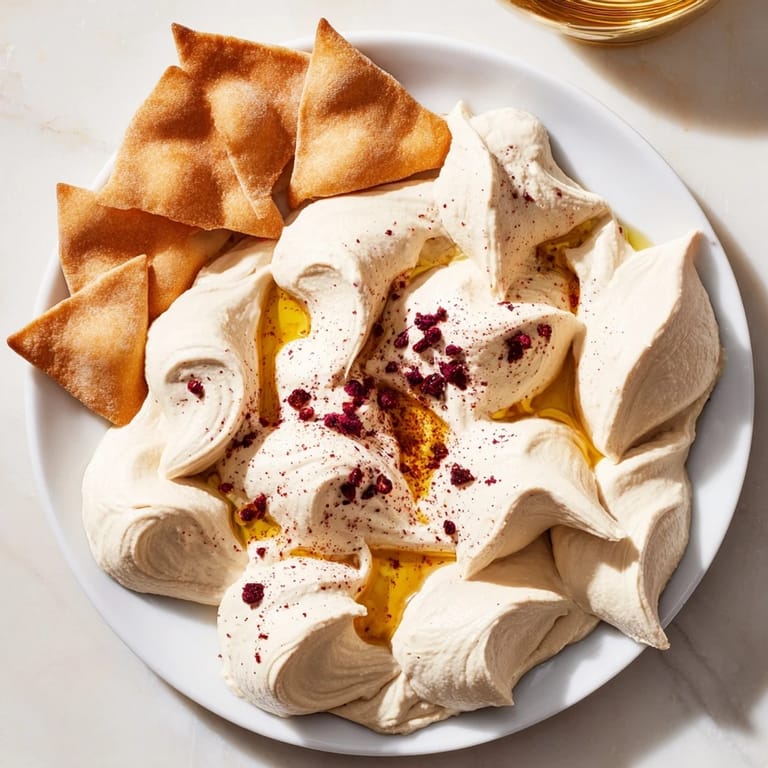
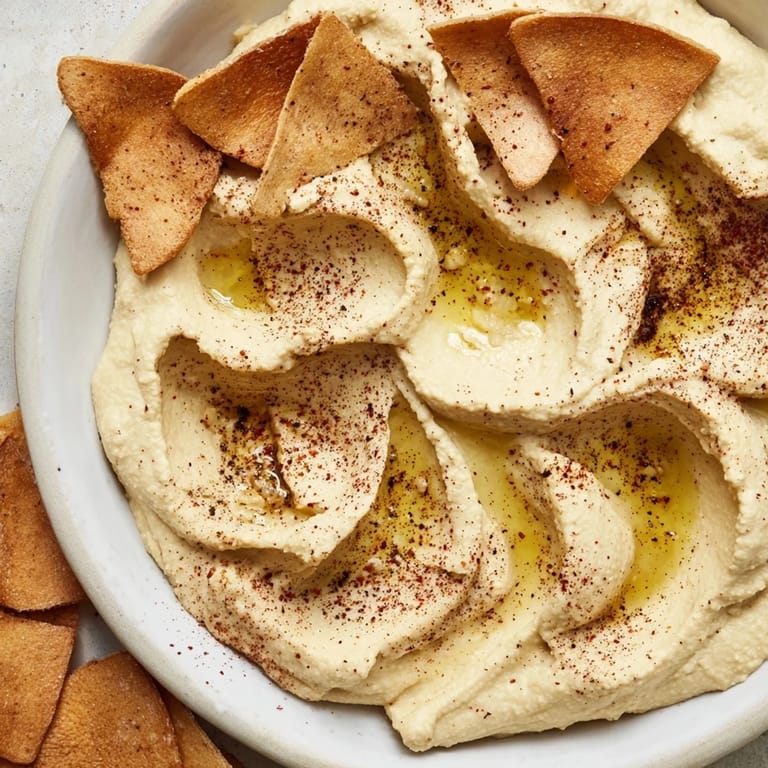
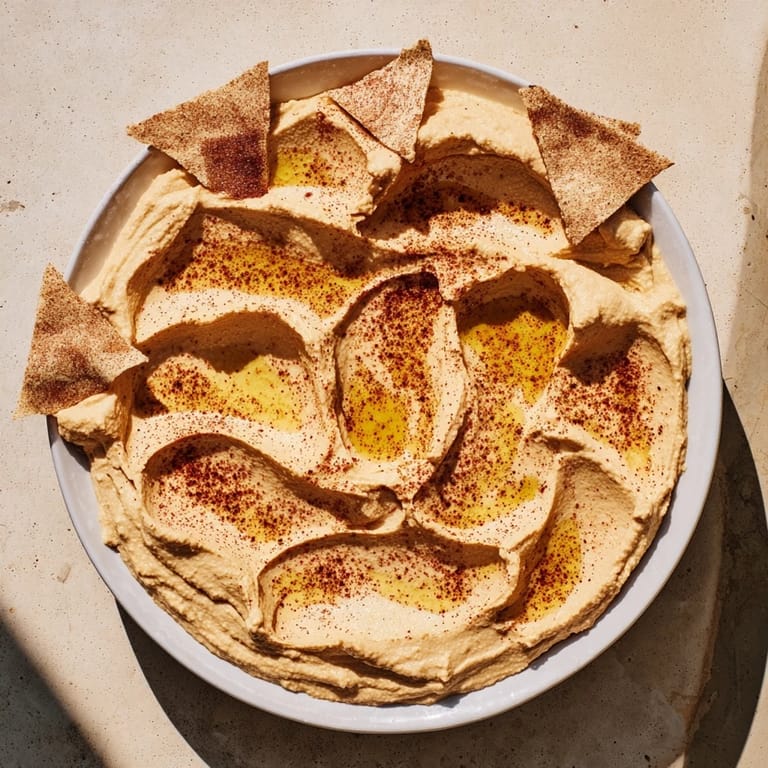
- Use an offset spatula or the back of a spoon to dollop and shape the hummus into undulating mounds on your serving platter. Think rolling hills, not perfect spheres.
- Finish with drama:
- Drizzle olive oil over the hummus, dust lightly with sumac or sweet paprika, scatter fresh parsley if you have it, and arrange your pita chips all around the edges like they're climbing the dunes.
 Pin it
 What struck me most was how this dish transformed a quiet evening into something celebratory. It wasn't fancy ingredients or complicated technique—it was the act of turning everyday ingredients into something that made people pause and smile before they even took a bite. That's when I realized food doesn't have to be complicated to be meaningful.
The Art of Shaping Hummus
The beauty of this presentation is that there's no single correct way to shape the hummus, which takes the pressure off completely. Some days I make tall, peaked dunes; other days I make flatter, more abstract shapes that still feel landscape-like. An offset spatula works best because it lets you sweep and sculpt, but a simple spoon works fine too—just dip it in cold water between scoops so the hummus doesn't stick. The slight irregularity is what makes it look intentional and artful rather than mass-produced.
Why These Flavors Work Together
The combination of toasted cumin, smoked paprika, and tahini creates this warm, earthy backbone that tastes vaguely of spice markets and distant places—which is exactly the point. The lemon juice cuts through all that richness and keeps the hummus from feeling heavy, while the olive oil adds silkiness and a subtle fruity note. When you bite into a crispy chip and then into the creamy hummus, the textures make each other taste better, and that little dusty finish of sumac brings brightness right at the end. It's simple flavor architecture, really.
Making This Your Own
Once you nail the basic recipe, you can play with it endlessly. I've added roasted red peppers for a subtle sweetness, stirred in fresh herbs like cilantro or mint, even topped it with crispy chickpeas for extra crunch. The pita chips are flexible too—you can use whole wheat pita for nuttiness, swap in za'atar instead of paprika for herbaceousness, or even use gluten-free crackers if that fits your table. The dish is forgiving enough to bend to your mood and your pantry.
- Try adding a pinch of cayenne pepper to the hummus if you like subtle heat.
- Roast fresh garlic first if you want the garlic flavor without the sharpness of raw.
- Make extra pita chips because they disappear faster than you'd expect.
 Pin it
 This dish taught me that sometimes the most memorable moments at the table come not from spending hours in the kitchen, but from taking time to make something feel special. Serve it when you want people to linger a little longer.
Frequently Asked Questions
- → What ingredients give the hummus its creamy texture?
The creamy texture comes from blending chickpeas with tahini, lemon juice, olive oil, and adding cold water gradually to achieve smoothness.
- → How are the pita chips shaped to resemble dunes?
Pita breads are cut into irregular, curved triangles to mimic the rolling shapes of desert dunes before baking until crisp.
- → Can the pita chips be made gluten-free?
Yes, swapping pita bread for gluten-free crackers creates a similar crisp texture suitable for gluten-free needs.
- → What spices enhance the flavor of the pita chips?
Smoked paprika, ground cumin, and sea salt are sprinkled on the pita before baking to add smoky and earthy flavor notes.
- → How should the hummus be served for the best presentation?
Shape hummus into smooth, undulating mounds on a platter to evoke dune shapes, then drizzle with olive oil and sprinkle with sumac or sweet paprika.
- → Are there any recommended accompaniments for this dish?
Sliced cucumbers and carrots provide a fresh contrast, and a crisp white wine like Sauvignon Blanc pairs nicely.