 Save
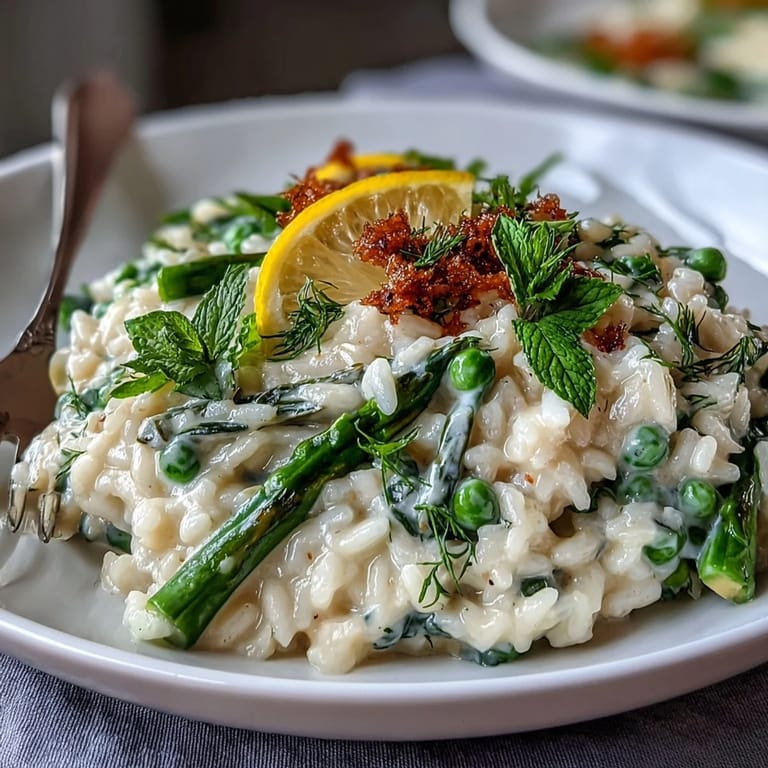
Save My neighbor knocked on the door one April evening with a handful of mint from her garden, still dewy from the afternoon rain. She mentioned she'd been craving something green and spring-like, and suddenly I was pulling out the Arborio rice, remembering how risotto had saved me at countless dinner parties when I needed something that looked fancy but felt forgiving. That night, as the rice slowly drank in the warm stock and the kitchen filled with the smell of butter and garlic, I understood why this dish keeps showing up in my cooking rotation—it's elegant without pretense, and it turns simple ingredients into something guests genuinely remember.
I served this to my book club once on a whim, and someone asked for the recipe before they'd even finished their second bite. What struck me was how the mint didn't just flavor the dish—it seemed to wake everyone up, made the conversation louder and the laughter easier. That's when I realized risotto isn't just about feeding people; it's about creating a moment where everyone slows down together.
Ingredients
- Fresh or frozen green peas (1 cup): The backbone of spring flavor here—if you can find fresh peas still in their pods, shell them yourself for the sweetest taste, though frozen work beautifully and honestly require less work on dinner party night.
- Arborio rice (1 1/2 cups): This isn't a substitution situation; Arborio's starchy grains are what make risotto creamy from the inside out rather than sloppy.
- Small onion, finely chopped: The gentler foundation that lets the brighter flavors take center stage later.
- Garlic (2 cloves, minced): Just enough to add depth without bullying the peas and mint.
- Vegetable stock (4 cups), kept warm: Warm stock is non-negotiable—cold stock shocks the rice and throws off your timing, something I learned the hard way.
- Dry white wine (1/2 cup): A Sauvignon Blanc or something crisp that you'd actually drink, because the rice absorbs its acidity and brightness.
- Unsalted butter (3 tbsp), divided: Two tablespoons for cooking the aromatics, one final tablespoon stirred in at the end for that luxurious, creamy finish.
- Freshly grated Parmesan cheese (1/2 cup, plus extra): Please grate this yourself if you can—pre-grated cheese has anti-caking agents that prevent it from melting smoothly into the risotto.
- Fresh mint leaves (1/4 cup, finely chopped): Add this at the very end so it stays vibrant and doesn't turn dark and muted.
- Fresh flat-leaf parsley (2 tbsp, optional): A gentle green note if you want it, but the mint is the real star.
- Lemon zest (from 1 lemon): The secret brightness that makes people pause and ask what you did differently.
- Salt and freshly ground black pepper: Taste as you go—risotto forgives a lot, but underseasoning it won't.
Tired of Takeout? 🥡
Get 10 meals you can make faster than delivery arrives. Seriously.
One email. No spam. Unsubscribe anytime.
Instructions
- Soften the aromatics:
- Melt two tablespoons of butter in a large saucepan over medium heat—you want it foaming gently, not browning. Add your finely chopped onion and let it turn soft and translucent, which takes about four minutes; you're building a quiet flavor base here, not rushing.
- Toast the rice:
- Stir in the Arborio rice and cook it for about two minutes, stirring constantly so every grain gets coated in butter and begins to smell nutty and toasted. This step matters more than it sounds—it seals the grain so it releases starch gradually rather than all at once.
- Wake it up with wine:
- Pour in your white wine and stir until it's mostly absorbed, which takes a couple of minutes and fills your kitchen with that bright, slightly acidic aroma. You'll hear the sizzle quiet down, and that's your signal to move forward.
- Add stock, one ladle at a time:
- This is where patience becomes your best friend—pour in a ladle of warm stock and stir constantly until it's mostly absorbed before adding the next one. Keep going for about eighteen to twenty minutes, until the rice is creamy and tender but the grains still have a slight firmness when you bite them.
- Bring in the peas at the last moment:
- Add your peas during the final five minutes so they stay bright green and tender rather than turning pale and soft. If they're frozen, no need to thaw them first—they'll warm through quickly.
- Finish with butter, cheese, and herbs:
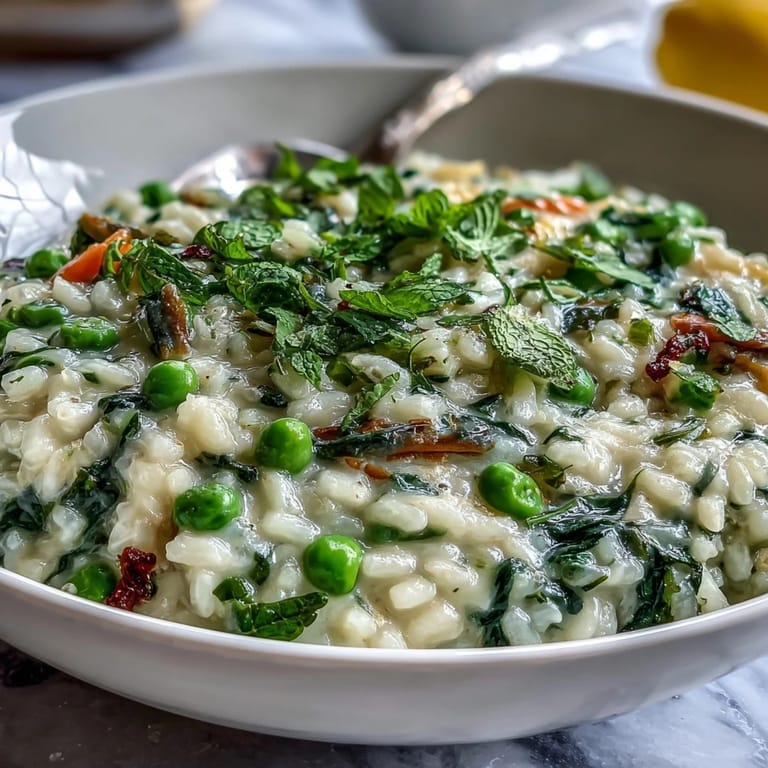
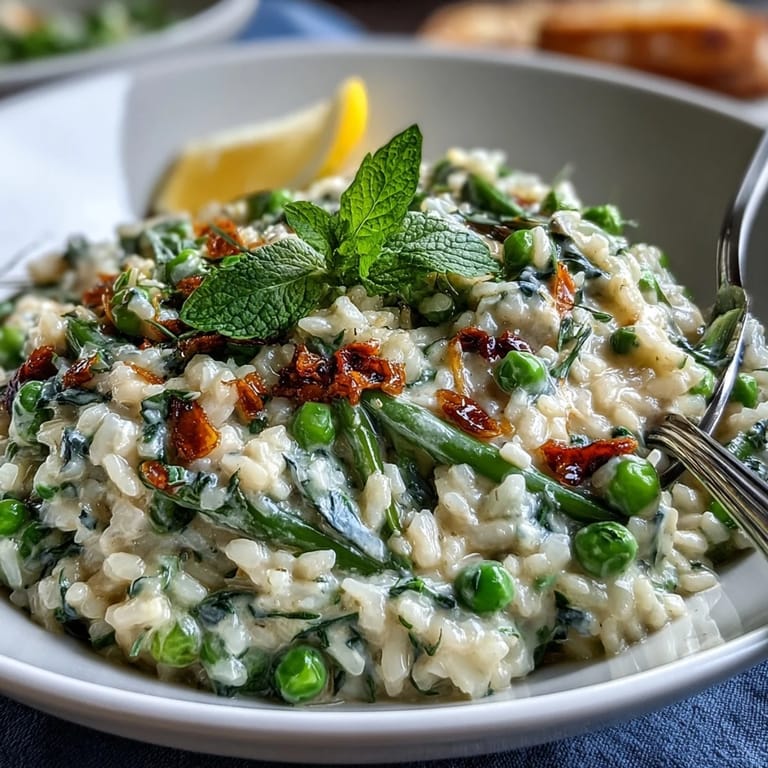
- Off the heat, stir in the remaining tablespoon of butter, the Parmesan, your finely chopped mint, and the lemon zest, tasting and adjusting your salt and pepper as you go. The rice should look loose and creamy, almost flowing slightly on the plate rather than sitting in a tight mound.
- Serve immediately:
- Risotto waits for no one—spoon it into bowls right away, top with more Parmesan and a few fresh mint leaves, and bring it to the table while it's still steaming.
 Pin it
 There's a moment about halfway through stirring when the rice starts to smell sweeter, when the kitchen gets warm and steamy, and you realize you're doing something right. That's when the magic happens—not in the final plating, but in those quiet minutes of stirring, when you're fully present in a way that cooking almost forces you to be.
The Magic of Mint in Spring Cooking
Mint is one of those herbs that transforms depending on how you treat it—bruise it or cook it too long, and it turns aggressive and almost medicinal, but add it fresh and gently at the very end, and it tastes like the season itself. I learned this after ruining a batch by stirring it in with the warm stock, watching it turn a sad grayish-green as the risotto finished cooking. Now I treat mint like a finishing touch, almost an afterthought, and it makes all the difference.
Wine Pairing and What to Serve Alongside
A crisp white wine—Sauvignon Blanc or Pinot Grigio—feels essential here, not just as an ingredient but as what you drink alongside the meal. The wine's acidity balances the creamy richness of the risotto, making each bite feel lighter than it actually is. I've also found that a simple green salad with a lemon vinaigrette, tossed just before serving, brightens the whole plate and gives you something fresh to cleanse your palate between bites.
Small Tweaks That Make a Difference
Sometimes I finish the risotto with a drizzle of really good olive oil, the kind that costs a bit more and actually tastes like olives—it adds a depth that feels almost decadent. Other nights I add a squeeze of fresh lemon juice right at the table, letting each person adjust the brightness to their taste. The beauty of risotto is that it's forgiving enough to handle small variations while staying true to itself.
- Toast your Parmesan on top under the broiler for a minute if you want a crunchy crust on each serving.
- A pinch of saffron threads steeped in the warm stock would turn this into something even more special, though then you're really showing off.
- If you have good chicken or vegetable stock homemade, this is the recipe where it truly shines and gets noticed.
 Pin it
 This risotto has become my answer to the question of what to cook when I want to impress without stress. It's elegant enough for a dinner party, comforting enough to make for yourself on a quiet spring evening, and simple enough that once you've made it once, you'll make it again and again.
Frequently Asked Questions
- → What type of rice is best for this dish?
Arborio rice is recommended for its ability to absorb liquid and release starch, producing a creamy texture essential to risotto.
- → Can I use frozen peas instead of fresh?
Yes, frozen peas work well and can be added during the last few minutes of cooking to retain their color and texture.
- → How can I make the risotto creamier?
Stirring in extra butter and Parmesan at the end enhances creaminess. Adding a splash of good-quality olive oil before serving also enriches the texture.
- → Is white wine necessary for this preparation?
White wine adds depth and subtle acidity; however, it can be omitted or replaced with additional vegetable stock if preferred.
- → What herbs complement the peas and Parmesan in this dish?
Fresh mint and flat-leaf parsley provide bright, fresh notes that balance the richness of Parmesan and butter.