 Save
Save My neighbor Marcus brought over these jerk chicken skewers one summer evening, and I watched the smoke curl off his grill from three houses down. The smell—that intoxicating blend of allspice, thyme, and charred pineapple—made my whole family wander outside like we were being pulled by invisible strings. He handed me one still steaming, and I bit into chicken so tender it fell apart on my tongue, with just the right amount of heat that made you want another bite immediately. That night changed how I thought about grilling, and now these skewers are the first thing I make when I want to impress someone or just feel like summer is still possible.
I made these for my cousin's birthday last July, and someone actually asked me for the recipe before dessert was served—which basically never happens. The combination of vibrant colors on the grill, the sizzle when you first lay them down, the way the peppers get these charred edges—it all felt like we were creating something special, not just cooking dinner. My cousin said it tasted like a Caribbean vacation on a stick, and honestly, that's exactly what I was going for.
Ingredients
- Vegetable oil: This carries all the flavor throughout the marinade without overpowering it; I've learned that cheap oil makes a noticeable difference here.
- Soy sauce (tamari for gluten-free): The umami backbone that makes the chicken taste deeper and more complex than just spices alone.
- Brown sugar: A teaspoon or two dissolves into the marinade and caramelizes on the grill, creating those slightly sticky, charred bits everyone fights over.
- Fresh thyme leaves: Dried thyme gets bitter when grilled at high heat, so fresh is non-negotiable; the flavor stays bright and herbaceous.
- Ground allspice, cinnamon, ginger, and nutmeg: These warm spices are what make jerk jerk—they create layers instead of just heat, so don't skip any of them or substitute casually.
- Scotch bonnet or habanero pepper: Wear gloves and seed it carefully; the heat builds subtly, and you can always add more heat next time if you're brave.
- Spring onions: They blend into the marinade and add a fresh, slightly sharp note that cuts through the richness of the chicken.
- Lime juice: The acid brightens everything and helps tenderize the chicken without making it mushy if you don't overdo the marinating time.
- Chicken thighs: They're fattier than breast meat, which means they forgive you if you're distracted while grilling and stay tender and flavorful.
- Bell peppers and pineapple: These cool down the heat slightly and add textural contrast; the pineapple especially caramelizes into something almost candy-like.
Tired of Takeout? 🥡
Get 10 meals you can make faster than delivery arrives. Seriously.
One email. No spam. Unsubscribe anytime.
Instructions
- Blend your jerk magic:
- Throw all the marinade ingredients into a blender and let it run until it's completely smooth with no visible chunks. The mixture should smell so good that everyone in your kitchen suddenly appears with questions.
- Marinate with patience:
- Place your chicken pieces in a bowl or zip-top bag, pour that gorgeous marinade over everything, and make sure every piece gets coated. Refrigerate for at least two hours, though overnight is better—the longer it sits, the deeper the flavor penetrates into the chicken.
- Prepare your grill stage:
- If you're using wooden skewers, soak them in water for thirty minutes so they don't char before the food is done. Get your grill or grill pan screaming hot over medium-high heat; you want those grates to sear and caramelize, not just cook through.
- Thread with intention:
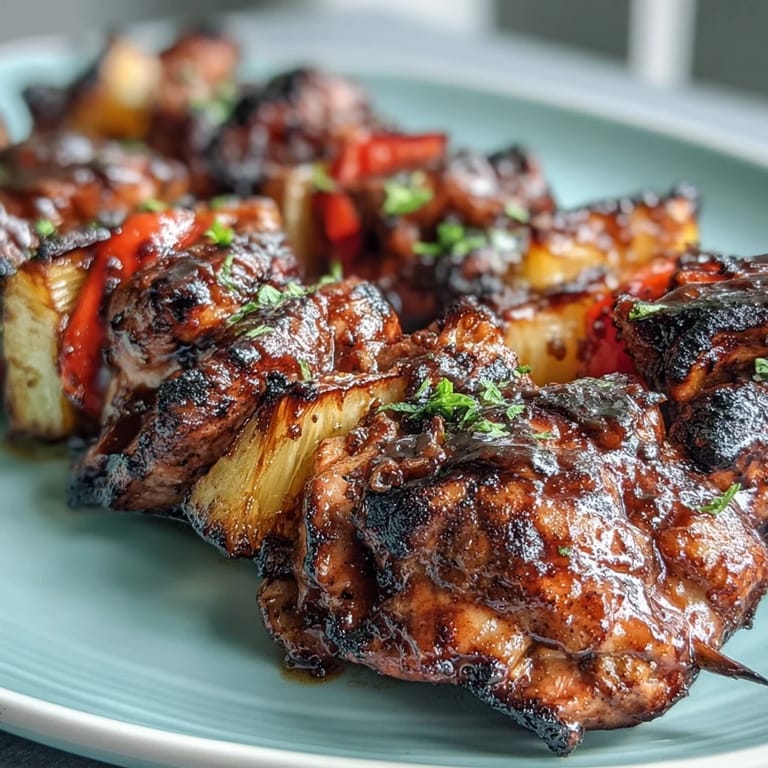
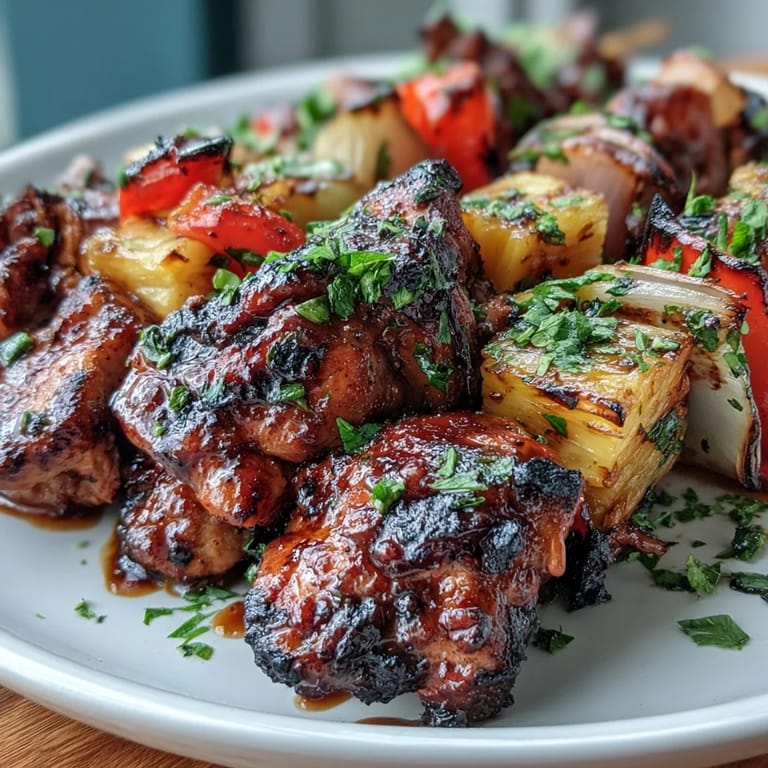
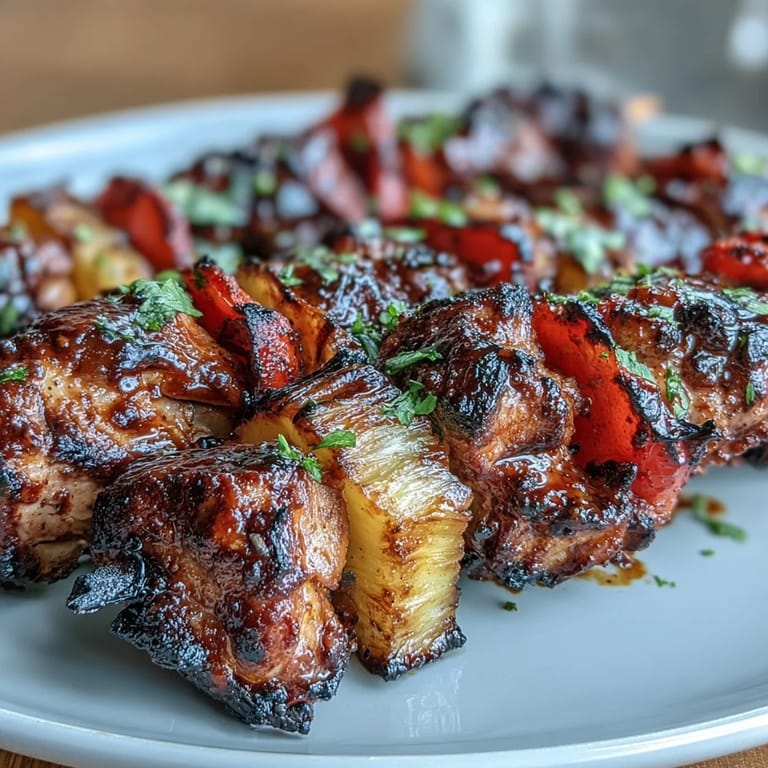
- Alternate chicken, pineapple, and bell pepper pieces on your skewers, leaving just enough space between pieces so heat can circulate and create that gorgeous char. The colors should look like edible Caribbean sunsets.
- Grill and listen:
- Lay your skewers on the hot grill and listen for that immediate sizzle—it tells you the heat is right. Turn them every three to four minutes, grilling for twelve to fifteen minutes total until the chicken is cooked through and has those beautiful charred spots, then rotate to catch all sides.
- Rest and serve:
- Let them sit for just a minute off the heat, then slide them onto a plate and top with fresh lime and cilantro if you want to be fancy. That resting moment lets the juices settle back into the meat.
 Pin it
 There's this moment when someone bites into one of these skewers and their eyes go wide, and they pause mid-chew like they're trying to figure out where the heat, sweetness, and smokiness are all coming from at once. That pause is why I keep making them.
The Science of Jerk Seasoning
What makes jerk actually jerk is the combination of warm spices with fierce heat, and understanding that balance changes how you cook it. The allspice, cinnamon, nutmeg, and ginger create this warming, almost dessert-like backdrop that makes the Scotch bonnet pepper feel less like pure fire and more like a complex flavor partner. Once I understood that these spices were meant to work together rather than compete, my jerk marinades stopped tasting one-dimensional and started tasting alive. The brown sugar and soy sauce amplify this by caramelizing on the grill, which adds bitterness and depth to cut through the sweetness of the pineapple.
Why Thighs Over Breast
Chicken breast is leaner and cooks faster, which sounds like an advantage until you bite into something dry and stringy after spending two hours marinating. Thighs have enough fat that they stay moist even if you accidentally let them cook a minute too long, and that fat also helps carry the jerk flavors deeper into the meat. I switched to thighs years ago and never looked back, especially for skewers where the pieces are smaller and more exposed to direct heat. The marinade sticks to thighs better too, creating more surface area for that caramelization.
Grilling Like You Mean It
The difference between mediocre grilled skewers and incredible ones comes down to heat consistency and the confidence to leave them alone. I used to flip constantly, thinking I was protecting them, but all that did was prevent any real char from forming and added time to the cooking process. Now I flip maybe three times total and resist the urge to poke and move things around—that patience creates the crust that makes these skewers special. If you don't have a grill, a grill pan on the stove works just as well, though you lose some of that smoky flavor you get from actual flames.
- Get your grill screaming hot before you lay anything on it, or the chicken will stick and tear.
- Don't move the skewers for the first few minutes; let them develop that char undisturbed.
- If you're worried about flare-ups from dripping marinade, keep a spray bottle of water nearby but use it sparingly.
 Pin it
 These skewers have become my answer to the question of what to make when I want something that feels impressive but doesn't require me to stand in the kitchen sweating. They're Caribbean comfort food that doesn't apologize for its flavor, and they remind me every time I make them why I love cooking in the first place.
Frequently Asked Questions
- → How long should the chicken marinate?
For best flavor, marinate the chicken for at least 2 hours, but you can leave it overnight for a deeper taste.
- → What type of pepper is used for heat?
Scotch bonnet or habanero pepper provides the signature spicy kick; adjust the amount to suit your heat preference.
- → Can I substitute chicken breast for thighs?
Yes, chicken breast can be used but thighs remain juicier and more flavorful after grilling.
- → Should wooden skewers be prepared before grilling?
Soak wooden skewers in water for at least 30 minutes to prevent burning during grilling.
- → What sides pair well with this dish?
Serve with coconut rice, a crisp green salad, or fresh lime wedges to complement the bold flavors.