 Save
Save There's something about a perfectly composed charcuterie board that stops conversation mid-sentence. I discovered this years ago when a friend showed up with an unpolished slate slab and began arranging meats and cheeses in deliberate, geometric lines. It felt almost architectural, like we were building something instead of just setting out food. That moment changed how I thought about entertaining—not as a performance, but as an intentional arrangement of care and good taste.
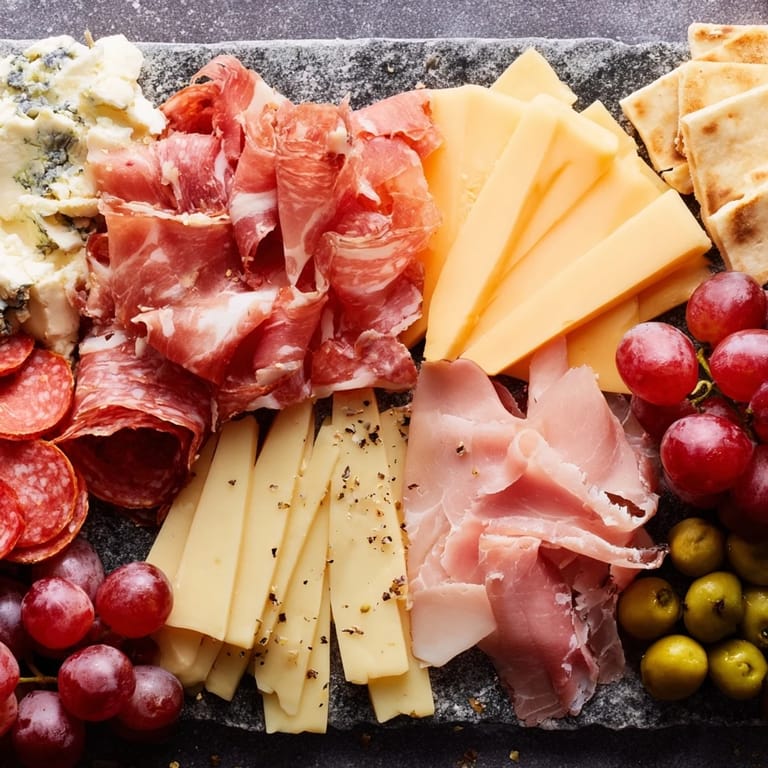
I remember bringing this board to a dinner party where everyone was exhausted and polite. The moment I set it down—heavy, dark, filled with those clean lines of color and texture—people leaned forward. Conversation shifted. Someone poured wine without being asked. It became clear that presentation isn't shallow; it's an invitation to actually pay attention to what you're eating.
Ingredients
- Smoked prosciutto (100 g): The foundation of the meat selection, offering a delicate saltiness that doesn't overpower.
- Soppressata (100 g): This Italian dried sausage brings a peppery snap that cuts through richness with each bite.
- Coppa (100 g): Slightly fattier and more luxurious than prosciutto, coppa adds visual interest with its marbled texture.
- Mortadella (100 g): Silky and mild, it provides a creamy contrast to sharper cured meats.
- Aged cheddar (100 g, sliced): Sharp enough to stand up to bold cured meats without disappearing into the mix.
- Manchego (100 g, sliced): A nutty Spanish cheese that brings warmth and a slightly grainy bite.
- Gruyère (100 g, sliced): Deep and complex, it's the bridge between sharp and creamy on your board.
- Blue cheese (100 g, sliced or crumbled): The wildcard that makes people pause and take another piece, balancing salt and funk beautifully.
- Seedless red grapes (1 small bunch): They provide a burst of sweetness that reset your palate between rich bites.
- Cornichons (50 g): Tiny pickles offer bright acidity and cut through the heaviness of cheese with precision.
- Whole grain mustard (50 g): Grainy and complex, it's a flavor anchor that makes every bite feel intentional.
- Mixed olives (50 g, green and black): The contrast between varieties gives you something to return to repeatedly.
- Freshly cracked black pepper: Applied just before serving, it adds aroma and a subtle bite that elevates the entire presentation.
Tired of Takeout? 🥡
Get 10 meals you can make faster than delivery arrives. Seriously.
One email. No spam. Unsubscribe anytime.
Instructions
- Find your canvas:
- Place the unpolished stone slab on your work surface, letting its rough texture become part of the presentation. If you have time, chill it for twenty minutes so ingredients stay cool longer.
- Set the meat lines:
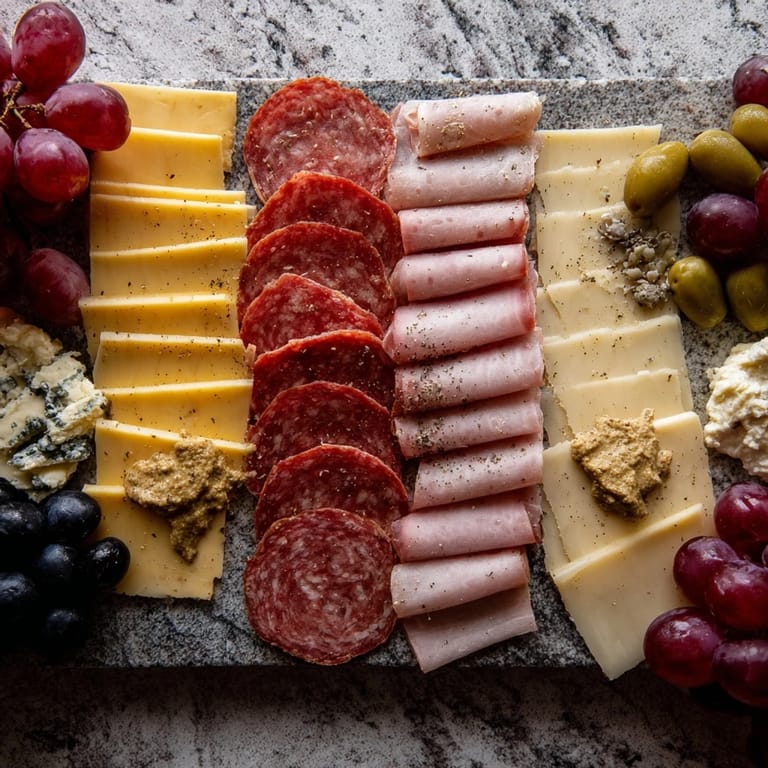
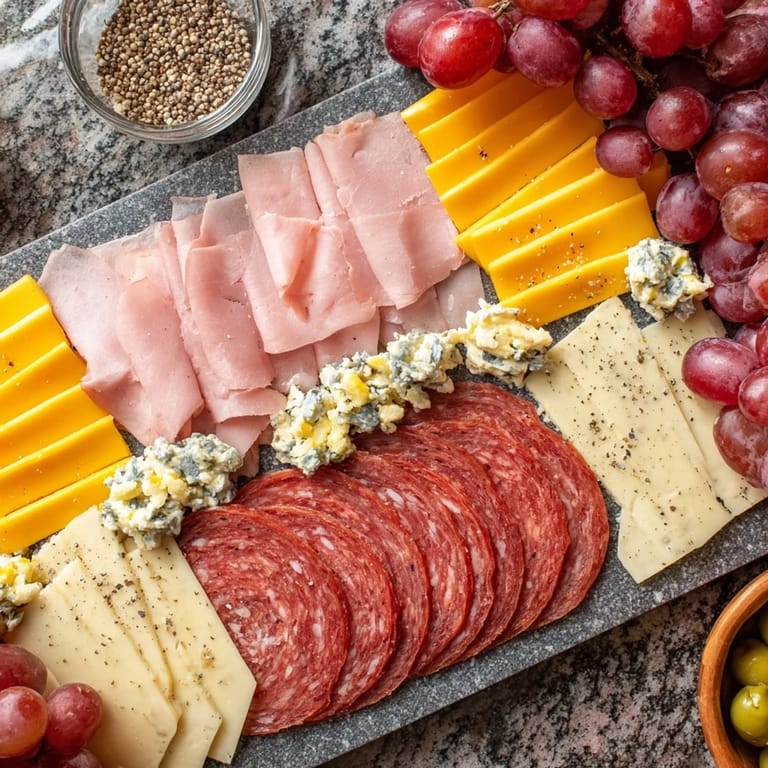
- Slice each cured meat into thin, even pieces and arrange them in parallel lines on one half of the board, keeping each type visually separate. Step back and let the pattern guide your eye before moving forward.
- Mirror the cheese:
- On the opposite side, arrange your sliced cheeses in matching parallel lines, grouping by type so flavors build logically as guests move across the board.
- Fill the spaces:
- Tuck bunches of grapes, scattered cornichons, and olives into the gaps, letting them nestle naturally between meats and cheeses without disrupting the geometric flow.
- Add the mustard moment:
- Place dollops of whole grain mustard in a thin line or small dish at the board's edge, making it clear this is an optional flavor amplifier, not a requirement.
- Finish with pepper:
- Just before serving, give the meats and cheeses a light but visible sprinkle of freshly cracked black pepper, filling the air with subtle aroma and completing the visual composition.
 Pin it
 I learned the power of this board when my mother-in-law stopped mid-bite and said, 'This is what I imagined fancy restaurants looked like when I was young.' It wasn't complicated. It was just arrangement and intention, and somehow that meant more than a ten-step recipe ever could.
Why Straight Lines Matter
The geometry isn't just for show. When you arrange meats and cheeses in parallel lines, you're creating visual calm in a world of visual noise. Your eye knows where to travel. There's no confusion about what comes next. It's the kitchen equivalent of a well-organized room—it actually makes you feel more relaxed, not less. Guests sense that care and respond by slowing down, looking closer, tasting more deliberately.
Pairing and Serving
This board doesn't demand much from wine, but it rewards intention. A crisp Sauvignon Blanc cuts through the richness without apology, while a bold Cabernet Sauvignon plays beautifully with the umami of aged cheeses and cured meats. If you're serving without alcohol, sparkling water with fresh lemon works just as well. The board actually becomes more interesting when people approach it slowly, over the course of an hour, rather than attacking it all at once.
The Vegetarian Pivot
If you're building this for mixed crowds, the beauty is that you can simply omit the meats and add marinated artichoke hearts, roasted nuts, and a few more pickled items without losing the board's architectural integrity. The principle remains the same—contrast, color, line, and balance. Some of my most interesting boards have actually been vegetarian, precisely because you have to think harder about texture and flavor without the automatic richness of cured meats.
- Try marinated artichoke hearts, roasted marcona almonds, and candied walnuts for depth.
- Add extra pickled vegetables like roasted peppers or pickled carrots to maintain brightness.
- A creamy cheese like burrata or a soft goat cheese works beautifully alongside harder varieties.
 Pin it
 There's quiet power in knowing that sometimes the most memorable meals aren't the ones that demand hours of work. They're the ones that show respect through arrangement, balance through intention, and elegance through simplicity.
Frequently Asked Questions
- → What meats are featured on the platter?
The platter includes smoked prosciutto, soppressata, coppa, and mortadella, offering a mix of textures and flavors.
- → Which cheeses complement the meats?
Sharp cheeses such as aged cheddar, Manchego, Gruyère, and blue cheese are sliced and arranged alongside the meats.
- → How should the platter be arranged for best effect?
Place cold meats in straight parallel lines on one side and sharp cheeses opposite, filling gaps with grapes, cornichons, and olives.
- → Are there any serving suggestions to enhance the experience?
Chilling the stone slab before arranging ingredients helps keep everything fresh longer and heightens visual appeal.
- → Can this platter accommodate dietary preferences?
A vegetarian variation can be made by omitting the meats and adding marinated artichoke hearts and roasted nuts.