 Save
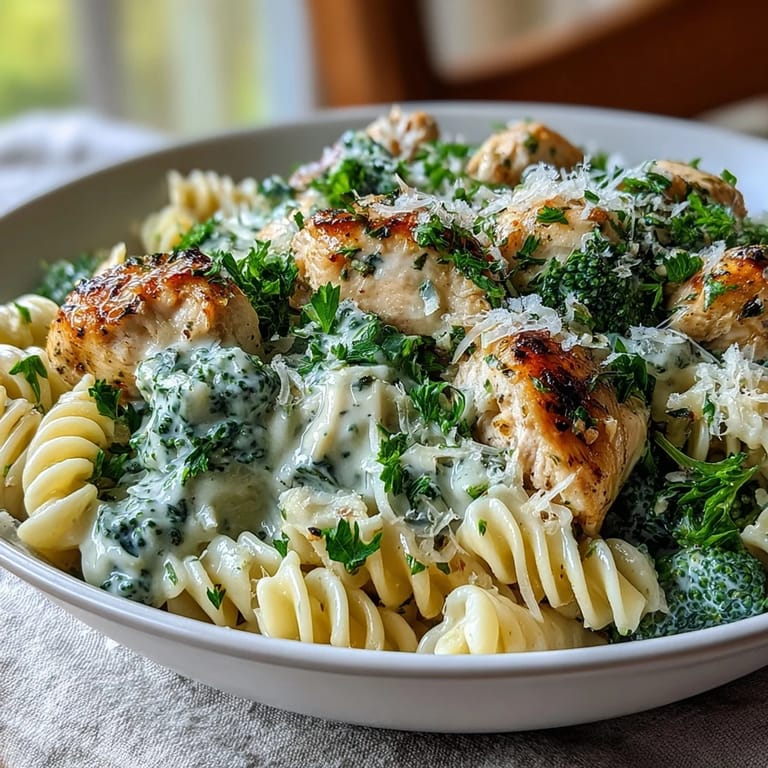
Save There was a Tuesday night when my partner came home exhausted, and I had exactly thirty-five minutes to turn out something that felt both comforting and impressive. I stood at the stove with a half-full broccoli bunch and two chicken breasts, thinking about that creamy garlic soup we'd loved at a restaurant months before. What if I could capture that same velvety richness but turn it into a complete dinner without fussing over multiple pots? That night, this pasta was born—and it's been my secret weapon ever since.
I made this for my mom on her birthday, and watching her expression shift from "oh, pasta" to pure contentment was everything. She asked for the recipe before she'd even finished her plate, which never happens—she's the cook in our family. Now she texts me pictures of it with little heart emojis whenever she makes it, and somehow that means more than any fancy dinner out ever could.
Ingredients
- 2 medium boneless, skinless chicken breasts (about 400 g), diced: Cutting them into bite-sized pieces ensures they cook quickly and distribute evenly throughout, so every forkful has protein.
- 2 cups broccoli florets (about 200 g): Fresh broccoli stays vibrant and crisp if you add it partway through cooking; frozen works beautifully too and saves prep time.
- 3 cloves garlic, minced: This is where the magic lives—don't skip it or use powder, the fresh garlic builds that savory depth that makes people ask what your secret is.
- 1 small yellow onion, finely chopped: Onion sweetens slightly as it cooks and anchors all the other flavors, creating that rounded richness you taste in every bite.
- 300 g (10 oz) short pasta (penne, fusilli, or rotini): Short shapes hold the sauce beautifully; I prefer penne because it catches and clings to every bit of that creamy coating.
- 1 cup (240 ml) whole milk: Whole milk is essential here—low-fat versions won't give you that silky texture, and skim will taste thin and disappointing.
- 1 cup (100 g) grated Parmesan cheese: Freshly grated Parmesan melts more smoothly than pre-grated; there's a real difference in how the sauce comes together.
- 2 tbsp (30 g) unsalted butter: Butter carries flavor and helps build the initial richness before the cream joins in.
- 1/2 cup (120 ml) heavy cream: Added at the end, this is what transforms a good sauce into something you'll dream about.
- 2 tbsp olive oil: Use a good quality olive oil here since it's tasted directly in the chicken sear.
- 1 1/2 cups (360 ml) low-sodium chicken broth: Low-sodium lets you control the salt and prevents the dish from becoming overly salty as the liquid reduces.
- 1/2 tsp dried Italian herbs: A small amount adds subtle background notes without overwhelming the garlic and Parmesan.
- Salt and freshly ground black pepper, to taste: Taste as you go—the final seasoning should feel bright and balanced, not flat.
Tired of Takeout? 🥡
Get 10 meals you can make faster than delivery arrives. Seriously.
One email. No spam. Unsubscribe anytime.
Instructions
- Sear the chicken until golden:
- Heat olive oil and butter together in your largest skillet over medium heat until the butter foams and smells nutty. Add the diced chicken pieces and let them sit undisturbed for a minute so they develop a golden crust, then stir and continue cooking about five to six minutes total until no pink remains inside. The color on the chicken matters—it means flavor is developing.
- Build your aromatic base:
- Keep that same skillet hot and add your chopped onion, stirring until it turns soft and translucent, maybe two minutes. Then add the minced garlic and let it cook for just thirty seconds until your kitchen smells absolutely incredible; this is the moment where the dish starts tasting like something special.
- Create a one-pot pasta:
- Stir in your uncooked pasta, chicken broth, whole milk, and Italian herbs, then bring everything to a rolling boil. Lower the heat to a simmer, cover with a lid, and let it cook for about eight minutes, stirring occasionally so the pasta doesn't stick to the bottom and the liquid distributes evenly.
- Add the broccoli and finish cooking:
- Scatter the broccoli florets across the top, cover again, and simmer for another five to six minutes until the pasta is tender but still has a slight bite, and the broccoli has turned a beautiful bright green. The timing is flexible here depending on your pasta shape—taste a piece and trust your instinct.
- Make it creamy and luxurious:
- Turn the heat down to low and pour in the heavy cream, then add your grated Parmesan cheese and stir constantly until it's completely melted and the sauce turns silky and coat the pasta. Return the cooked chicken to the pan and stir everything together gently, letting it warm through for about two minutes.
- Season and serve:
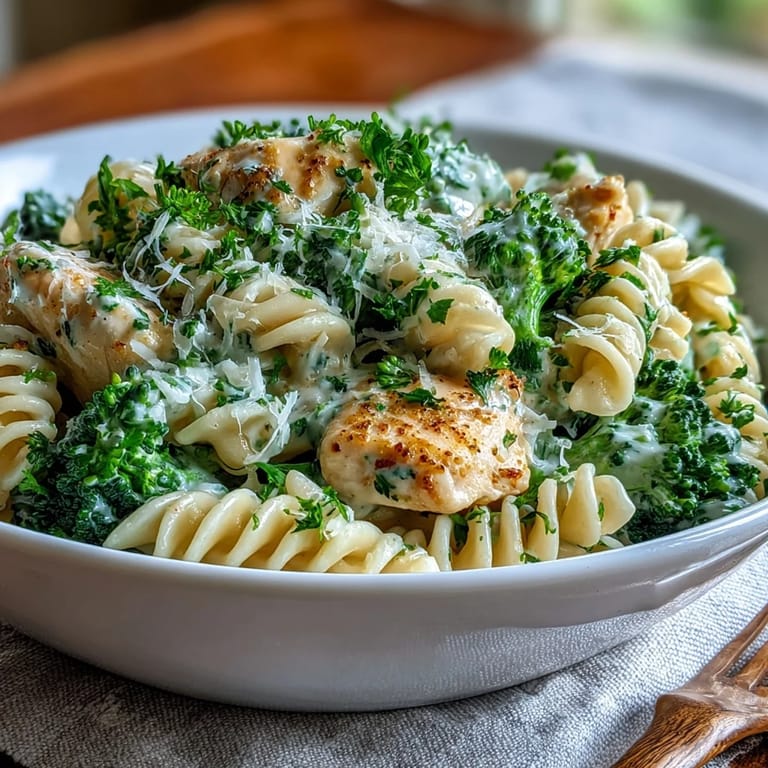
- Taste a small spoonful and adjust salt and pepper until the flavors feel balanced and bright. Divide among bowls and top with fresh parsley and extra Parmesan if you have it.
 Pin it
 There's something almost meditative about cooking this dish—the way the kitchen fills with that buttery garlic aroma, how the pasta softens into the creamy sauce, the satisfaction of everything coming together in one pan. It stopped being just dinner the first time a friend ate it and said "you made this?" like it was impossible. Now it's become my go-to when I want to feel like a real cook without spending my evening at the stove.
Why This Works So Well
The genius of this pasta is that it breaks every complicated cooking rule and somehow emerges perfect anyway. Most creamy pasta sauces require a separate sauce made on the stovetop, but here you're cooking the pasta directly in the liquid, which means the starch released from the pasta naturally thickens the broth into a sauce. The vegetables cook at different rates—the onion first, then the pasta, then the broccoli—so nothing is over or underdone, and each layer of flavor gets its moment to develop. By the time everything comes together, you've got something that tastes like you've been fussing with it for hours when you've really just been standing in one place, stirring occasionally.
Timing and Temperature Matter
I learned this the hard way after making this for the third time—if you keep the heat too high after adding the cream and Parmesan, the sauce can break and look grainy instead of silky. That low heat at the end isn't lazy; it's the difference between a restaurant-quality sauce and something that looks curdled. Similarly, if you're distracted and let the pasta boil away without the lid, you'll run out of liquid before the pasta is tender. The lid is your friend here, and patience with medium-low heat is what separates good creamy pasta from exceptional creamy pasta.
Flexibility and Variations
The beauty of this dish is how adaptable it is once you understand the basic method. Rotisserie chicken shaves off ten minutes if you're in a rush, and honestly, nobody can tell the difference—you're adding so much flavor with the garlic and cream that pre-cooked chicken blends right in seamlessly. Spinach wilts beautifully in those final minutes instead of broccoli, peas add sweetness, and even sliced mushrooms work wonderfully if you sauté them with the onion. The ratios stay the same because you're working with the pasta's starch to build your sauce, so swapping vegetables is genuinely risk-free.
- Roasted cherry tomatoes stirred in at the end add brightness that cuts through the richness.
- A squeeze of fresh lemon juice right before serving makes the whole dish taste fresher and more alive.
- Crispy bacon pieces scattered on top turn this into something your family will fight over.
 Pin it
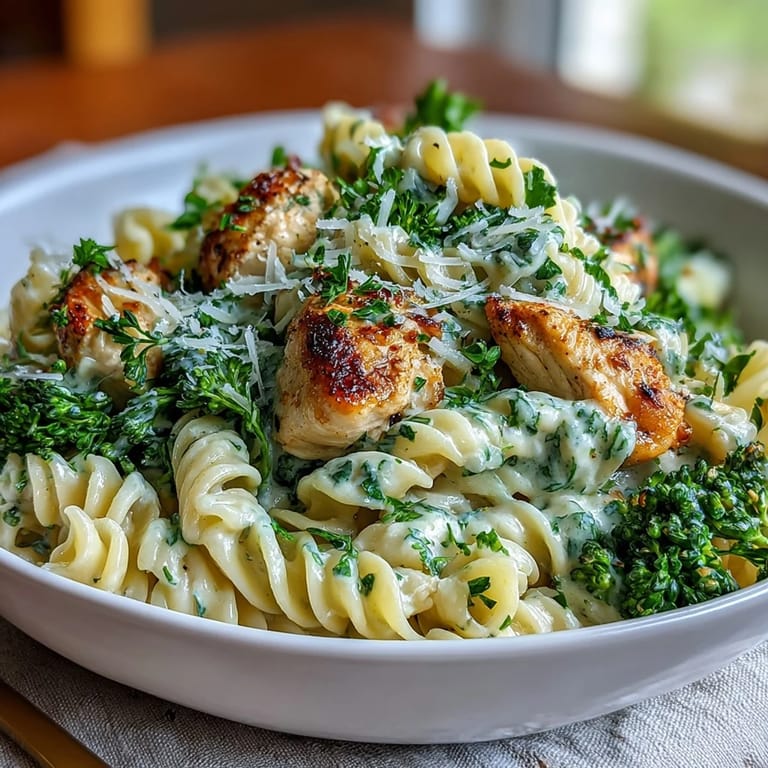
 This pasta has become my answer to those nights when I want something that feels indulgent without actually being complicated, a dish that makes people ask for the recipe even though the secret is just patience and good ingredients. Cook it once and you'll understand why it keeps coming back to the table.
Frequently Asked Questions
- → Can I use rotisserie chicken?
Yes, shred or dice rotisserie chicken and add it during step 5 when you return the meat to the skillet, just long enough to heat through.
- → What pasta shapes work best?
Short pasta varieties like penne, fusilli, or rotini catch the creamy sauce beautifully. Their nooks and crannies hold onto the garlic Parmesan coating.
- → Can I make this gluten-free?
Substitute gluten-free pasta and ensure your chicken broth is certified gluten-free. The sauce naturally thickens without wheat flour.
- → How do I store leftovers?
Refrigerate in an airtight container for up to 3 days. The sauce may thicken—add a splash of milk or broth when reheating on the stovetop.
- → Can I use frozen broccoli?
Yes, add frozen florets directly during step 4. They may need 1-2 extra minutes to cook through and become tender.
- → What can I substitute for heavy cream?
Half-and-half works for a lighter sauce, though it will be slightly less rich. Avoid milk alone as it may curdle when simmering.