 Save
Save There's something almost meditative about standing over a pot of sliced onions, watching them transform from sharp and white to deep amber over the course of an hour. Years ago, a French colleague brought me a bowl of her grandmother's onion soup on a grey November afternoon, and I remember the shock of how something so simple—just onions, butter, and broth—could taste like pure comfort. That bowl changed how I thought about patience in cooking. Now, whenever the weather turns cold, I find myself pulling out my heaviest pot and committing to the slow caramelize, knowing exactly what's waiting at the end.
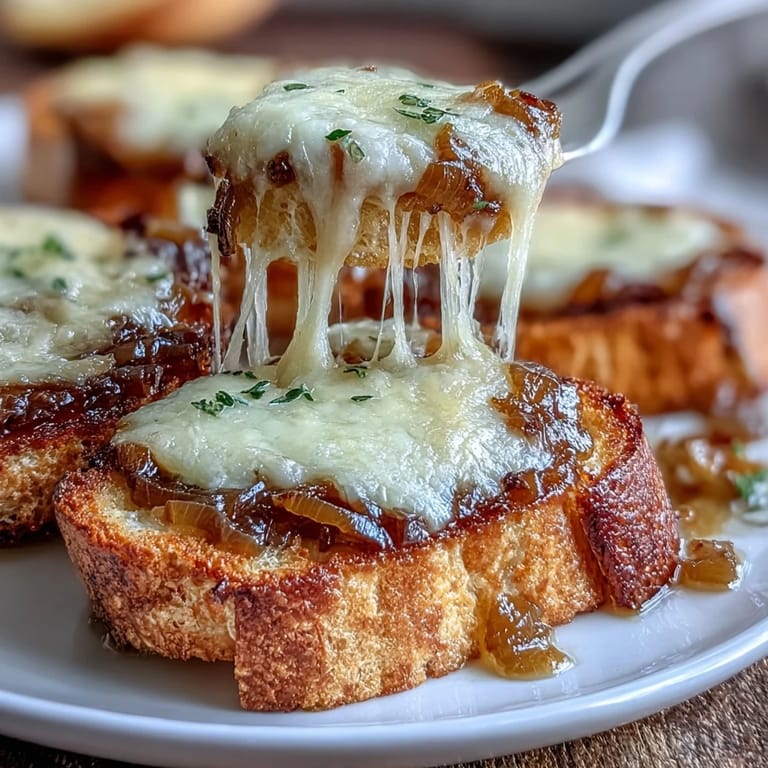
I made this for my roommate last February when she was going through a rough stretch, and watching her scrape every last bit of cheese from the crostini told me everything about whether the recipe worked. She came back to the kitchen three times that week asking if I'd make it again, and suddenly it became our thing—our excuse to sit down together on cold nights and actually talk. There's real power in a bowl of soup that asks you to slow down.
Ingredients
- 6 large yellow onions, thinly sliced: Yellow onions have the sugar content you need for deep caramelization—red onions will taste sharp, and white onions won't develop that rich color.
- 3 tbsp unsalted butter and 1 tbsp olive oil: Butter gives flavor while oil keeps things from burning, and using both is the secret to that golden, glossy finish.
- 1 tsp sugar: This tiny bit jumpstarts the caramelization process and balances any acidity that sneaks in from the broth.
- 1 tsp salt and 1/2 tsp freshly ground black pepper: Season as you go; it helps draw out the onion's moisture and prevents that raw edge.
- 2 cloves garlic, minced: Add it late so it doesn't burn while the onions caramelize—burnt garlic tastes acrid and will ruin everything.
- 2 tbsp all-purpose flour: This thickens the soup just slightly and adds a subtle depth; don't skip it or your broth will taste too thin.
- 1/2 cup dry white wine: The alcohol cooks off, leaving behind acidity and flavor that makes you think about why you're eating this.
- 6 cups beef broth: Homemade is better if you have it, but good store-bought matters more than you'd think—taste it first and don't use anything too salty.
- 2 sprigs fresh thyme or 1/2 tsp dried: Fresh is milder and more delicate; dried is stronger, so adjust based on what you have.
- 1 bay leaf: It adds a subtle woodsy note that makes the whole thing taste more refined.
- 1 small sourdough baguette: The tang plays beautifully against the sweet onions, and the crust holds the cheese without getting soggy.
- 2 tbsp olive oil for toasting: Good oil here matters because you'll taste it on the crostini.
- 1 cup Gruyere cheese, grated: It melts smoothly and has a slightly nutty depth that regular cheddar doesn't; it's worth seeking out.
- 1/2 cup Parmesan cheese, grated: This is optional but it adds an extra salty punch if you're going for it.
Tired of Takeout? 🥡
Get 10 meals you can make faster than delivery arrives. Seriously.
One email. No spam. Unsubscribe anytime.
Instructions
- Melt your butter and oil together:
- Use a large pot with a heavy bottom—it distributes heat evenly and prevents hot spots that scorch the onions. Medium heat is your friend here; if it's too high, you'll brown the onions instead of caramel them, and that's a completely different (and less delicious) thing.
- Add the onions and commit to the wait:
- Slice them thin, toss them in with the sugar and salt, and settle in. Stir every few minutes as they release their moisture and start to collapse—this takes 35 to 45 minutes, and there's no way around it. Your kitchen will smell incredible, which is how you know it's working.
- Finish the onions until they're deep golden:
- You're looking for a rich caramel color, almost amber, with no pale bits left. Once they hit that stage, add the garlic and cook for just one minute—any longer and it becomes acrid and bitter.
- Make a quick roux and deglaze:
- Sprinkle flour over the onions, stir for two minutes to cook out the raw flavor, then pour in the white wine while scraping the bottom of the pot. All those browned bits are flavor, so don't leave them behind.
- Let the wine reduce and build the broth:
- Simmer for a few minutes until the wine smells sharp and less alcoholic, then add your broth, thyme, and bay leaf. Bring it to a gentle boil, then drop the heat and let it bubble quietly for 25 to 30 minutes—this is when everything melts together and tastes like it was always meant to.
- Toast the baguette while the soup finishes:
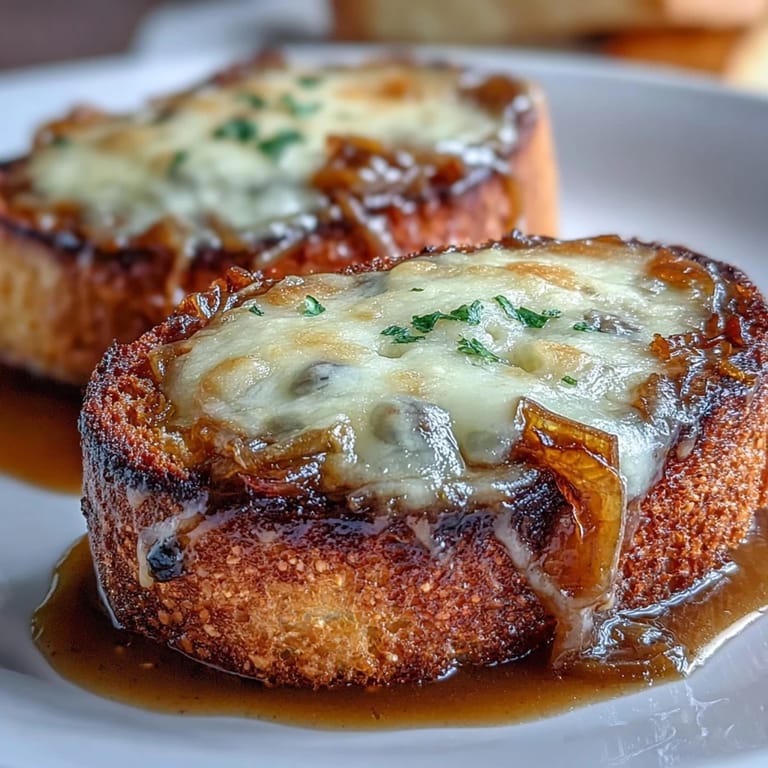
- Preheat your oven to 400°F, slice the bread into half-inch rounds, brush them with oil, and toast until they're golden and crispy on the edges but not hard all the way through. You want them to hold the cheese without falling apart.
- Top with cheese and broil:
- Pile Gruyere on each toast—and Parmesan too if you like extra salt—then bake for 3 to 4 minutes until the cheese is melted and bubbly. If you want it extra brown and melty, slide it under the broiler for a minute, but watch it because cheese burns faster than you'd think.
- Serve and let people layer it themselves:
- Ladle the soup into bowls, top with a crostini or two, and if you're feeling fancy, slide it under the broiler for another minute so the cheese gets extra melty and starts to brown at the edges. The soup should be hot enough that the bread softens slightly but stays textured.
 Pin it
 The moment someone dips their spoon into the soup and pulls up cheese-covered bread, there's always this pause—like they're about to experience something good and they want to savor the anticipation. That's when you know you've nailed it.
The Magic of Caramelization
Caramelization is what happens when sugar breaks down under heat, and onions have natural sugars that transform slowly into something deep and complex. It's not browning, which happens fast and tastes burnt—it's a patient process where the onions lose their sharpness and become almost jam-like. I learned this the hard way years ago by trying to rush it with higher heat, and the result tasted like charred vegetables. Now I know that those 45 minutes aren't wasted time; they're the whole point. The longer you wait, the sweeter and more caramel-like the onions become, and that's what makes people ask for seconds.
Building Layers of Flavor
This soup works because every element does something specific—the wine adds acidity, the flour thickens and adds body, the thyme brings a subtle herbaceous note, and the beef broth grounds everything in savory depth. When you add them in the right order, each one builds on what came before, and by the end you have something that tastes like it took all day. The cheese on top isn't just decoration; it's the moment when richness peaks, when the soup becomes an actual experience rather than just something warm to drink.
Making It Your Own
The beauty of French onion soup is that it handles variations well once you understand the base. If you want vegetarian, vegetable broth works fine—it'll taste lighter but still good. For extra richness, a splash of brandy or sherry before serving transforms it into something almost luxurious, though honestly it doesn't need it. Some people use Emmental or Swiss cheese instead of Gruyere, and while Gruyere is ideal, these substitutes work if that's what's in your fridge.
- A crisp Sauvignon Blanc is the perfect pairing, or honestly any cold white wine cuts through the richness beautifully.
- Leftover soup keeps in the fridge for three days and actually tastes better the next day when flavors have melded.
- Make the soup ahead and freeze it without the crostini, then toast fresh bread and add cheese when you reheat it.
 Pin it
 This soup is one of those dishes that reminds you why people gather around tables in the first place. Serve it on a cold night, watch people's faces soften when they taste it, and you'll understand why it's been feeding people since the 18th century.
Frequently Asked Questions
- → How do I properly caramelize onions?
Cook thinly sliced onions slowly in butter and olive oil over medium heat for 35–45 minutes, stirring often until deeply golden and sweet.
- → Can I make this soup vegetarian?
Yes, substitute beef broth with vegetable broth and omit Parmesan cheese to keep it vegetarian-friendly.
- → What cheese works well for the crostini?
Gruyere cheese provides a rich, nutty flavor, but Emmental or Swiss cheese can be used as alternatives.
- → Should I toast the bread before adding cheese?
Yes, toasting sourdough slices in olive oil until golden creates a sturdy base that crisps up under the melted cheese.
- → What wine pairs best with this dish?
A crisp white wine like Sauvignon Blanc complements the savory, caramelized flavors beautifully.
- → Can I add extra depth to the broth?
Adding a splash of brandy or sherry just before serving enriches the broth with subtle complexity.