 Save
Save One Tuesday evening, I was staring at my pantry wondering what could feel both light and satisfying when my neighbor mentioned she'd been craving something with Asian flavors but nothing too heavy. That conversation led me to experiment with pearl couscous—a grain I'd overlooked for years—paired with a sesame-ginger dressing that reminded me of the noodle bowls I'd loved ordering out. The first time I made these bowls, the kitchen filled with this warm, toasty aroma from the sesame oil that made my whole family pause mid-conversation and ask what was happening on the stove.
I made this for a potluck last spring where everyone was supposed to bring something light, and I watched people circle back to these bowls three times. One friend actually asked if I'd trained in a restaurant kitchen, which made me laugh because I'd assembled it while on a work call. That moment taught me that simple, thoughtful combinations often impress more than complicated techniques ever could.
Ingredients
- Chicken breasts: Look for ones that are roughly the same thickness so they cook evenly, and don't skip the resting step—it keeps the meat juicy instead of stringy.
- Pearl couscous: This stuff is magic because each grain stays distinct instead of turning mushy, and toasting it first deepens the flavor in a way that feels intentional.
- Toasted sesame oil: The dark stuff, not the light version—this is where the soul of the dressing lives, so don't skimp or substitute.
- Soy sauce or tamari: Use low-sodium if you can, since the other ingredients will add their own punch and you want control over saltiness.
- Fresh ginger: Grate it right before mixing the dressing so you get those bright, almost peppery notes instead of the tired flavor from pre-minced jars.
- Rice vinegar: The gentler acidity balances the richness of the sesame oil without overpowering anything else.
- Vegetables: Shred or slice them just before assembling so they're still crisp and the colors pop—it genuinely makes a difference in how the bowl feels to eat.
Tired of Takeout? 🥡
Get 10 meals you can make faster than delivery arrives. Seriously.
One email. No spam. Unsubscribe anytime.
Instructions
- Get your oven ready and prep the chicken:
- Preheat to 400°F and line a sheet with parchment—this saves cleanup and prevents sticking. Pat your chicken breasts dry, rub them generously with olive oil, salt, and pepper, and arrange them on the sheet so they have breathing room.
- Bake the chicken through:
- Pop it in for 18 to 22 minutes, checking for that 165°F internal temperature with a meat thermometer if you have one. Let it rest for 5 minutes before slicing, which lets the juices redistribute and keeps every bite tender.
- Toast and cook the couscous:
- While chicken bakes, heat olive oil in a saucepan and add the pearl couscous, stirring constantly for 2 to 3 minutes until it smells nutty and looks golden. Pour in your broth and salt, bring it to a boil, then cover and drop the heat to low for 10 to 12 minutes until the liquid disappears.
- Build the dressing while everything cooks:
- Whisk together soy sauce, sesame oil, rice vinegar, honey, fresh ginger, minced garlic, lime juice, and sesame seeds in a bowl. Taste it as you go—the dressing should make your mouth water with a balance of salty, sweet, nutty, and bright.
- Marry the couscous with the dressing:
- Pour that golden dressing over the fluffed couscous in a large bowl and toss everything together like you mean it, making sure every grain gets coated. The pearl couscous will absorb the flavors and smell incredible at this point.
- Assemble your bowls with intention:
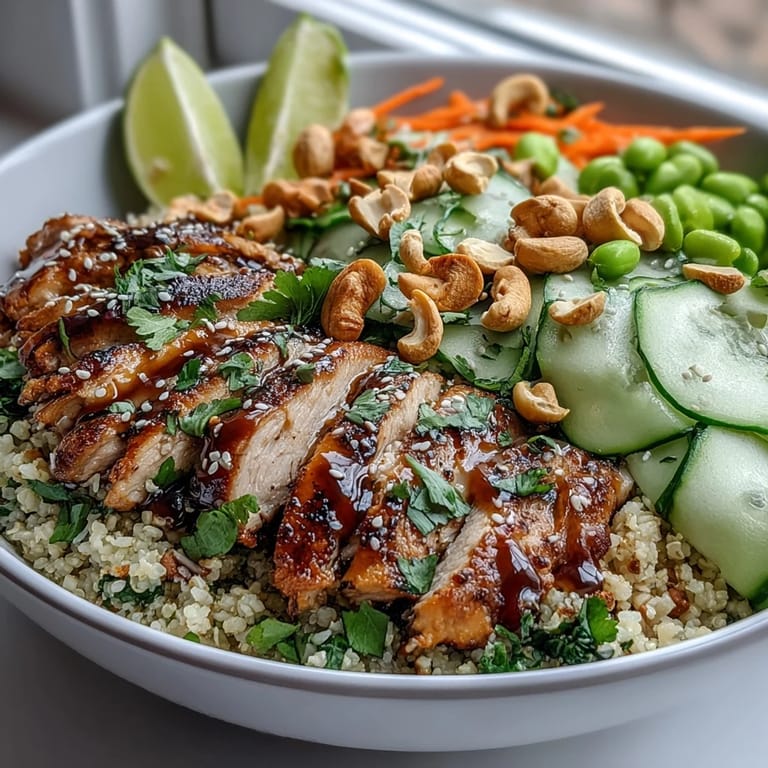
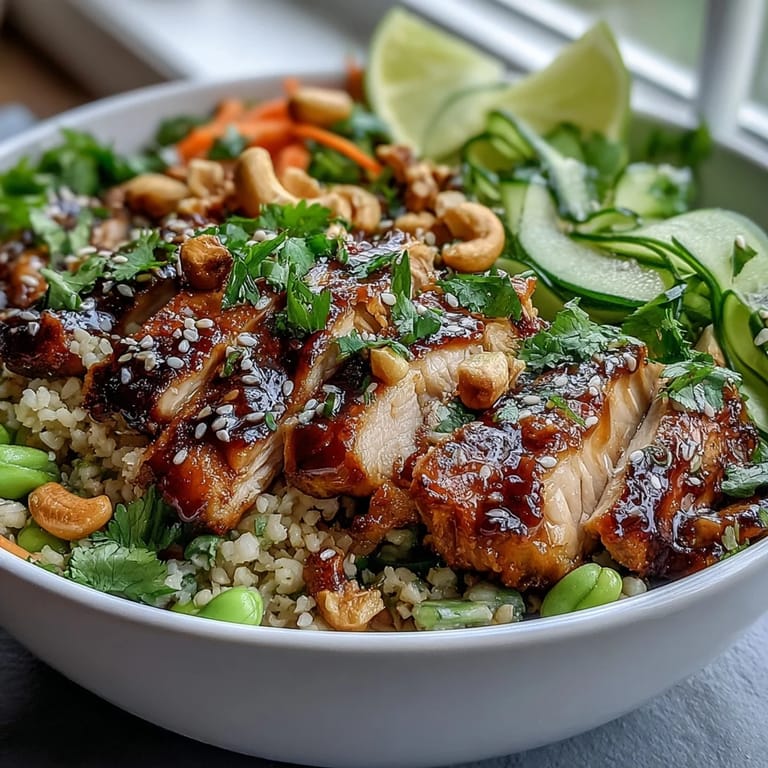
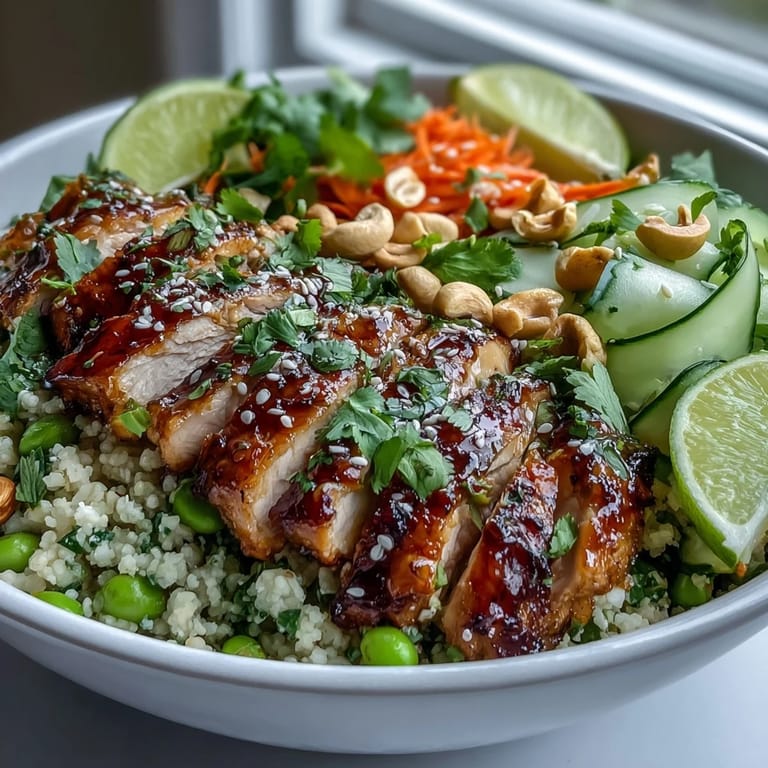
- Divide the dressed couscous among four bowls, then arrange your toppings in sections—chicken on one side, cucumber and carrots piled on another, edamame scattered across. The presentation matters because we eat with our eyes first, and a thoughtfully arranged bowl tastes better.
- Finish and serve right away:
- Sprinkle green onions, cilantro, and nuts over the top, then set lime wedges on the side so people can squeeze as much brightness as they want. Serve immediately while the couscous is still warm and the vegetables are crisp.
 Pin it
 My teenage daughter told me this was the first bowl meal she'd actually want to eat for lunch the next day, and she's usually the type to pick everything apart. That single compliment made me realize these bowls aren't just practical—they're the kind of food that makes people feel cared for without fanfare.
Why Pearl Couscous Changes Everything
I spent years making regular couscous until someone at a farmers market convinced me to try the pearl version, and I've never looked back. The larger grains have this pleasant chewiness that holds up to dressing without getting gummy, and they actually look impressive in a bowl instead of looking like sand. It's become my go-to grain when I want something that feels fancier than rice but doesn't require the planning that other grains demand.
The Magic of Sesame-Ginger as a Flavor Foundation
There's something about the combination of toasted sesame oil and fresh ginger that makes people pause and ask what they're tasting—it's warm and aromatic without being aggressive. I learned this dressing on a night when I was bored with my usual vinaigrettes and decided to experiment, and now it's in my regular rotation for dressing everything from noodles to roasted vegetables. The honey rounds out the sharp edges while the lime juice keeps it from feeling heavy, which is why this works so well over couscous instead of just in a traditional Asian noodle situation.
Make It Work for Your Table
The beauty of a bowl format is that everyone can customize without creating extra work—set out the components and let people build what sounds good to them. I've made vegetarian versions by swapping in crispy tofu or extra edamame, and once I even used shredded turkey breast when that's what I had on hand. The formula stays the same, so you're never starting from scratch even when you're working with what you've got.
- Prep vegetables the morning of if you want to save time, but hold off on slicing anything until assembly so textures stay crisp.
- Make extra dressing because it keeps in the fridge for almost a week and transforms leftovers into something that tastes intentional instead of reheated.
- If you're feeding a crowd, assemble the components on a big platter family-style and let everyone build their own bowl—it's interactive and feels special.
 Pin it
 These bowls have become my answer to the question of what to cook when you want something that feels restaurant-quality but doesn't require fussy techniques or hard-to-find ingredients. Make them once and you'll understand why they've become such a regular thing in my kitchen.
Frequently Asked Questions
- → Can I make this dish ahead of time?
Yes, prepare the components in advance. Store cooked chicken, couscous, and dressing separately in the refrigerator for up to 3 days. Assemble bowls when ready to serve and add fresh toppings just before eating.
- → What can I substitute for pearl couscous?
Quinoa, brown rice, or regular couscous work well as alternatives. Adjust cooking time according to package instructions. For gluten-free options, choose quinoa or rice specifically.
- → How do I store leftovers?
Keep components separate in airtight containers in the refrigerator. The couscous absorbs dressing over time, so store extra dressing separately. Reheat chicken gently and toss everything together before serving.
- → Can I use rotisserie chicken instead?
Absolutely. Shred or slice about 2 cups of rotisserie chicken to replace the baked chicken. This shortcut reduces preparation time significantly while maintaining great flavor.
- → Is the dressing spicy?
The sriracha is optional, so control the heat level. Even without it, fresh ginger and garlic provide a mild warmth. Add more chili sauce if you prefer extra spice.
- → What protein options work for vegetarians?
Roasted or pan-fried tofu cubes, chickpeas, or tempeh make excellent plant-based protein substitutes. Prepare them with similar seasonings to maintain the flavor profile.