 Save
Save There's something about a pot of simmering soup that stops time in a kitchen. Years ago, I found myself on a Tuesday evening with chicken breasts, a half-empty vegetable drawer, and the kind of exhaustion that made elaborate cooking feel impossible. What emerged from that pot over the next forty minutes became the answer I reach for whenever I need something that feels like care in a bowl. This soup doesn't ask for much, yet it delivers everything—warmth, nourishment, and the quiet satisfaction of a meal that came together without fuss.
I made this for a friend the day she came home from the hospital, and I watched her eat two bowls without stopping. She didn't compliment the recipe or ask for the ingredient list—she just looked relieved, like her body had been waiting for exactly this kind of nourishment. That moment taught me that sometimes the best cooking isn't about impressing anyone; it's about understanding what someone needs.
Ingredients
- Boneless, skinless chicken breasts (about 400 g, cut into bite-sized pieces): Cutting them into pieces rather than leaving them whole lets them cook faster and distribute their flavor throughout the broth more evenly.
- Yellow onion, diced (1 medium): The foundation of everything; it softens and sweetens as it cooks, creating the subtle backbone of flavor.
- Carrots, peeled and sliced (2): They add natural sweetness and body to the broth, plus that gentle crunch if you prefer them slightly firmer.
- Celery stalks, sliced (2): Often overlooked, but celery brings a quiet herbal note that rounds out the entire pot.
- Garlic, minced (3 cloves): Just enough to be felt without overwhelming; added after the softer vegetables so it doesn't burn.
- Baby spinach or kale, chopped (1 cup, optional): I use whatever green I have on hand, and it adds vitamins without changing the soul of the soup.
- Fresh parsley, chopped (1 tablespoon, plus more for garnish): A small amount stirred in at the end brightens everything; it's the difference between a complete meal and something that feels like it's missing something.
- Long-grain white rice, rinsed (2/3 cup): Rinsing removes excess starch and prevents the soup from becoming gluey as it sits.
- Low-sodium chicken broth (8 cups): The canvas for everything else; I taste the broth before adding it to know how much salt I'll actually need.
- Dried thyme (1 teaspoon): Herbaceous and warm, it reminds me of someone's grandmother's kitchen.
- Dried oregano (1 teaspoon): Adds an earthy Mediterranean whisper to the pot.
- Bay leaf (1): It sits quietly in the broth, imparting subtle flavor that you only notice when you remove it and something feels a little less round.
- Black pepper (1/2 teaspoon): Added early so it infuses rather than sitting on top.
- Salt (3/4 teaspoon, or to taste): Taste as you go; the broth already has sodium, so you're seasoning on top of that foundation.
- Lemon juice (from 1/2 lemon, optional): A squeeze at the very end lifts and brightens without making the soup taste citrusy.
- Olive oil (1 tablespoon): Just enough to soften the onion, carrots, and celery without making the soup feel slick.
Tired of Takeout? 🥡
Get 10 meals you can make faster than delivery arrives. Seriously.
One email. No spam. Unsubscribe anytime.
Instructions
- Build the base with vegetables:
- Heat the olive oil in a large pot over medium heat and add the onion, carrots, and celery. Let them soften for 4 to 5 minutes, stirring occasionally; you're looking for the moment when the onion turns translucent and the kitchen starts to smell like something good is happening. The celery will still have some resistance, and that's exactly right.
- Introduce the garlic:
- Once the vegetables are tender, add the minced garlic and cook for about 1 minute until it becomes fragrant. This brief moment of cooking mellows the garlic's sharp edge without letting it brown.
- Sear the chicken gently:
- Add the chicken pieces and cook for 2 to 3 minutes, stirring often, until they lose their raw pink appearance on the outside. They won't be cooked through yet, and that's fine; the broth will finish the job.
- Create the flavor foundation:
- Stir in the rinsed rice, thyme, oregano, bay leaf, salt, and pepper, coating everything in the oil and letting the spices wake up for a moment. Pour in all 8 cups of chicken broth and bring the pot to a rolling boil.
- Let time and heat do their work:
- Reduce the heat to a gentle simmer, cover the pot, and cook for about 20 minutes, stirring every few minutes to ensure the rice cooks evenly. You'll notice the kitchen beginning to smell like comfort itself, and the rice will gradually become tender while the chicken cooks through completely.
- Finish with greens and brightness:
- Stir in the chopped spinach or kale and cook uncovered for 2 to 3 minutes until it wilts into the broth. Taste the soup and adjust the salt and pepper, then add the lemon juice and fresh parsley.
- Release and serve:
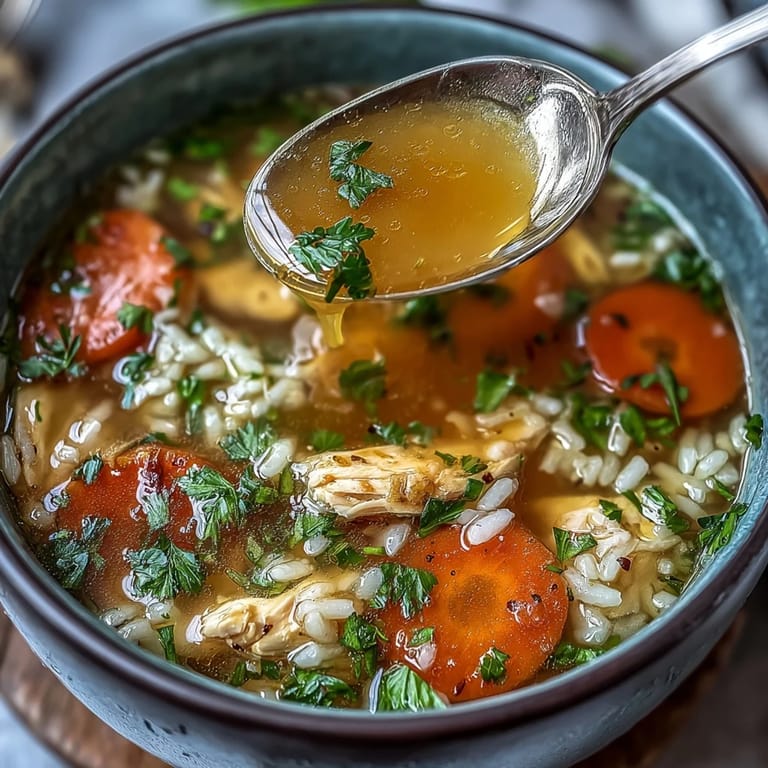
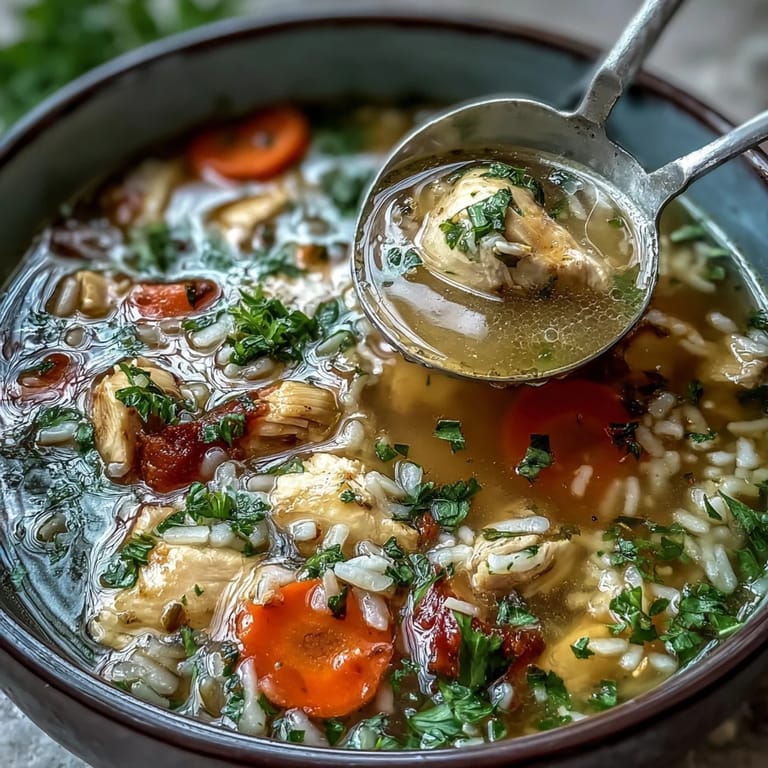
- Remove the bay leaf and ladle the soup into bowls, garnishing each with a pinch of fresh parsley. The steam rising up carries the promise of warmth.
 Pin it
 I learned the real magic of this soup when I made it for my mother during a difficult week. She didn't have much appetite, but she sat at the table and let the warmth of the bowl in her hands seem to ease something she couldn't name. Food at its best is never just nutrition; it's a way of saying I'm here, and I care about you feeling better.
The Wisdom of Leftovers
This soup thickens noticeably as it sits in the refrigerator because the rice continues to absorb broth even after cooking stops. When you reheat it the next day, the texture shifts from light and brothy to something more substantial and cozy. If you prefer it looser, add half a cup of broth while reheating, stirring gently so the rice doesn't break apart.
Variations Worth Exploring
The beauty of this soup is its flexibility without losing its essential character. A parmesan rind added during the simmer adds a savory depth that lingers without making the soup taste cheesy. For vegetarians, omitting the chicken and swapping vegetable broth for chicken broth, then adding a can of drained chickpeas, creates a protein-rich version that feels just as satisfying and requires no other changes to technique.
Small Moments That Make a Difference
I've found that tasting the broth before you add anything tells you so much about how much seasoning the soup actually needs. Some broths are quite salty already, while others taste almost neutral, and adjusting from there means you end up with a better final dish. The lemon juice at the end shouldn't make the soup taste like lemon; it should make everything else taste more like itself, brighter and more awake.
- Stir the soup occasionally while it simmers so the rice cooks evenly and nothing settles stubbornly to the bottom.
- If you're cooking for someone who's been unwell, let the soup cool slightly before serving; it's easier to eat when you're not fighting the heat of the bowl.
- Fresh herbs matter more at the end than at the beginning, so don't skip the parsley garnish even if you're tired.
 Pin it
 This soup asks very little of you and gives back comfort, nutrition, and the quiet knowledge that you've made something that matters. Serve it to someone you care about, or make it for yourself on a day when you need to remember that good food doesn't have to be complicated to be healing.
Frequently Asked Questions
- → What type of rice works best for this dish?
Long-grain white rice is preferred for its ability to cook evenly and absorb flavors, but brown rice can be used with extended simmering time.
- → Can I add leafy greens to enhance nutrition?
Yes, adding baby spinach or kale in the final minutes of cooking adds vibrant color and boosts nutritional value without overpowering flavors.
- → How do I ensure the chicken stays tender?
Cooking chicken pieces alongside the rice in broth allows gentle simmering, keeping the meat juicy and tender while absorbing rich flavors.
- → What herbs complement the flavor profile?
Dried thyme, oregano, and fresh parsley provide aromatic depth and freshness that enhance the savory base of the dish.
- → Is it possible to make this meal vegetarian?
Yes, omitting the chicken and substituting vegetable broth, along with chickpeas for protein, creates a satisfying plant-based version.