 Save
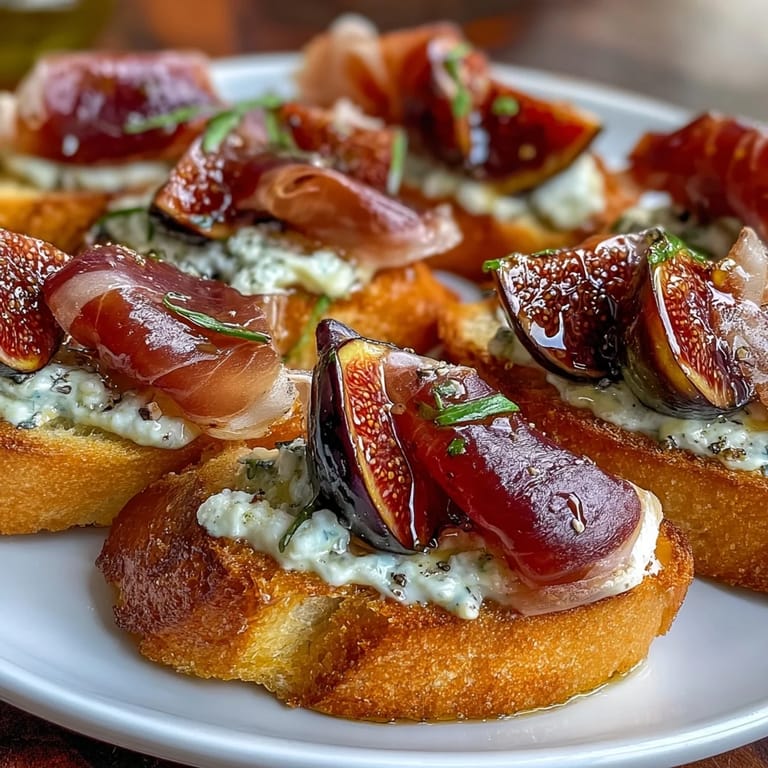
Save My neighbor Marco handed me a warm crostini through his kitchen window one autumn afternoon, and I still remember the shock of how three simple things—crispy bread, paper-thin prosciutto, and a slice of fig—could taste like an entire Italian summer. That moment changed how I thought about appetizers; suddenly, they weren't about impressing people with complexity, but about respecting each ingredient enough to let it shine. I've made these countless times since, and they've become my go-to when I want something that feels fancy without the fuss.
I made these for my sister's book club three years ago, nervous they'd seem too simple. Instead, everyone asked for the recipe, and halfway through the evening, I caught someone sneaking extras from the kitchen counter. That's when I realized the best appetizers aren't the ones with the longest ingredient lists—they're the ones people can't stop eating.
Ingredients
- Baguette or rustic Italian bread (8 slices): Look for bread with a good crust and an open crumb structure; it toasts evenly and holds toppings without falling apart.
- Extra-virgin olive oil (2 tbsp): This is where quality truly matters—a buttery, peppery oil makes the toast taste like something you'd find in a Roman trattoria.
- Prosciutto (8 thin slices): Ask the deli counter to slice it paper-thin; you want it to drape softly over the bread rather than clump up.
- Fresh figs (4): Season matters here; in late summer and early fall, figs taste like jammy perfection, but any ripe fig with deep color will work.
- Soft goat cheese or ricotta (2 oz, optional): This creates a creamy base that mellows the salt from the prosciutto and gives the crostini more structure.
- Freshly ground black pepper: Grind it right before serving; pre-ground pepper tastes tired by comparison.
- Fresh thyme or arugula (optional garnish): Thyme adds an earthy whisper, while arugula brings a peppery brightness that cuts through the richness.
- Honey (1–2 tsp, optional): A light drizzle bridges the salty and sweet, turning these from appetizer into something almost dessert-like.
Tired of Takeout? 🥡
Get 10 meals you can make faster than delivery arrives. Seriously.
One email. No spam. Unsubscribe anytime.
Instructions
- Heat your oven and prep the bread:
- Set the oven to 400°F and arrange your bread slices on a baking sheet—give them room to breathe so they toast evenly. Brush both sides lightly with olive oil using a pastry brush, taking care not to oversoak them; you want golden and crispy, not greasy.
- Toast until the bread has personality:
- Bake for 8–10 minutes, turning halfway through so both sides develop that deep golden color and satisfying crunch. You'll know they're ready when your kitchen smells like toasted bread and butter, and the edges are just starting to darken.
- Cool slightly and add creaminess if you choose:
- Pull the crostini from the oven and let them sit for a minute or two to cool just enough to handle. If using goat cheese or ricotta, spread a thin, delicate layer on each warm toast so it softens into the bread without overwhelming the other flavors.
- Layer the prosciutto and figs:
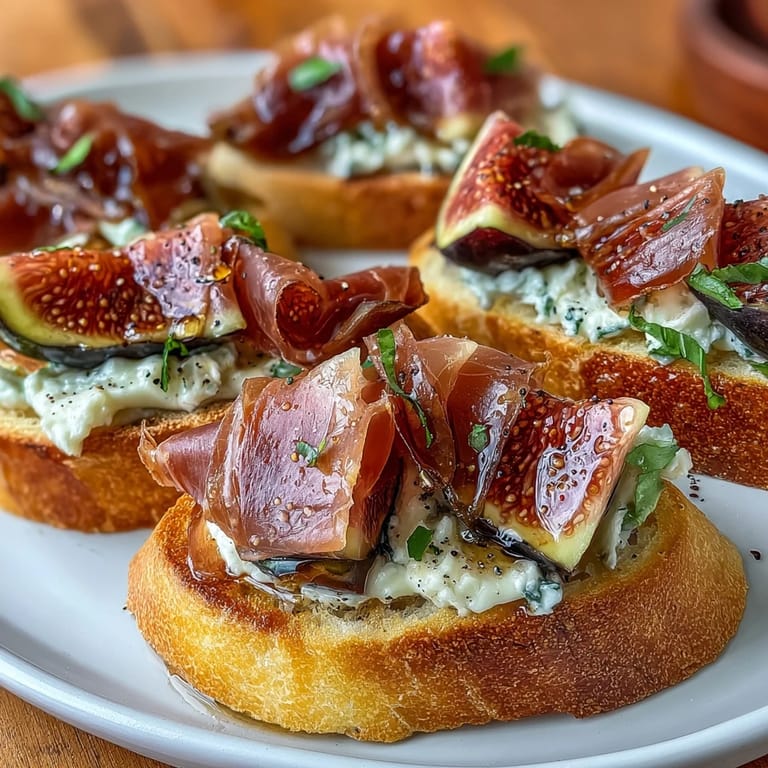
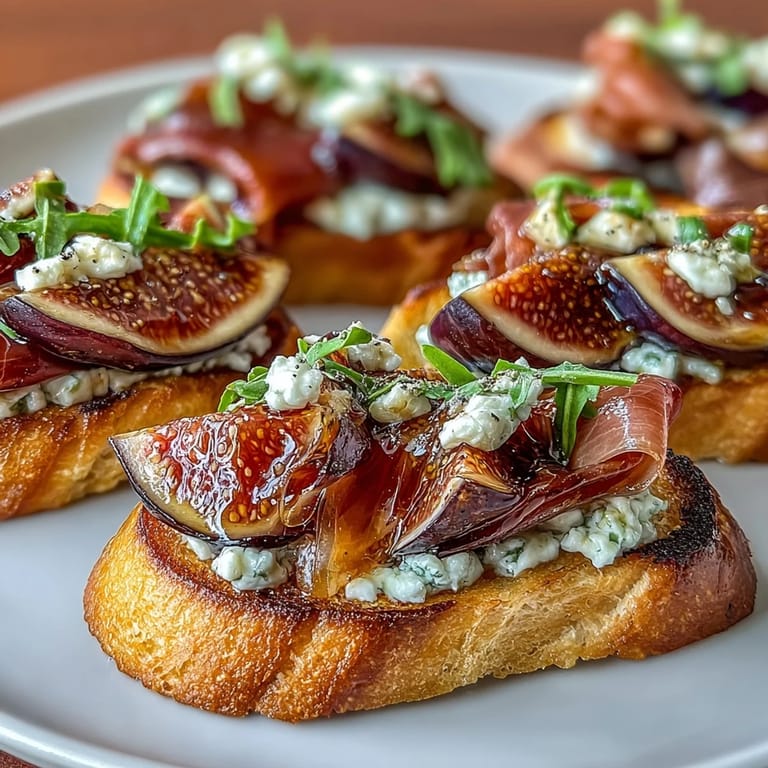
- Drape a single slice of prosciutto on each toast, then arrange a few fig slices on top; the contrast of salty and sweet happens right here. Don't crowd them; restraint is what makes these feel elegant.
- Season and garnish with intention:
- Crack fresh black pepper over each crostini, then scatter your choice of thyme leaves or arugula. If you're using honey, drizzle the finest amount—just enough to catch the light.
- Serve immediately while the bread is still warm:
- These are best eaten moments after assembly, when the warmth of the toast plays against the cool figs and the textures haven't started to soften into each other.
 Pin it
 My daughter once said these crostini taste like autumn on a plate, which isn't what most five-year-olds would say, but it made me realize that simple food cooked with attention somehow speaks to everyone. That's the real gift of this recipe.
The Art of Perfect Toasting
Toasting is more forgiving than you might think, but it rewards patience. I learned this by burning my first batch while distracted by a phone call; now I set a timer and stay nearby, because the difference between golden and burnt happens in about two minutes. The crust should be firm enough to hold toppings without bending, but not so hard that you need your teeth to be made of steel. If you're making these ahead, you can toast the bread in the morning and store it in an airtight container; just refresh it in a 350°F oven for two minutes before topping.
Why Figs and Prosciutto Were Meant to Find Each Other
This pairing works because of pure flavor chemistry—the funk and saltiness of cured pork needs sweetness to feel balanced, and figs deliver that without tasting artificial or heavy. I once tried substituting jam because fresh figs weren't available, and it felt wrong; the texture was too soft, and it overwhelmed everything else. Pears work beautifully as a substitute because they have the right amount of moisture and delicate sweetness, and walnuts or pistachios scattered on top add a textural element that makes the whole thing feel more substantial without actually being heavy.
Elevating the Moment
What transforms these from snack to occasion is how you present them and what you serve alongside. I once made them for an outdoor dinner party and arranged them on a wooden board with a small ramekin of extra honey on the side, and suddenly everyone was treating them like precious little pieces of art. The honey option seems small, but that gentle sweetness drizzled at the last moment can change someone's entire impression of the dish.
- Pair with crisp Prosecco or Sauvignon Blanc if you want to sound like you know what you're doing.
- Make them 10 minutes before serving so the bread stays crispy and the figs stay cool.
- Double the recipe without hesitation; people will eat twice as many as you plan for.
 Pin it
 This recipe taught me that sometimes the best meals are the ones that let each ingredient speak for itself. Make these, share them, and watch how something so simple becomes the thing people remember.
Frequently Asked Questions
- → What type of bread works best for crostini?
Baguette or rustic Italian bread slices are ideal for achieving a crispy, sturdy base when toasted.
- → Can I substitute prosciutto with another topping?
Yes, thinly sliced cured meats like pancetta or smoked ham can be used for a similar savory effect.
- → How should I prepare the figs for serving?
Fresh figs should be sliced thinly and placed atop the crostini to add natural sweetness and texture contrast.
- → Is it necessary to use cheese on these crostini?
Cheese such as goat cheese or ricotta is optional but adds creaminess that complements the prosciutto and figs.
- → What herbs best complement this appetizer?
Fresh thyme or peppery arugula leaves enhance the flavor and add a fresh, aromatic touch.
- → Can this dish be paired with wine?
Yes, crisp white wines like Prosecco or Sauvignon Blanc pair wonderfully with the sweet and savory flavors.